Nvidia’s GeForce RTX 3060 Ti, which is supposedly the next GPU to arrive in the Ampere range, could be launched in less than three weeks’ time on November 17, going by the latest speculation.
This comes from MyDrivers (via Videocardz) along with the suggestion that according to third-party graphics card manufacturers, stock levels of the 3060 Ti will be similar to that witnessed with the RTX 3070 that just hit the shelves – in other words, it’ll be very thin on the ground.
But that wouldn’t really be any surprise given that all of Nvidia’s RTX 3000 launches have failed to meet demand by some margin. That said, treat this speculation with a great deal of caution, and indeed this purported launch date.
It is, however, true that the November 17 date more or less falls in line with what we’ve heard from the grapevine previously, after Chinese retailers put the RTX 3060 Ti up for pre-order, and a mid-to-late November timeframe was suggested for arrival.
Rumored spec and cost
The rumor mill reckons that the 3060 Ti graphics card will weigh in at under $400 when it debuts, and it’ll boast 4,864 CUDA cores with 8GB of GDDR6 VRAM. It’ll use the same GPU as the RTX 3070 in fact, just a cutdown version (naturally).
As mentioned, the recently launched GeForce RTX 3070 GPU failed to provide sufficient inventory to retailers and sold out very swiftly, just like the RTX 3080 and 3090 before it. That wasn’t entirely unexpected, but hopes were up that the 3070 would fare better given that Nvidia delayed release by a fortnight in order to help resolve stock issues.
If you were wondering where the vanilla RTX 3060 is, this current rumor notes that there is no clear release timeframe yet, but that it will arrive at a later date, which is pretty much what we’ve heard previously (it’ll be based on a different GPU to the 3060 Ti).
It’s surprising how you can get used to having a gadget around. Having bought into the Asus ZenBook range back in 2015, for the last couple of years I’ve been putting off upgrading the sleek, compact laptop that won me over so long ago, but as we enter the run-up to Black Friday 2020, I can’t delay the inevitable any longer.
The ZenBook UX305 was, when I bought it, a staggeringly good buy. I paid £500-600 for it (around $700 / AU$1,000), and was overjoyed at having found a slim, lightweight, and enjoyably fast laptop that didn’t cost anywhere near as much as a MacBook Air – which remained at a price tag of $999 (£949, AU$1,499) for some time after its release. The ZenBook had 8GB of RAM, and 256GB storage, and it felt wondrous when I first booted it on.
I was also a little bored of the black and gray computers I’d owned before, and continued to see everywhere – not least because Apple persisted, and persists in primarily using those colors for its MacBook range. The Asus ZenBook, though, had a brushed aluminum finish, with a radial pattern and purple / mauve coloring that seemed more ‘lifestyle accessory’ than ‘tech bro gadget’, almost like a clutch or sofa cushion. (Yes, I drank the Kool-Aid.)
Initially my ZenBook’s purpose was to make ferrying between lectures and libraries an easier task – it weighs just 1.17kg – but it quickly morphed into ensuring that a commute on London’s buses and trains, or a wander around the city, wouldn’t leave me with backache. And it didn’t!
(Image credit: Asus)
All good things come to an end
The issue now, in 2020, is that I can’t justify keeping it on life support any longer. The screen is dim compared to pretty much every other display I own; the bezel seems thicker and sterner with every infinity-screen smartphone or smart TV I see; the audio simply doesn’t work anymore, whether over Bluetooth, cabled headphones, or the laptop’s own built-in speakers; and the processor is just a bit old.
Everything that made the ZenBook so tempting in 2015 – its size, weight, and speed – is now less impressive, less enticing, less urgent, with technology having marched on in the intervening years.
There will no doubt be plenty of Black Friday laptop deals to tempt me. Once discounts start to arrive in earnest, I expect to find similar specifications for around $400 / £400, or far better ones for the same price I paid for the ZenBook. For an ultrabook that gives me the same awe, and feels as good for the price as when I bought it, I might be paying a bit more though.
I’m probably looking at the same amount of RAM and storage, just with a better processor – maybe the Intel i5 or Ryzen 5, but probably not the Intel i7 or Ryzen 7 models that sit above them, which would put the prices of laptops running on them beyond my budget.
After waiting five years to upgrade, I expect the difference will be pretty dramatic.
(Image credit: Asus)
Letting go
What’s often missing from discussions about upgrading, comparing specs and so on is the personal attachment we have to our most-used devices.
Our smartphones are the devices that most of us handle most often, and for many people their phone has evolved from being a merely functional tool into something akin to an extra limb that they’d be virtually helpless without. So it’s no wonder that our phone is something we’re constantly looking to customize, upgrade, and enhance, to more perfectly meet our needs.
It says a lot that I’m not even using my ZenBook to write this article, on account of having a work laptop more fit for the purpose. But when it comes to a device that feels personal – that’s going to carry the programs I want to download, the projects I want to work on, the digital aspects of my life outside of my job – a new purchase is going to have big shoes to fill.
And it’ll need to be slim enough, light enough, fast enough – and yes, pretty enough – to be able to fill them.
When you think of the trusty Nissan Sunny, you think of only two things in the UAE – driving school cars, and taxis. The joys of learning how to drive in the 90s in a yellow Nissan Sunny are not lost on me, but I swore to myself that once I got my license, I would never set foot in – nor buy – a Nissan Sunny.
The Nissan Sunny has always been a no-frills ride, suitable for those who just want to get around in their first ever car before eventually upgrading to something that they actually want to drive.
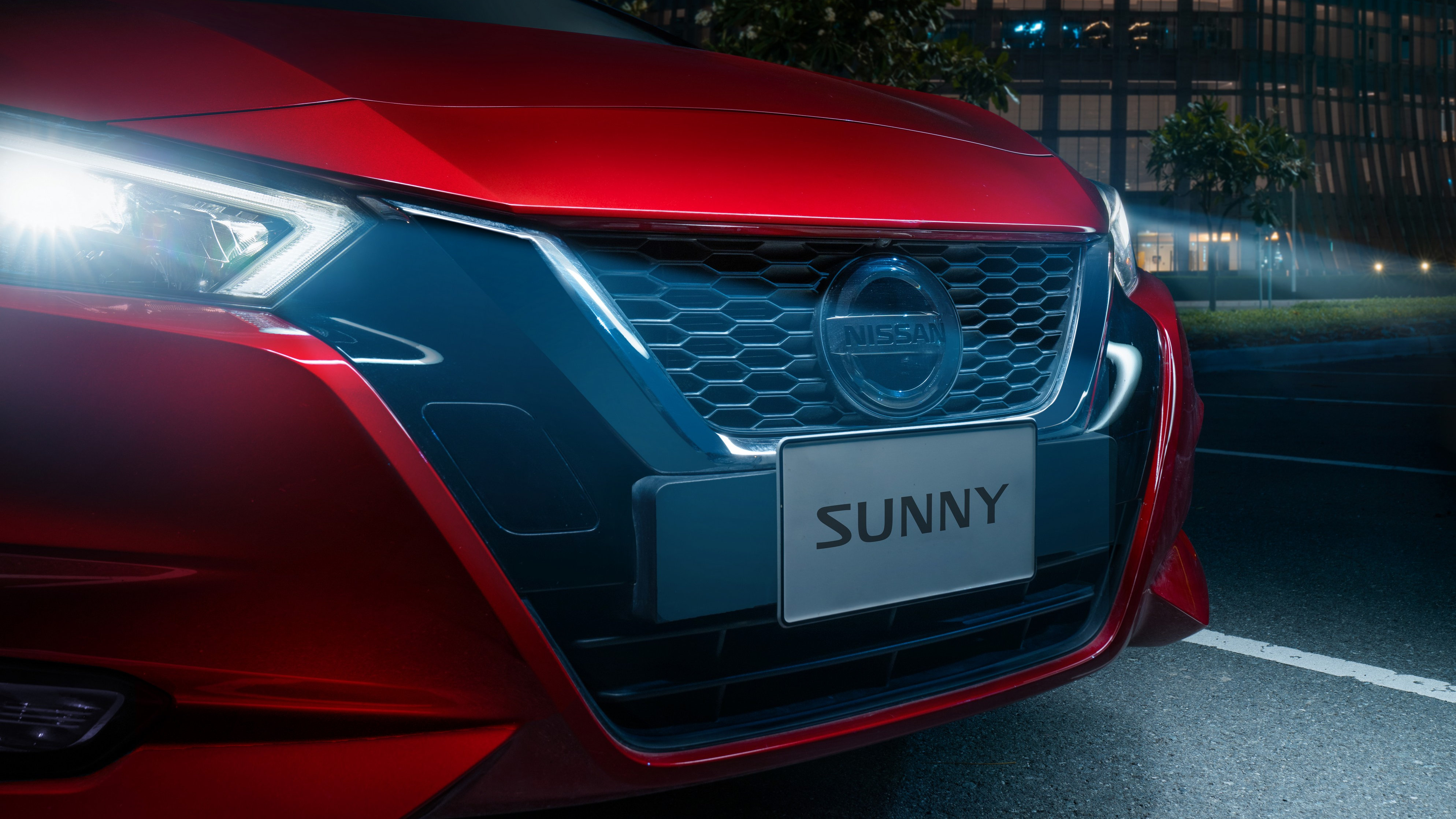
But that’s changing drastically with the Nissan Sunny 2020, which shows some incredible promise in a car that’s often been ignored in favor of some of Nissan’s more higher offerings.
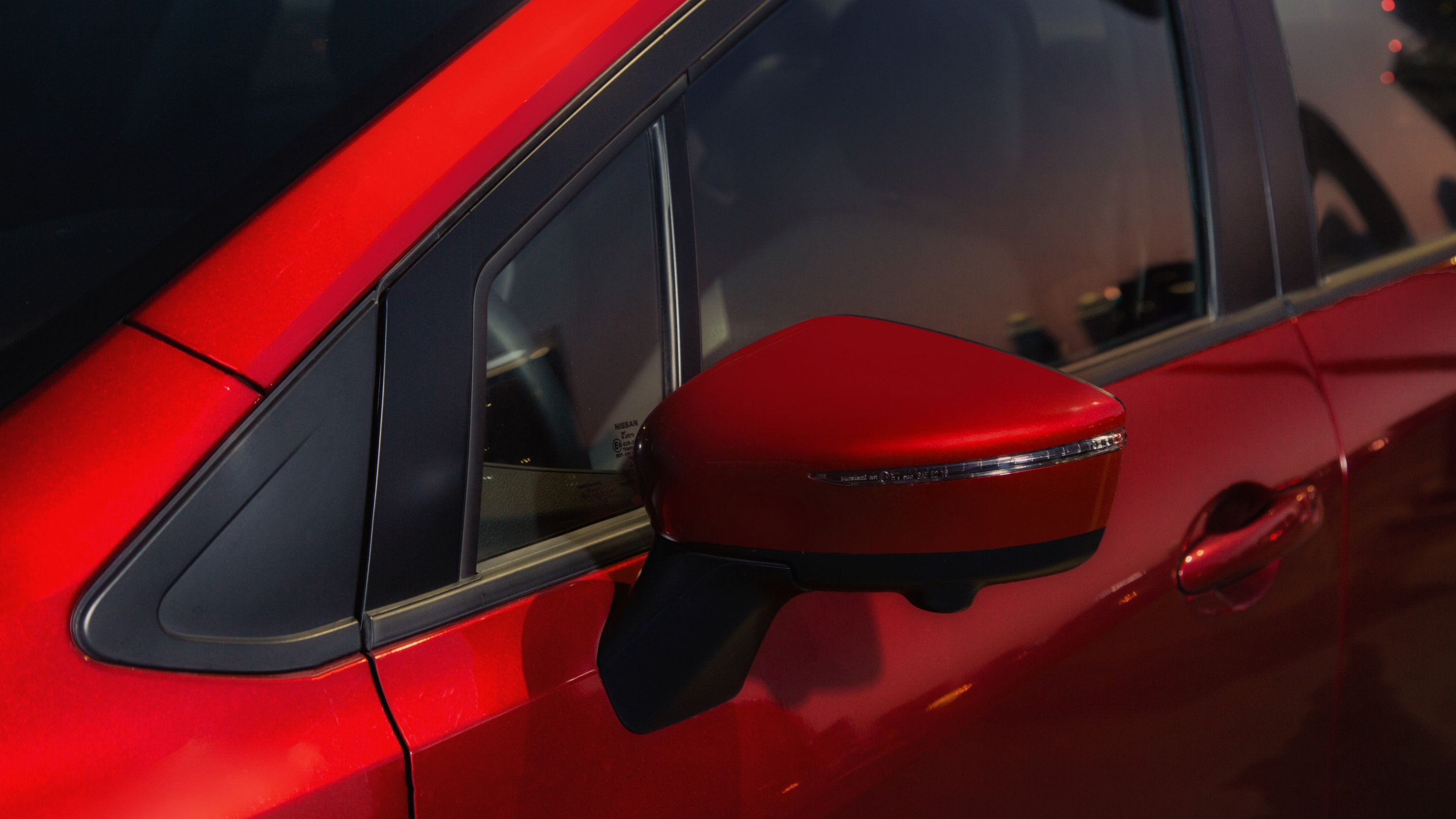
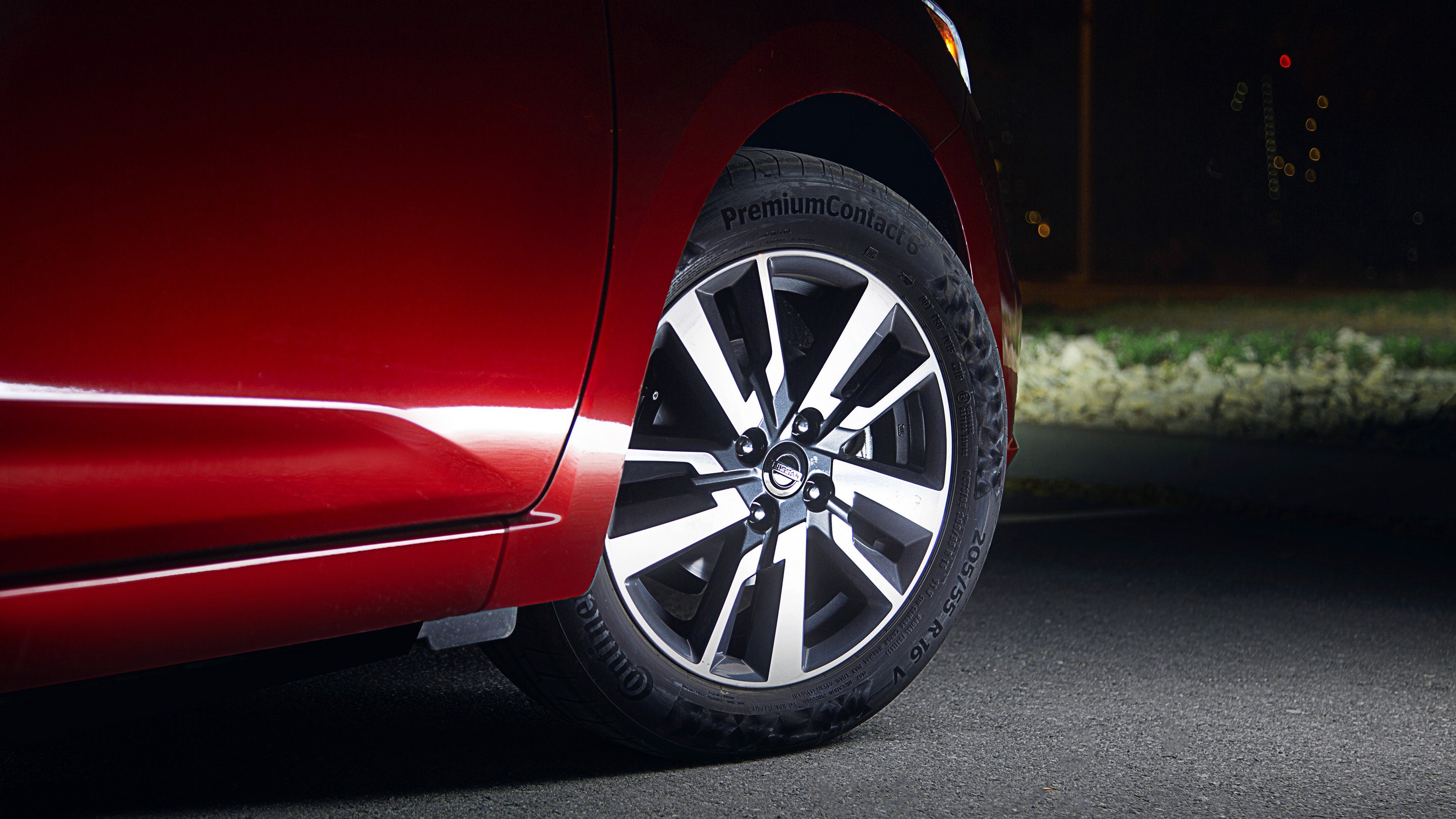
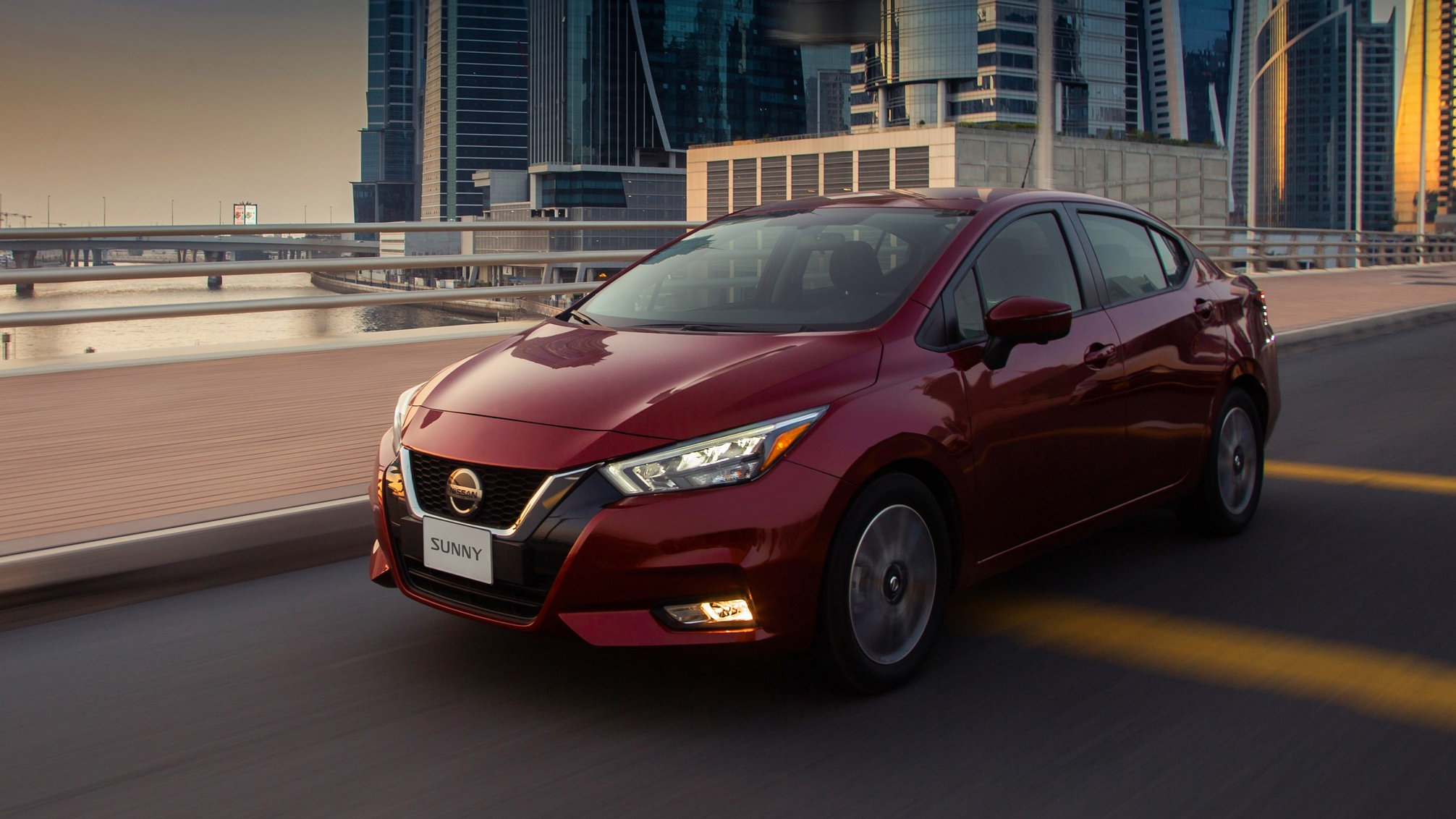
Gone are the days of the Sunny’s bloated, boxy style – the Nissan Sunny 2020 sports a longer, wider, and lower exterior than previous models. Perhaps trying to channel the looks of the Maxima, you’ll have to do a double-take as nothing on the outside immediately says that this is the Nissan Sunny that you recognize. Its design takes it far away from being an entry-level car, and adds some much needed flair and – dare I say it – attractiveness to the vehicle.
Image 1 of 3
(Image credit: Nissan)
Image 2 of 3
(Image credit: Nissan)
Image 3 of 3
(Image credit: Nissan)
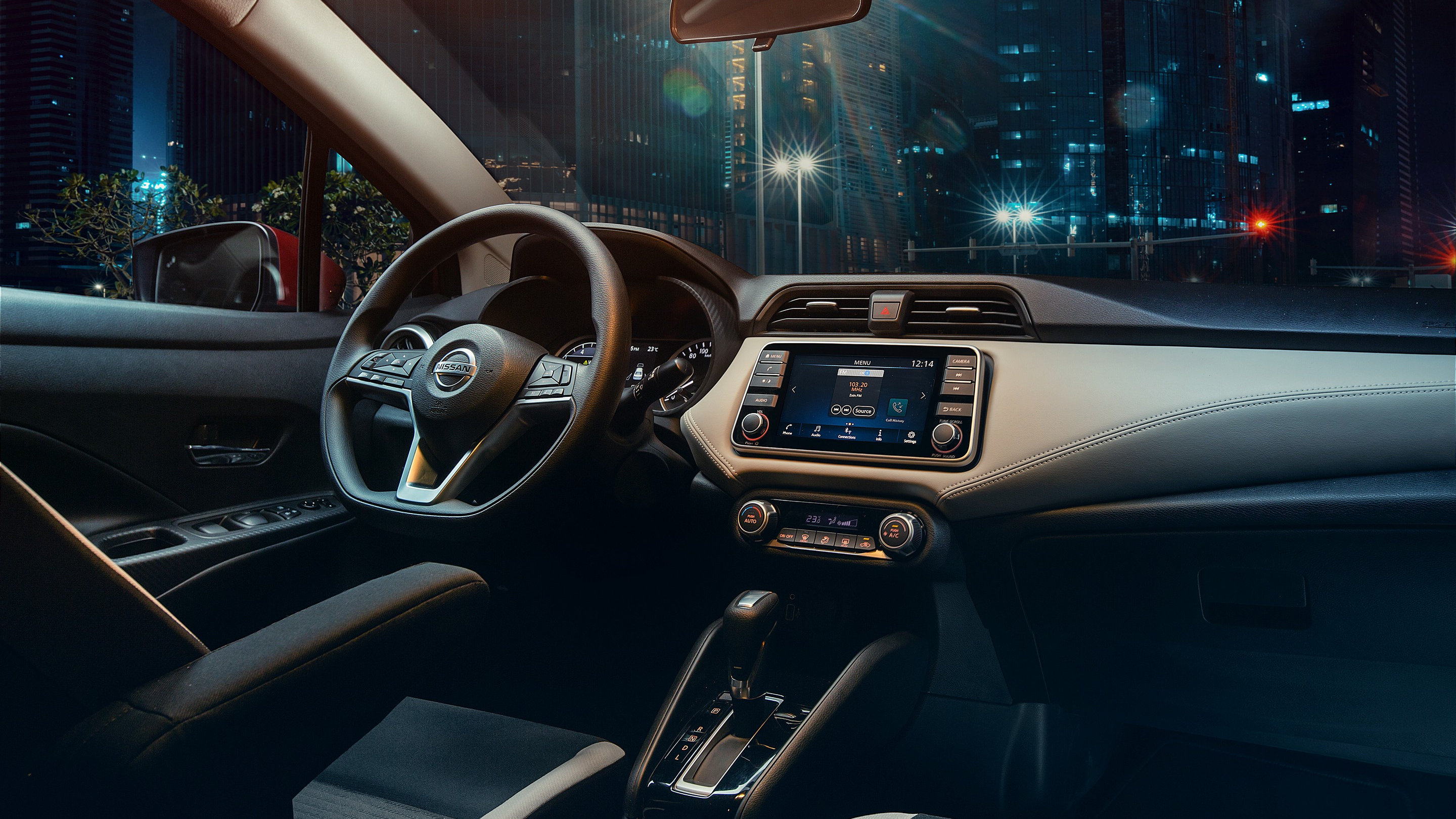
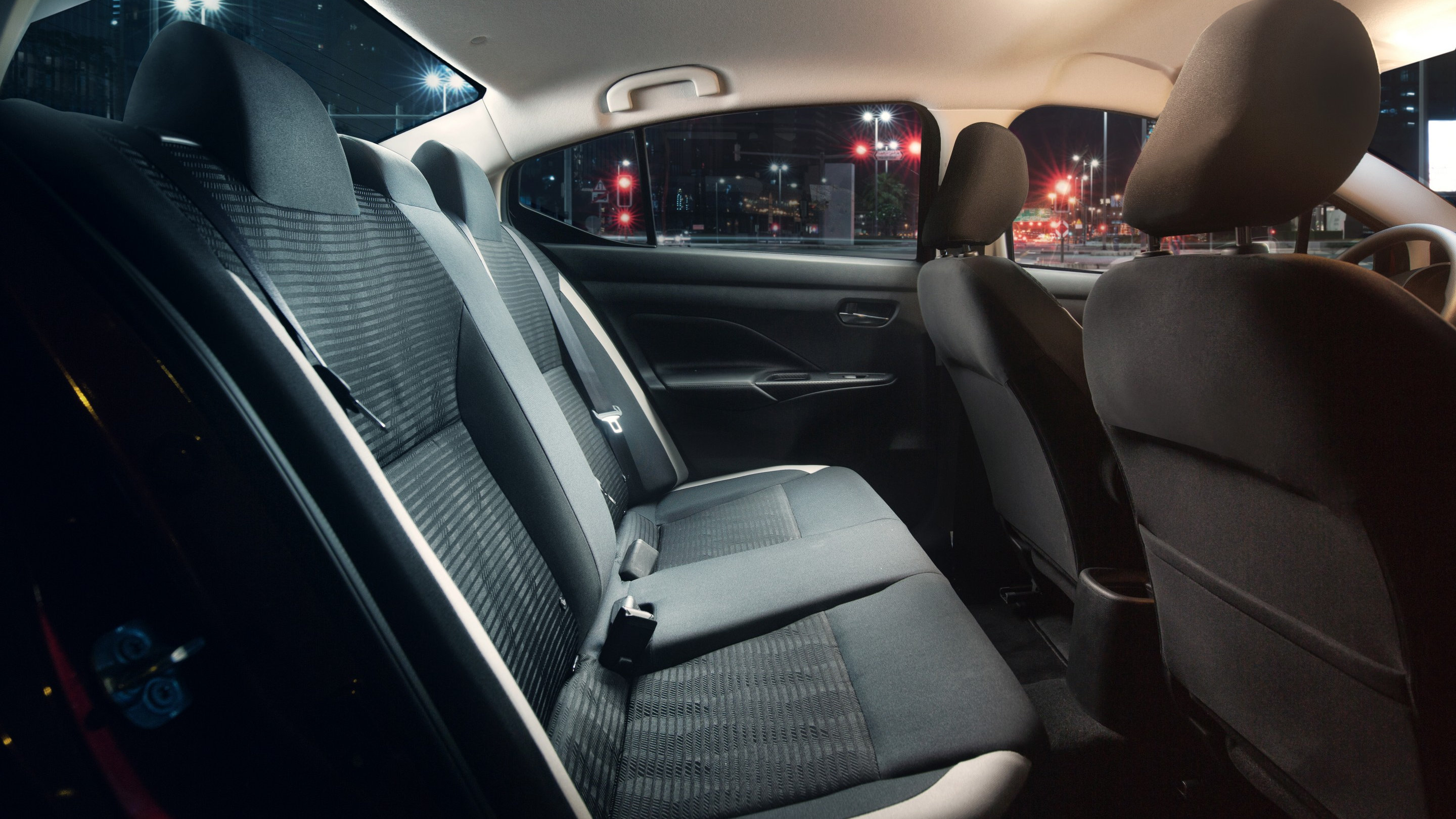
The interiors too, speak another language. Comfortable fabric-clad seats are contrasted by a leather – yes, leather – trim in the middle of the dashboard, with a good deal of legroom in the driver and front passenger seat. The rear seats might feel slightly less spacious at times, but that’s mostly due to more space being allocated to the trunk, which also passes through the rear seats for when you need more cargo space.
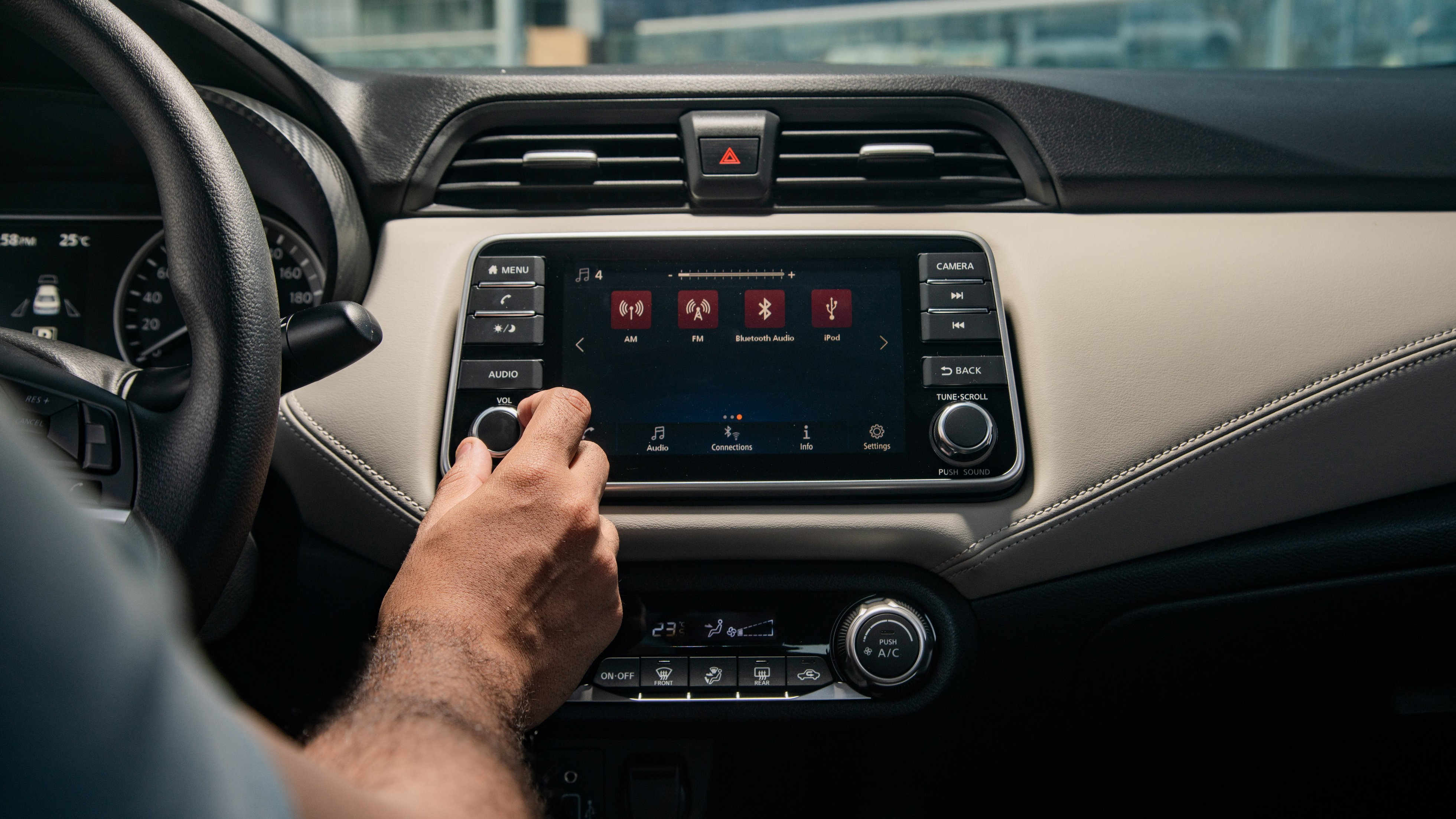
Front and center on our review model is a 7” touchscreen, which acts as your infotainment control, while physical climate controls sit separately below. The touchscreen is a bit slow at times, but lets you tweak all of your car settings quite easily. Both Android Auto and Apple CarPlay are supported, which are features you would never expect to see in a segment like this.
Image 1 of 3
(Image credit: Nissan)
Image 2 of 3
(Image credit: Nissan)
Image 3 of 3
(Image credit: Nissan)
On the driver’s side you’ve got a secondary display as part of the instrument panel, which can be easily switched around to show the tachometer or other information such as current music playing. There’s no center storage console here (that’s an extra add-on), so you’ll have to make do with two cup holders and a small cubby just above the shifter.
Performance
Understandably, the Nissan Sunny 2020 isn’t going to be bolting you across the roads once you get behind the wheel, but the overall drive is surprisingly comfortable, save for a few exceptions. The engine takes its time to go from 0-100 kph, but that’s what you’ll be able to squeeze out when you floor the accelerator. The 1.6-liter DOHC 16-valve 4-cylinder engine produces 118 hp at 6,000 rpm, and 149 Nm at 4,400 rpm. It’s mated to Nissan’s latest CVT automatic transmission, though a 5-speed manual transmission is also available for lower-specced models.
Handling on the roads is quite decent, and tackling corners is surprisingly agile for a car of this class. The gurgle from the engine will be quite evident during acceleration, but once you hit speeds above 100kph, the engine tends to quieten down. Our model came with a ‘sport’ mode, which is frankly hilarious to even see on a Sunny, let alone actually drive in this mode. The sport mode certainly made the engine come to life much quicker, but braking became extremely jerky, so we would stay clear of trying to enjoy the sport mode.
(Image credit: Nissan)
What’s more appealing is the amount of tech that the Sunny now has in it, especially if you fork out the extra for the high-tier model. Our review unit featured excellent safety features such as Forward Collision Warning, Blind Spot Warning, Emergency Braking, as well as 360-degree cameras when reversing. This kind of tech you’d expect to see in much more expensive cars, so it’s crazy to see that Nissan is able to offer all of this in a car as humble as the Sunny.
Final Verdict
The Nissan Sunny 2020 marks a new direction for the series, and for anyone looking for a tech-savy car without a large price tag, then this is the car for you. It’s reliable and comfortable enough for long-distance city driving, while still maintaining a fresh look and feel that puts it above and beyond its price tag.
Pricing starts from AED 57,900, review model priced at AED 67,900.
from TechRadar - All the latest technology news https://ift.tt/3kQrfvk
Episode 1 of The Mandalorian season 2 just released – and it's a real treat if you're a Star Wars fan, for a number of reasons. As well as featuring a gigantic Tatooine set-piece that looked more expensive than anything Lucasfilm pulled off in season 1 – with a giant sandworm getting blown up after eating a bantha laden with explosives – it also introduced a Star Wars character from the books to live action.
That was Cobb Vanth – the man wearing the Boba Fett armor in this episode, played by Timothy Olyphant, who's almost always playing some version of a cowboy when he appears in TV shows and movies (Justified, Deadwood, Rango and Quentin Tarantino's Once Upon a Time in Hollywood, to name a few examples).
And that wasn't even the biggest surprise for Star Wars fans in this episode: what appeared to be Boba Fett himself turned up at the end, too – played by Temuera Morrison, who played Boba Fett's father, Jango, in Attack of the Clones – seemingly alive after escaping from Jabba's Sarlacc Pit.
Now, at the very least, it seems like Vanth is set up to be a recurring character in The Mandalorian's future. Vanth and Mando tell each other that they hope their paths will cross again at the end of this first episode – nothing forges a greater friendship than slaying a giant sandworm, after all.
But Olyphant is so big a star that Cobb Vanth feels like a potential candidate for a spin-off from The Mandalorian – and we know Disney wants to make a few of those.
Flash back to a Disney earnings call earlier this year – and the company's CEO Bob Iger said the following: "The priority in the next few years is television with The Mandalorian season 2 coming in October, and then more coming from The Mandalorian thereafter, including the possibility of infusing it with more characters and the possibility of taking those characters in their own direction in terms of series."
Surely Cobb Vanth seems like a good candidate for that?
A Cobb Vanth spin-off could work – and this first appearance almost functions as a backdoor pilot episode for what that show could look like, as the sheriff and protector of this backwater Mos Eisley town (it's literally not on the map).
What really works about Vanth's introduction in this episode is that you don't need the baggage of his appearances in the Star Wars: Aftermath novels to understand who the character is. The show's creators take the time to tell you everything you need to know about him right away: how he came to become the protector of the town of Mos Pelgo, after obtaining Boba Fett's armor from the Jawas, and using it to defeat the miners who took over the town.
In this episode, he was wearing Boba Fett's armor over what looks like a jumper knitted by his grandma – by the end, he handed the armor back to Mando in exchange for saving the town.
It's great storytelling, because this approach to introducing the character doesn't rely on wordy exposition or Star Wars lore. To the viewer, he's just a cool guy who forges an understanding with Mando in battle – you don't need to read Wookieepedia to know any more. This shows how The Mandalorian can weave in wider elements of Star Wars lore without it seeming contrived.
This bodes well for later episodes in season 2 – which are rumored to introduce more characters from the canon.
The idea of a spin-off featuring Vanth makes sense for a few reasons. First, it's rare for The Mandalorian to give us an origin story this detailed for a one-off character – the flashbacks here are comprehensive. Second, Olyphant is a big name for this kind of one-off role, even by this series' standards – he would surely be a perfect lead for a Disney Plus Star Wars TV show.
Third, the choice to bring Vanth into live-action from other media feels significant – here you have a character who already has pre-existing stories to draw upon for inspiration. It might just be a nice Easter Egg for fans that he turns up here – but what if there are bigger plans in store at Lucasfilm?
Cobb Vanth, the spin-off TV show: make it happen. Let's hope we see him again before the end of season 2.
The Mandalorian season 2 releases every Friday on Disney Plus.
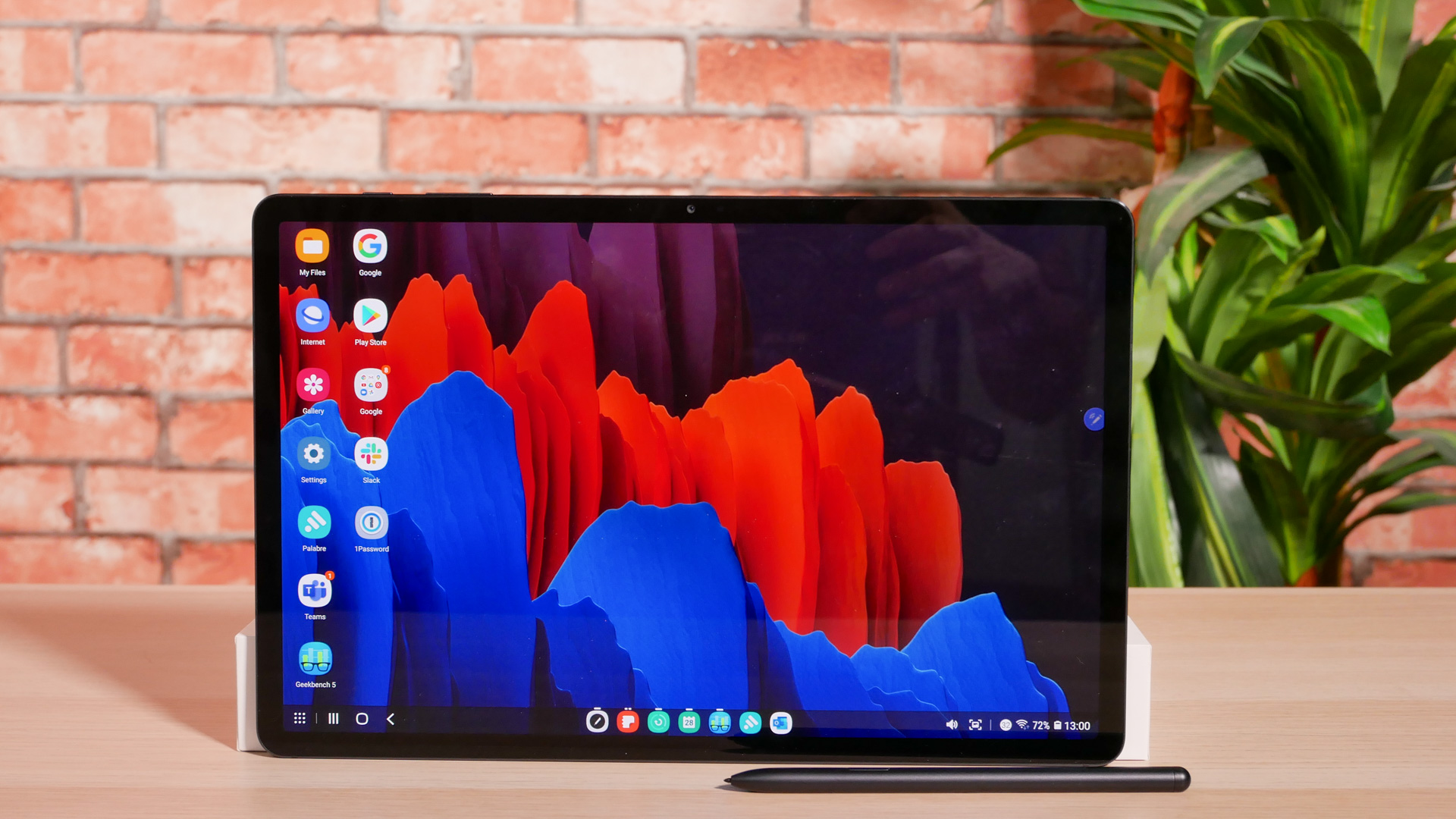
The Samsung Galaxy Tab S7 series means serious business. Both the Galaxy Tab S7 Plus and Galaxy Tab S7 have a whole lot of power in them, and though the differences between them might seem negligible, they will be significant to some buyers.
That said, both of these tablets showcase the best of what Samsung has to offer, and if you’re in the market for an Android tablet that won’t quit on you, then either of these will do the job.
So if you’re having a bit of trouble trying to decide which Galaxy Tab S7 to buy, we’re here to help out. We’ve looked at all the features and specs of both tablets, as well as the price, design, and everything else that you may need to know before you buy.
Samsung Galaxy Tab S7 Plus vs Galaxy Tab S7 price and availability
The standard Samsung Galaxy Tab S7 starts at $649.99 / £619 / AU$1,149, for which you get 6GB of RAM and 128GB of storage. Opt for the Samsung Galaxy Tab S7 Plus and the starting price goes up to $849.99 / £799 / AU$1,549 for the same RAM and storage combination.
In both cases that's for a Wi-Fi-only model, but you can also get cellular versions which push the price up, with both 4G and 5G models of both slates available. You can also get versions with 8GB of RAM and 256GB or 512GB of storage in some places - though not all models are available in all regions.
One place where you can get extra RAM and storage is the UAE, where you'll be looking at AED 3,599 for the Samsung Galaxy Tab S7 Plus with an 8GB / 256GB combo, but no LTE.
Finally, the standard Samsung Galaxy Tab S7 costs AED 2,699 for the Wi-Fi only model, or you can get an LTE version for AED 2,999, and they both come with 128GB of storage.
Samsung Galaxy Tab S7 Plus vs Galaxy Tab S7 design
The most obvious difference between the two tablets is the size of each. The Galaxy Tab S7 Plus measures 285 x 185 x 5.7mm, while the Galaxy Tab S7 comes in at 253.8 x 165.3 x 6.3mm. So as its name suggests, the Tab S7 Plus is larger - though it's also slightly thinner.
The larger screen size on the Galaxy Tab S7 Plus (more on which below) makes it slightly heavier as well, weighing in at 575g as opposed to the 498g of its smaller sibling.
The Samsung Galaxy Tab S7(Image credit: TechRadar)
Both come in a choice of three colors - Mystic Black, Mystic Bronze, and Mystic Silver.
They're both also very thin - though again the Tab S7 Plus is the thinner of the two, and both have an aluminum rear and frame.
Samsung Galaxy Tab S7 Plus vs Galaxy Tab S7 display
This is the first major difference between the two tablets. The Galaxy Tab S7 Plus sports a 12.4-inch Super AMOLED display with a resolution of 1752 x 2800 pixels. Everything from images to video to text looks sharp and crisp, and the screen really is a delight to use.
For those who value screen brightness and clarity, there really is no other choice than opting for the far superior display on the Galaxy Tab S7 Plus.
The Samsung Galaxy Tab S7 Plus(Image credit: Future)
On the Galaxy Tab S7, you’ll have to contend with a smaller, 11-inch LTPS IPS LCD screen, with a resolution of 1600 x 2560 pixels. We don’t mind the slightly lower resolution much - in fact the two slates have a similar pixel density, but the quality of the screen is nowhere near as high as its AMOLED sibling.
Thankfully, both displays have a refresh rate of up to 120Hz and include HDR10+ support, so you still get a decent visual experience even if you skip the AMOLED screen.
Samsung Galaxy Tab S7 Plus vs Galaxy Tab S7 camera and battery
Samsung has stuck exactly the same dual-lens camera setup on both of these tablets. Specifically there's a 13MP f/2.0 main snapper and a 5MP f/2.2 ultra-wide one.
Both tablets also have an 8MP f/2.0 single-lens camera on the front. This unusually - and usefully - is positioned so that it's at the top of the screen when the tablet is held in landscape orientation.
Most tablets mimic phones by having the selfie camera at the top when the slate is held in portrait, but given that most people use a tablet in landscape orientation for video calls and the like, the position on these Samsung slates makes a lot more sense, as the lens is more in line with where you're looking, rather than being off to the side.
The Samsung Galaxy Tab S7(Image credit: TechRadar)
Beyond the camera hardware, both Galaxy Tab S7 models are also packed with camera modes, such Night mode, Pro Video mode, Live Focus (for portraits), and Single Take mode, which automatically takes numerous photos and short videos using all the lenses, so you're sure to end up with something good.
As for the battery, Samsung has equipped the Galaxy Tab S7 Plus with a 10,090mAh one, while the Galaxy Tab S7 comes with a smaller 8,000mAh battery. However, the smaller screen size and the use of LCD rather than OLED means you'll get similar life from it as from the Tab S7 Plus.
Battery life will of course depend on your usage, as well as if you’ve got any other accessories connected to the tablet, such as the keyboard cover. But you should be able to get at least eight to ten hours of active usage from each before needing a recharge.
Samsung Galaxy Tab S7 Plus vs Galaxy Tab S7 specs and features
Both tablets are powered by a Qualcomm Snapdragon 865 Plus processor, which is a beast at handling pretty much any app you can throw at it. You’ll also get the choice of 128GB, 256GB or 512GB of storage, coupled with 6GB or 8GB of RAM, depending on regional availability.
You get the familiar Android 10, along with Samsung’s One UI 2.5 and access to the Google Play store in its entirety. A fingerprint sensor rests in the side-mounted power button on the Galaxy Tab S7, while on the Galaxy Tab S7 Plus it’s located under the display itself.
The Samsung Galaxy Tab S7 Plus(Image credit: Future)
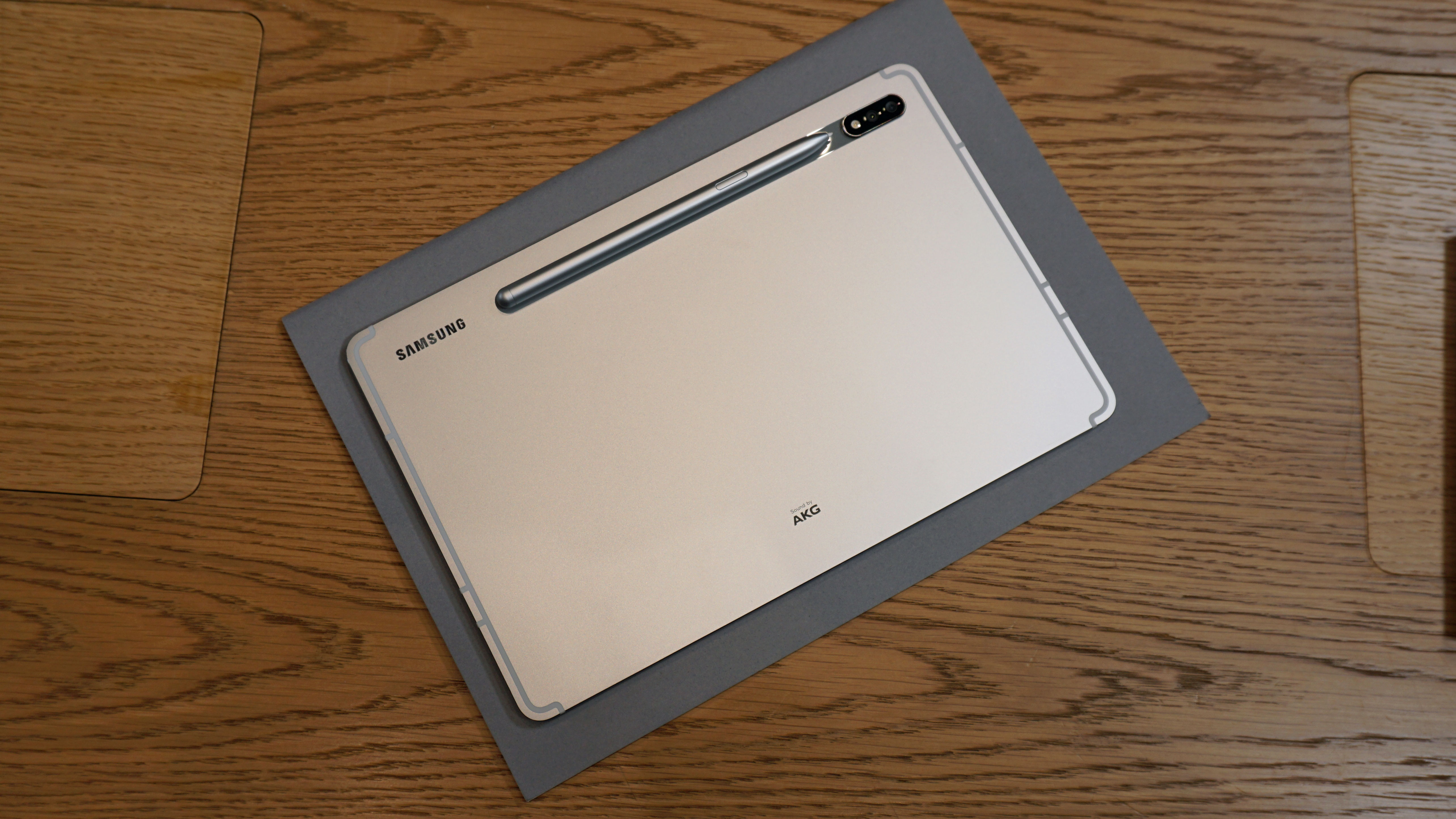
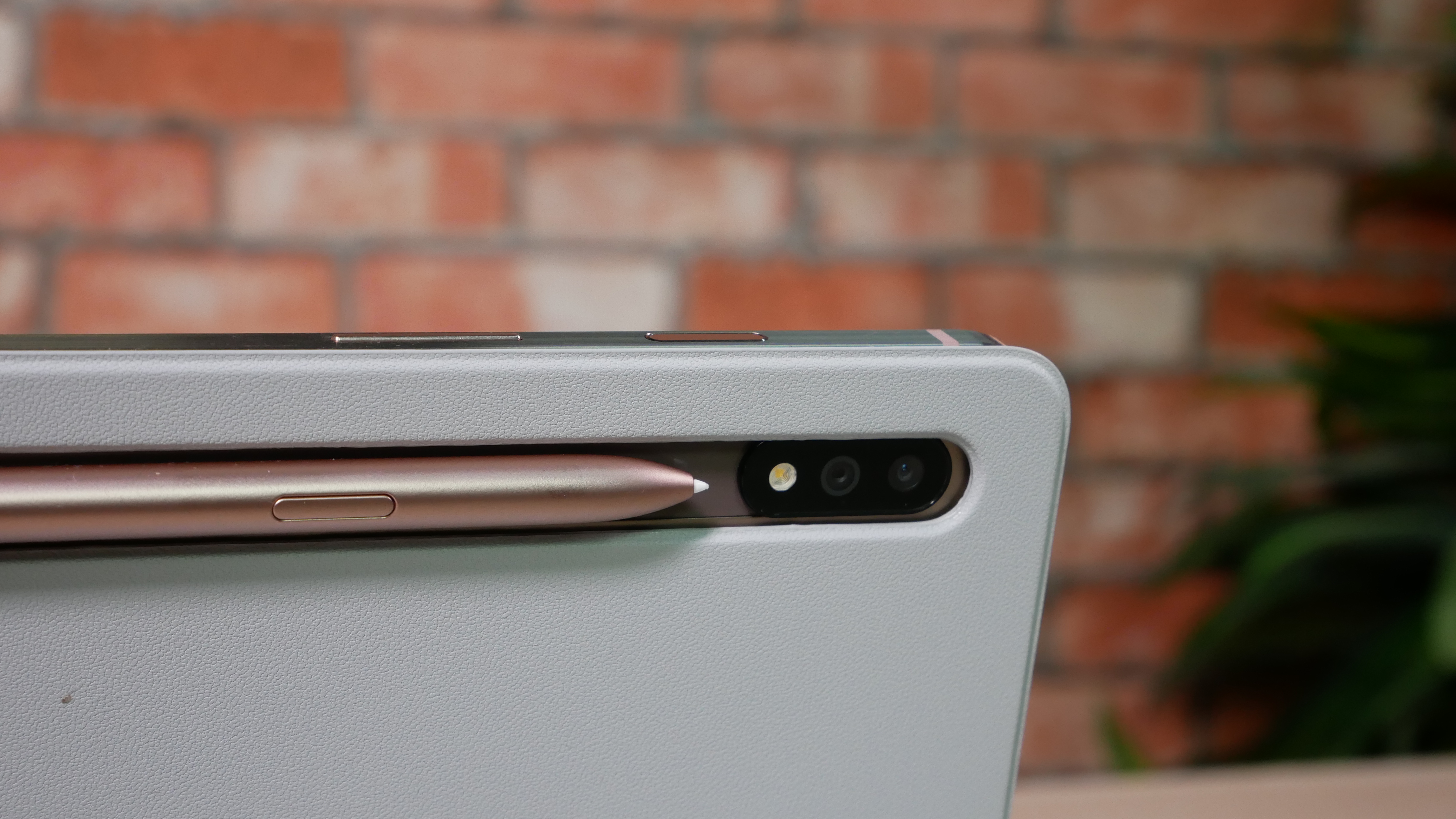
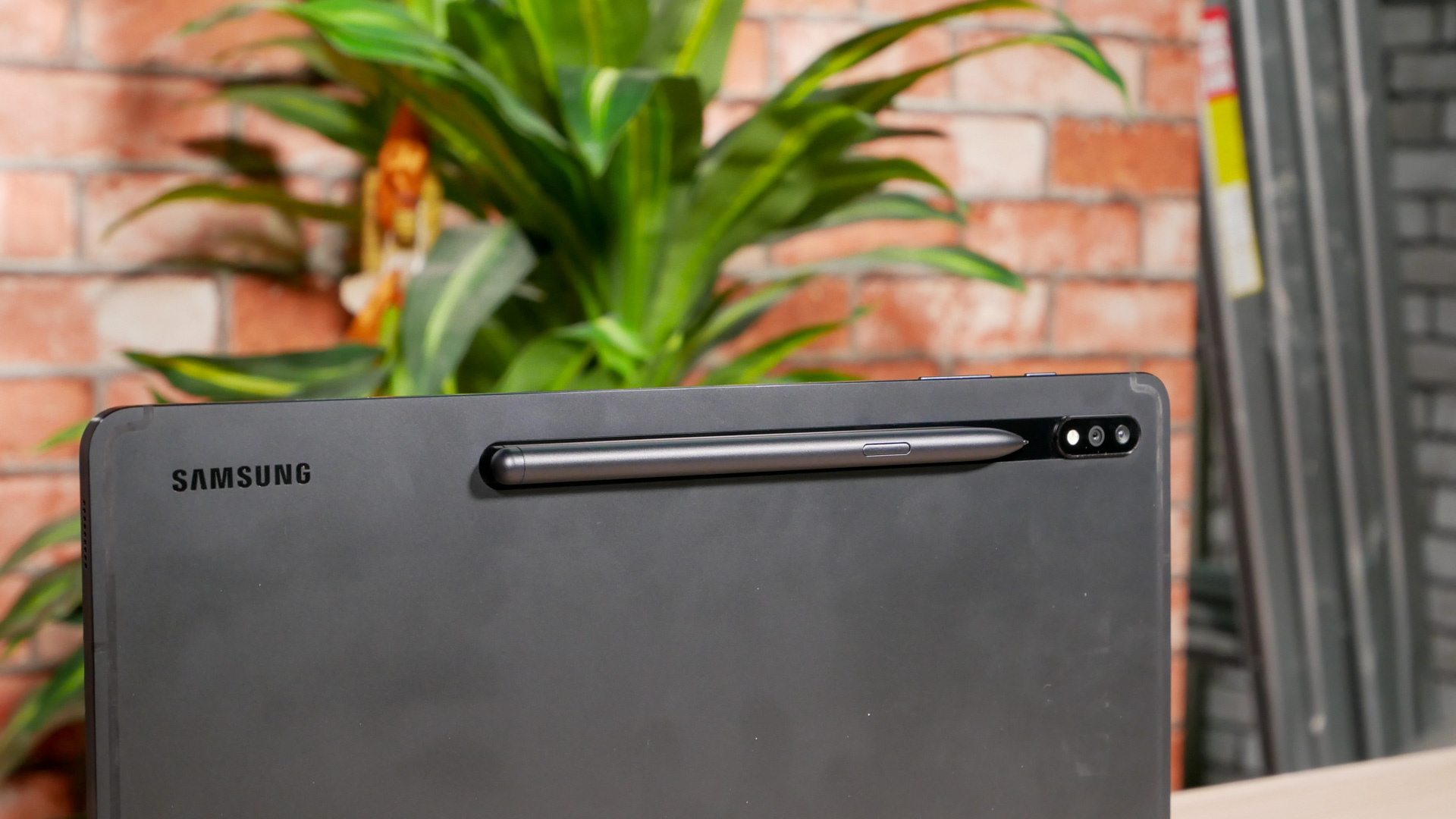
Both tablets come with an S Pen stylus, which magnetically attaches to the back near the camera bump to wirelessly charge. It can also be safely nestled away inside the Book Cover (sold separately), should you choose to keep it somewhere safe.
Pen accuracy for writing and sketching is very satisfactory, and you’ll soon forget that you’re actually writing on a tablet.
One area where the two slates tend to differ is in their connectivity. The Galaxy Tab S7 Plus offers 5G support as well, so if you have a compatible operator in your country, you can enjoy high speed data wherever coverage is available. On the Galaxy Tab S7 you’ll - in most cases - have to contend with regular LTE speeds instead, as while there is a 5G model of it, it's not as widely available.
Takeaway
There are quite a few Android tablets on the market, but the Samsung Galaxy Tab S7 and Tab S7 Plus are definitely the ones to beat. The design, screens, battery life, and overall experience of using both is just beyond what we’ve come to expect on an Android tablet, and makes them both highly recommended.
You can of course up your productivity with each by pairing them with the keyboard cover for easier typing, and while the keys may not be exactly the same as typing on a laptop, they are still very responsive and easy to get used to.
So while it's not perfect as a laptop replacement, the Galaxy Tab S7 is certainly a competent tool for quick note-taking, drawing, or just lying in bed watching some Netflix - and with its bigger, better screen the Galaxy Tab S7 Plus is even better for those things, but it also costs more, and is otherwise a very similar slate.
Foldable phones remain challenging and expensive to make, but the number of manufacturers with a foldable in their smartphone range is slowly growing. Now there's new evidence that Xiaomi could be next in line with a launch.
Code spotted in Xiaomi's MIUI 12 by XDA Developers strongly suggests that the groundwork is being laid for a foldable device codenamed Cetus – folding capabilities are mentioned numerous times in relation to the device display.
The code reveals that we're looking at a phone running MIUI on top of Android 11, carrying a 108MP primary camera, and running some kind of Snapdragon processor (most probably a high-end model).
No other information about the phone is revealed – there's nothing about its size or its release date – but it's one of the biggest hints we've seen so far that Xiaomi has a foldable phone on the way, and it could be arriving at some point next year.
Xiaomi + foldables
If Xiaomi does have a foldable phone in the pipeline, it wouldn't be much of a surprise: we've been hearing rumors about such a device from the Chinese electronics giant for almost two years at this point.
Rumors or not, Xiaomi is a company that likes to stay at the forefront of smartphone innovation, and it won't want the likes of Samsung, Huawei and Motorola getting too much of a head start when it comes to developing foldables.
Earlier this year there was some activity around Xiaomi patents for a device with a screen that bends, and in terms of the device design it had the look of a Huawei Mate Xs – which may or may not be what the finished smartphone ends up looking like.
Considering the mention of Android 11 and the fact that Samsung now has two Folds and a Flip out in the wild, we'd guess that Xiaomi won't want to wait much longer with its own foldable phone – a launch sometime in 2021 is looking likely.
There’s nothing better than finishing off a work day and hitting the couch to watch your favorite team play, the next episode in your latest Netflix show, or an epic movie. But what happens if you’re also keeping an eye on a BBQ? Or just want a little fresh air? An outdoor TV can solve all of these issues – and we certainly wouldn’t blame you for wanting one.
An outdoor TV is also a great way to entertain guests – and in a world of quarantine and isolation, it may be the only way to safely watch TV with a friend or two without getting too close and being inside together.
No matter the reason for considering an outdoor TV, there are a few things you should know before you pull the trigger.
Should I buy an outdoor TV?
There are plenty of reasons to consider buying an outdoor TV. Perhaps you’re setting up an outdoor entertainment area, and need something to tie it together. Or, maybe you want to make sure you don’t miss the game while you’re cooking on a patio grill.
In any case, it’s important to set expectations and make sure you find the best bang for your buck. Indoor TVs are getting better and better – thanks to technology like OLED, HDR, and high resolutions like 4K. Thankfully, outdoor TVs aren’t missing out on that, but the latest technology is a little slower to show up on these outdoor TVs than it is indoor ones. The ones that do have this tech are often more expensive than indoor options too.
Having said that, if you don’t mind spending a little extra cash to get the right product, and feel that an outdoor TV would complete your outdoor setup, then it may be worth buying one.
(Image credit: SunBrite)
Is it safe to put a TV outdoors?
There are two main issues to consider when buying a TV for outdoor use -- weather, and security. Let’s start with weather.
There are a few ways to ensure that your TV doesn’t get damaged in bad weather. The first way to do so is to buy a TV that was designed and built to be used outside. These TVs usually have some kind of weather-proofing, and a display that is bright enough to offer a good image even in direct sunlight – but are often bulkier and more expensive than their indoor counterparts.
The other option is you buy a regular TV, but keep it in a weather-proof case that you close up when you’re not using the TV. In this situation, you’ll have to ensure that you’re not using the TV when it’s raining or snowing, and this probably isn’t the best option for areas where it gets really cold or really hot. The advantage to this, however, is that you can spend less on a TV -- and in some situations, it may look better too.
Ultimately, if you can afford doing so we recommend buying a TV that was designed for outdoor use. This ensures that even if the weather gets a little crazy, your TV should remain perfectly fine – and you don’t have to worry about perfectly sealing up your TV when you’re not using it. That’s true even under a covered patio. There are other risks besides rain – such as insects, temperature variation, and so on.
The other main issue is security. It’s a good idea to ensure that the area you keep your outdoor TV is as hidden as possible from passers-by. And, it’s also a good idea to have a security camera set up outside in case something does happen. Of course, you should also make sure that your TV is properly bolted into a wall, rather than just having it on a stand like you might inside.
If you want to put a TV outdoors, you’re going to have to pay up a little. If you buy an actual purpose-built TV, you’re looking at around $1,000 on the low-end, and around $3,000 for a mid range option.
If you want to save cash, buying a standard TV and outdoor TV cabinet may be the way to go, considering you could buy a normal TV for a relatively small amount, and a cabinet for not much more. All in, you should be able to put together a solution for well under the cost of a dedicated outdoor TV.
The official 2020 election apps of both President Trump and Joe Biden feature significant security issues, researchers have claimed.
With the US Presidential election now just a few days away, doubts have been raised over the security of the official apps used by both candidates by researchers at security firm Promon.
The company found that both the Trump and Biden apps are vulnerable to StrandHogg, a well-known and critical Android vulnerability that allows hackers to easily hijack apps and overlay fake screens which can depict anything the attacker wants, including screens that ask the user to hand over sensitive information, such as usernames and passwords.
The news comes despite President Trump recently declaring at a campaign rally that, "Nobody gets hacked. To get hacked you need somebody with 197 IQ and he needs about 15% of your password”.
Promon was able to use StrandHogg to overlay fake screens - one on Trump’s app, calling on users to donate to the Biden campaign, and another on official the Biden app, showing the Democratic candidate in a MAGA hat, urging users to vote for Trump.
“The President’s statement sadly reflects a widely believed sentiment that secure passwords will protect you from hackers and that hacking, in general, doesn’t affect the average citizen," noted Tom Lysemose Hansen, CTO at Promon.
"Sadly, this isn’t the case. Absolutely nothing is “unhackable” and even the most secure, high profile accounts are vulnerable should the user fall victim to a phishing attack which seeks usernames and passwords."
The report comes shortly after the official Trump re-election campaign in the state of Wisconsin said it had lost $2.3 million to hackers who carried out a phishing attack.
Update (November 1):Micromax showed off the phones, debunking the correlation between In Mobiles and Huawei/Honor. The original story has been retained below, but it no longer holds true.
Micromax is set to make a big return to the Indian smartphone market next week, with the launch of the new ‘In’ series of smartphones. While we await more details around its specs and pricing, conspiracy theorists think that the company will be rebadging Honor phones this time.
Earlier this year, Micromax announced that it will resume selling smartphones in India. Eventual developments confirmed that this return will happen under a new umbrella — In Mobiles. On November 3, two budget devices will be launched in the sub Rs 15,000 segment, powered by the gaming-centric MediaTek Helio G25 and the G35 chipsets. The rest of the specifications are yet to be officially confirmed.
(Image credit: Future)
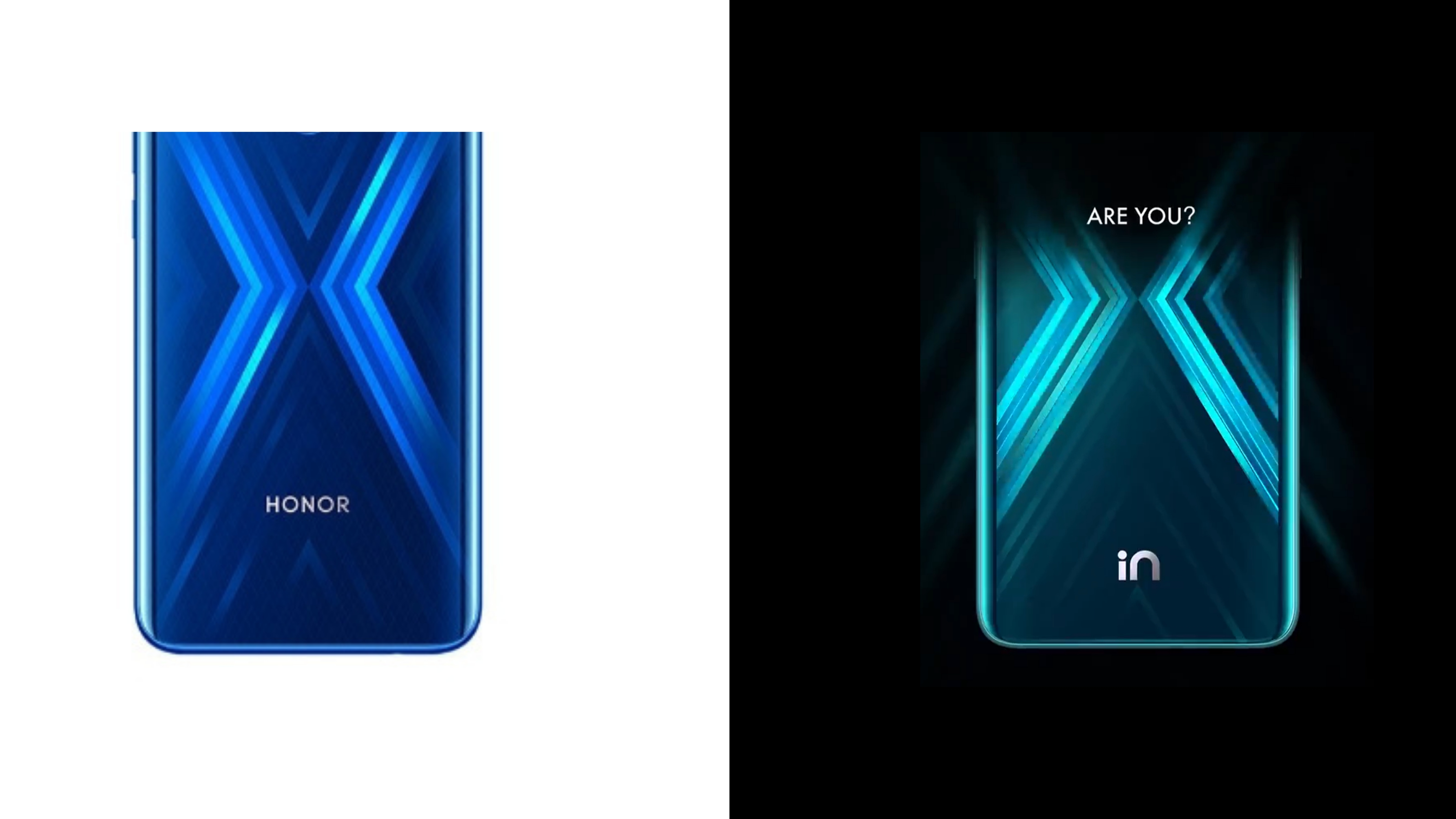
In the usual pre-launch buzz campaigns, the company shared another teaser which shows a part of the back of the phone: a glossy panel with an X-shaped pattern that shines according to the light hitting it. Twitter users were quick to point out how familiar this design characteristic was to the Honor 9X which was launched a few months ago. This snowballed into a cloud of doubt over Micromax’s operations.
Micromax has always prided itself in being an Indian smartphone brand. However, many of its phones were actually just rebranded devices from smaller Chinese OEMs. These manufacturers would supply the base hardware, while Micromax would take care of the software and after-sales service. Many believe that Micromax might be up to something similar with its 2020 return unless it is ready to invest hundreds of crores and take care of the entire supply chain itself.
It’s no secret that Honor and Huawei have had a tough last few months, withdrawing from many markets and slowing down in others. Getting rid of any excess inventory in this way might not be the worst idea in that sense. Of course, it is too early to tell if that is actually the case or just coincidence.
If it is true, this wouldn’t be the first partnership between the two brands. Back in July 2019, Huawei announced a strategic partnership with Micromax to use its extensive retailer network across India as a destination for sales and service.
We suggest you take this with a grain of salt as there is no real evidence suggesting a bigger partnership between the two companies. We should get a lot more clarity next week.
Asus TUF 15.6-inch laptop |$999.99$899.99 at Best Buy
(roughly £700) With a GeForce RTX 2060 graphics card and AMD Ryzen 7 4800H processor, this Asus is easily the most powerful laptop for under $1000 right now. The 512GB SSD and the $100 discount are just the cherry on the top ahead of Black Friday. View Deal
If you've been searching for a solid workhorse laptop that can also be used after dark as a gaming powerhouse, then you might want to consider the 15.6-inch Asus TUF FA506IV-BR7N12 - available for just under $800 at Best Buy - that’s $200 off.
With an eight core AMD Ryzen 7 4800H processor, a 512GB PCIe SSD and a GeForce RTX 2060 graphics chip (with 6GB GDDR6 memory), this beastly Asus device is probably the most powerful laptop you can buy for under $1000 right now.
You seldom see components this powerful even in machines priced at $999.99, so in terms of bang for your buck, it's definitely up there.
The specs on this machine are so powerful, in fact, that it could even have plenty of applications outside of gaming, such as 4K video editing or CPU intensive music production.
It's also a prime candidate for a cheap VR laptop, as the 60Hz refresh rate display won't matter at all when you're inside your headset and the RTX 2060 will keep frame rates super silky smooth.
This machine comes with 8GB memory (DDR4 3200MHz), which is probably the bare minimum you'd want for gaming. At $800, and with an RTX 2060 and Ryzen 7, this is pretty understandable in our books.
Luckily, RAM is the easiest and cheapest component to upgrade in a laptop, so picking up another stick and installing it won't set you back much, and should yield great results.
It's also worth noting you get a free six-month antivirus package (Webroot Internet Security) for three devices, which itself is worth $29.99.
It's a universal fact that Apple is by no means an affordable brand. Repeatedly clashing horns with Samsung to see who can raise phone prices higher, the iconic American brand has often come out on top.
However, 2020 seems to be showing Apple have a change of heart (or a change of marketing plans). This year alone, Apple has put in the work to release not one, but two affordable phones.
And when we say affordable, we use that term very loosely with one of those handsets. While the iPhone SE is a truly affordable phone, offering a device with a high-end processor for just $399/£419, Apple's other 'affordable' 2020 handset starts at $699/£699.
This device is none other than Apple's new iPhone 12 Mini. As one of the four featured iPhone 12 devices, the Mini really commits to its name at just 5.4-inches in size...but is this pocket-sized device actually good value for your money...? We would argue, yes.
Cut down the price with iPhone 12 Mini deals:
While the Mini is yet to be made available, with pre-orders launching on Friday, November 6, the incredibly obvious assumption is that it will be a fair bit cheaper than iPhone 12 deals.
And yet, despite the £100/$100 disparity in price, the iPhone 12 Mini and regular 12 have all of the most crucial specs in common. Both feature Apple's latest A14 Bionic chip, both make use of the new MagSafe feature, both use Dolby HDR camera features and both are 5G-enabled.
In fact, the iPhone 12 Mini in all of its tiny glory, is the smallest 5G device around right now. What this all adds up to is the fact that unless a 5.4-inch device is going to feel far too tiny in your hands, the iPhone 12 Mini is the best value of the two cheaper iPhone 12 handsets.
And in the red corner...iPhone 11 deals:
We said right at the start that Apple had two more affordable phones in 2020 and we haven't forgotten about that. The iPhone SE, while by no means revolutionary in its looks (iPhone 8, anyone?) is Apple's cheapest handset.
And yet, it lacks the excitement of the iPhone 12 Mini. It sticks with 4G, it's not exactly winning awards for battery, the screen uses old tech and the design is very much borrowing from older devices.
Obviously for those on a budget, the iPhone SE is perfect but for those who want something a bit newer and interesting, it lacks enough intrigue and future-proofing to keep you going for years.
So the iPhone 12 Mini wins, right? Well, time for a curveball! The iPhone 11 saw a very considerable price cut thanks to the iPhone 12 launch and when you consider all of the factors...iPhone 11 deals actually look like the best cheap iPhone in 2020.
Our Deputy Editor John Mccann said it best in his comparison of the iPhone 12 and 11 - "it's all too easy to be seduced by shiny new things". 5G isn't making waves yet and other than Apple's new Magsafe feature...the iPhone 12 range doesn't make huge changes over the iPhone 11.
Holding off until Black Friday to buy:
The iPhone 12 Mini isn't actually available until November 14 and just two weeks after that is Black Friday. With this in mind, we would suggest holding off for Black Friday iPhone deals to see if you can score a discount.
While there is no way to guarantee we will see iPhone 12 deals across Black Friday, especially considering the incredibly quick turn around, iPhone 11 deals and iPhone SE deals are almost certain.
If any of the three cheap iPhones appeal to you or for that fact, any mobile phone deals in general, holding out for Black Friday could see you receive a hefty discount.
from TechRadar - All the latest technology news https://ift.tt/3jHua81