https://ift.tt/154AwVo Galaxy M32 5G will be available to purchase in India today, September 2, at noon. It is powered by an octa-core MediaTek Dimensity SoC and comes with a quad rear camera setup. At the front, there is a notch for the selfie shooter.
https://ift.tt/1AODrh9 has announced that it is hosting a Surface hardware event on September 22. The virtual event could be when the Redmond, Washington-based tech giant launches the Surface Duo 2 smartphone as well as successors to the Surface Book 3 and Surface Pro 7.
Realme 8s and Realme 8i smartphones will be launched in India on September 9. The company has just announced the launch date. The Realme 8s will be India's first Dimsnsity 810 powered device while the Realme 8i will be India's first Helio G96 powered smartphone.
Realme Pad, the company's first tablet which has been in the news for a few months is also expected to launch on the same day. But, the company hasn't announced the date officially yet. However, the landing page for the same is now live on Realme.com and Flipkart which means the launch is not too far away.
On September 9, the company will host an online event at 12:30 pm IST where the phones will be unveiled. Unless these products are launched elsewhere before September 9, these will make their global debut in India.
We are all set to provide you with an ultimate performer that is #realme8s5G. It features the World's First MediaTek Dimensity 810 5G Processor to give you an #InfinitelyPowerful experience.Are you excited? pic.twitter.com/lNU9JocL5GSeptember 2, 2021
The Realme 8s is confirmed to be powered by the new MediaTek Dimensity 810 SoC and will have 5G connectivity. The Virtual RAM feature is also confirmed on the Realme 8s. It is said to sport a 6.5-inch 90Hz refresh rate display. This chipset will be accompanied by either 6GB or 8GB RAM options.
The Realme 8i on the other hand could bring a 120Hz display on a budget. The latest leak reveals the Realme 8i could be powered by the new MediaTek Helio G96 chipset paired with 4GB of RAM and 128GB of UFS 2.2 storage. The Realme 8i could pack in a triple-camera array with a 50MP main camera. A 5,000mAh battery unit is also expected.
Realme Pad: what to expect
After entering the laptop space recently, the company is stepping into the tablet market in India with its first-ever tablet. According to a post on Weibo from Digital Chat Station account on Weibo, the Realme Pad will be a budget-friendly device powered by MediaTek Helio G80 chipset. The Helio G80 SoC is based on 12nm architecture with up to 1.8GHz clock speed.
The device is expected to run on Android 11 and feature 4GB of RAM. Realme has also teased the design of the Realme Pad so, we can expect a sleek design.
As many of us get used to working from home for the foreseeable future, it's more important than ever to have one of the best home printers in your house. Just like in the office, you need a printer in your household that can handle printing without a snag. After all, your time at home is now just as important as your time at work ever was, especially given the current situation and compulsory work from home periods.
The best home printers need to be more versatile than regular printers since the modern household needs to print out a wide range of documents. You'll often find you need to print out forms and documents in your day to day.
Plus, a home printer that can do an excellent job printing your holiday snaps will save you from shelling out a lot of money. And, unlike big and bulky business printers, these are all-in-one printers that take up a small bit of space.
No matter what size of household and family demands you have, you’ll find the best home printer for you on this list. And, our price comparison tool makes sure you get the best deals on the one you pick as well.
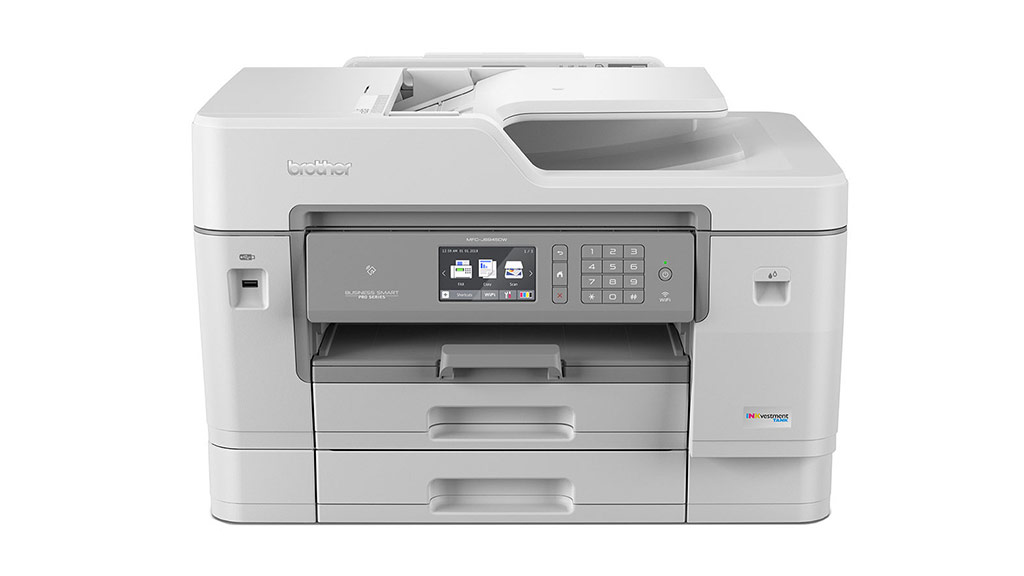
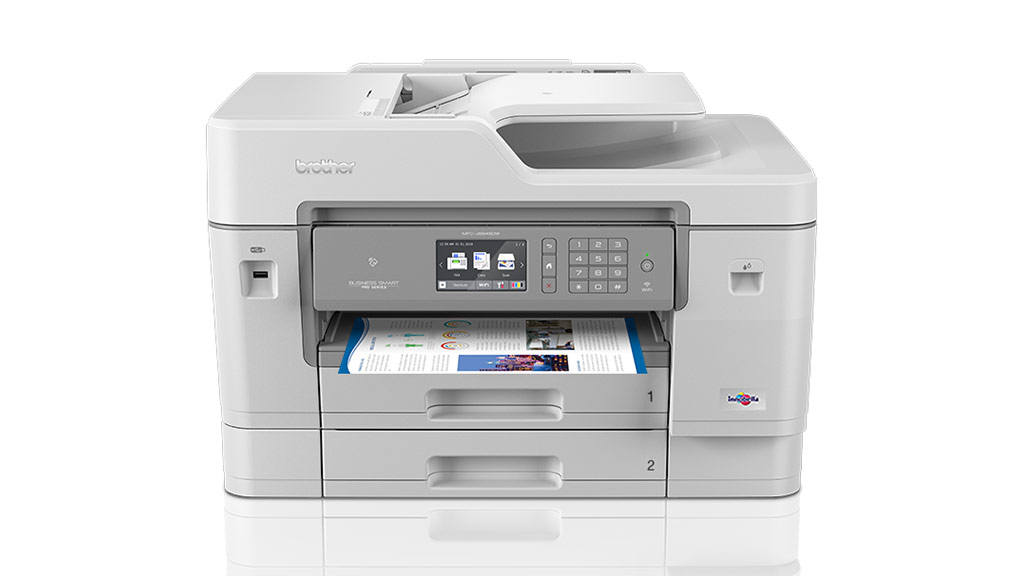
Category: All-in-one inkjet printer | Print speed: Black: 22/20 ipm, Colour: 22/20 ipm | Paper capacity: 600 sheets (2-tray) | Paper size: up to A3 | Weight: 24.2 kg*
Two-sided printing
Reliable enough for small businesses
Prints, scans, copies and faxes
Loud and slow
The Brother MFC-J6945DW is a monster printer. It’s incredibly efficient, being able to print for up to a year without having to change its ink cartridge. And, it’s also a feature-rich and intuitive machine perfect for any home or small business office. You can print to it from just about any device wirelessly and, for mobile, you don’t even need a network to do it, thanks to its NFC (near field communication) technology that connects directly to the printer. While interfacing with its 9.3cm colour display, you can even print from and scan to the cloud.
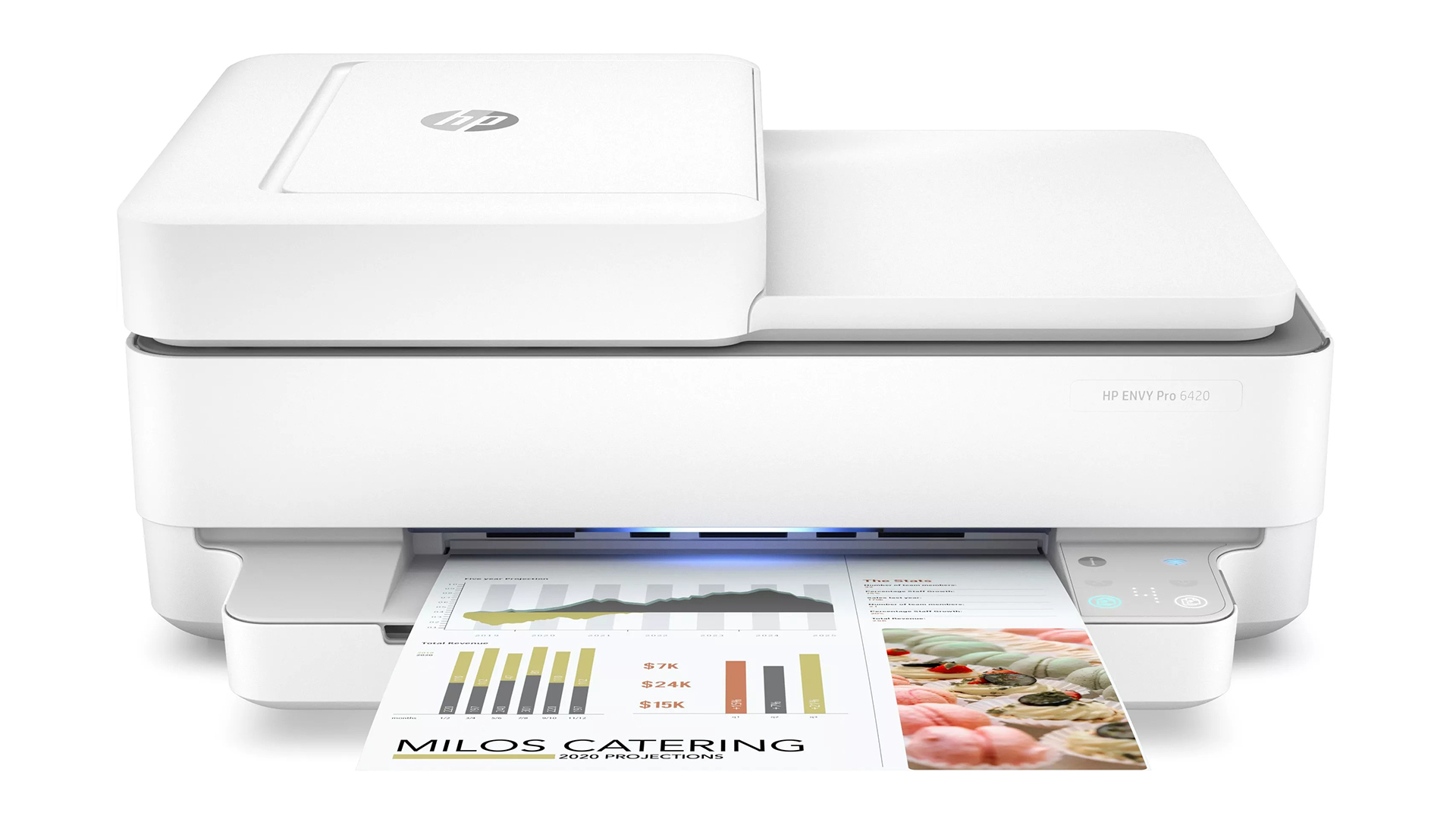
Category: All-in-one color inkjet printer | Print speed: 10ppm (mono) | Paper capacity: 100 sheets | Paper size: up to A4 | Weight: 6.16kg
Space saving design
Strong wireless connectivity
Slow print speed
Wasteful tri-color cartridge
The HP Envy Pro 6420 is a compact and inexpensive inkjet with all the features you could ask for from a home office printer. It can print, scan, copy and even fax via your smartphone. The print speed is slow, but it can duplex print and photocopy a stack of up to 35 pages with its inbuilt ADF (automatic document scanner). Instead of an Ethernet port, you have both Bluetooth and self-healing Wi-Fi built in, making mobile printing via HP’s iOS/Android app particularly easy.
We were impressed by its ease of use and overall print quality, while its lack of an LCD display, the limited paper capacity and slow print speed can all be overlooked if you’re printing on a small scale. Just bear in mind that the Envy Pro works best with HP's ink subscription service, Instant Ink which ties you to a (low) recurrent monthly fee.
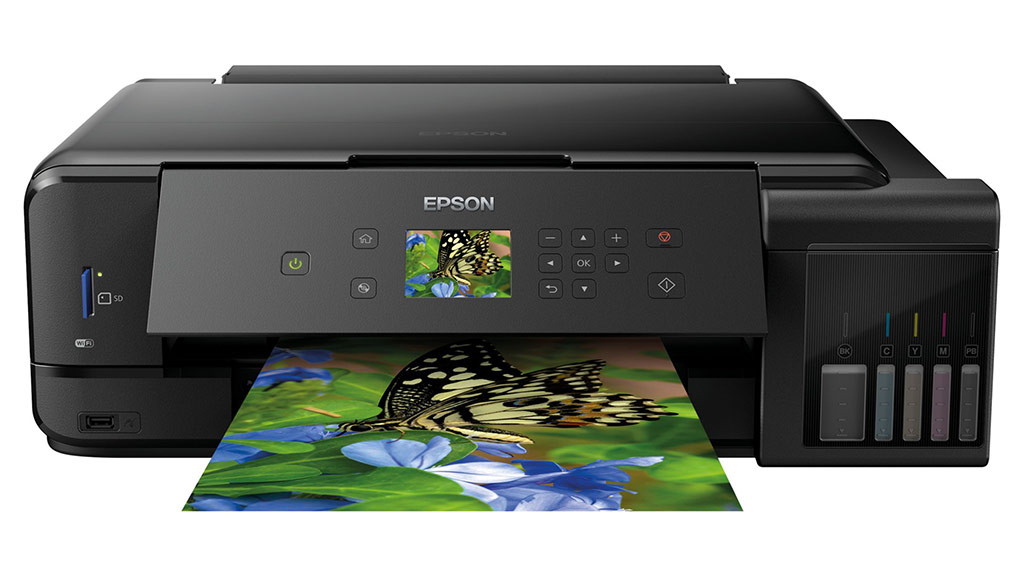
Category: All-in-one cartridge-free printer | Print speed: Black: 15 ISO ppm, Color: 8 ISO ppm | Paper capacity: 150 sheets | Paper size: Up to A6 | Weight: 7.3kg
Cost-effective printing
2 years-worth of ink included
Five-colour ink system works well
Not cheap
Small, non-touchscreen interface
No ADF, NFC or fax
Whether you’re trying to run a more eco-friendly household or you’re just fed up with having to run out go get ink at the most inconvenient times – in the middle of printing your important documents, for example – you might love the Epson EcoTank ET-7750. It's a multi-function printer that sits at the top of the EcoTank product tree and although price is alarming, it's worth every penny. The five-colour refillable ink tank system is a huge improvement in image quality thanks to the addition of a dedicated photo black pigment ink, and the build quality is streets ahead. This machine can also handle A3/magazine-sized paper and boasts fast duplex print speeds and high-resolution photo printing.
Category: colour laser printer | Print speed: 26ppm | Paper capacity: 250 sheets | Paper size: up to A4 | Weight: 21kg
Fast duplex printing
Prints quietly
Expensive
Primitive interface
This stout laser printer takes up relatively little space, given its high capacity for paper and toner. It means you can keep printing quickly and efficiently and with lower running costs than an equivalent inkjet. The display is rather fiddly, but in all other respects, this colour printer is easy to use and can be relied upon for immaculate mono and colour documents time after time.
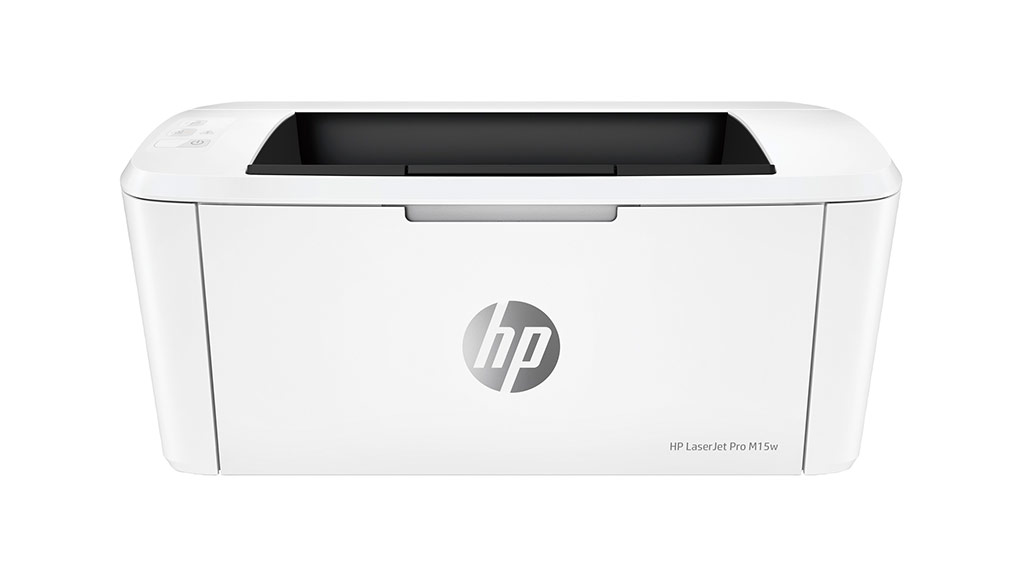
World’s smallest laser printer is also one of the cheapest
Category: colour laser printer | Print speed: 19ppm | Paper capacity: 100 sheets | Paper size: up to A4 | Weight: 3.8kg
Very small!
Tempting price
No duplex printing
No display
When we tested it, this was the smallest laser printer around and likely to remain so. Being as small and inexpensive as an inkjet, yet with all the speed, economy and consistency of a laser, the LaserJet Pro M15w is in many ways the ideal home printer. It manages to hold one hundred sheets of paper and print on them at the respectable rate of 19ppm. There’s no duplex mode, sadly, and no display, but at this price it’s hard to argue.
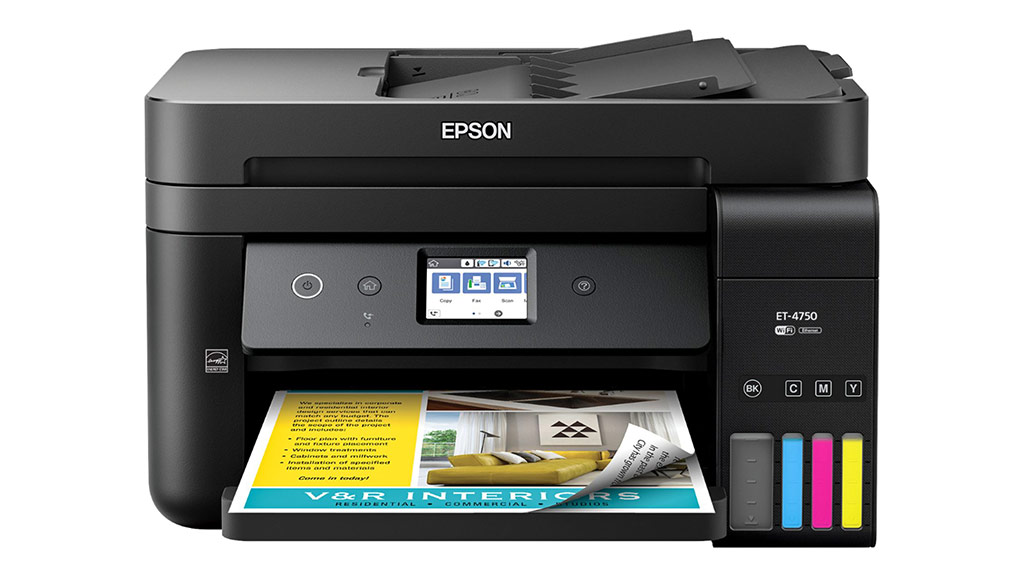
Category: colour inkjet printer | Print speed: mono: 15ppm, colour: 8ppm | Paper capacity: 250 sheets | Paper size: up to A4 | Weight: 6.8kg
Cartridge-free printing
250-sheet capacity
2 years-worth of ink included
It's pricey
Touch screen is quite small
Known as Epson's all-rounder, this all-in-one inkjet printer admittedly costs a pretty penny up-front, but delivers low-cost performance in the long run thanks to its high-yield ink tanks and two years worth of ink included – according to Epson, you can get a total of total of 15,000 text pages (or 12,000 color pages) just from the ink that comes supplied in the box, which is exceptionally great value. If you're looking for a great printer for your home office that will go the distance before needing to be topped up again, the Epson WorkForce ET-4750 is a great option.
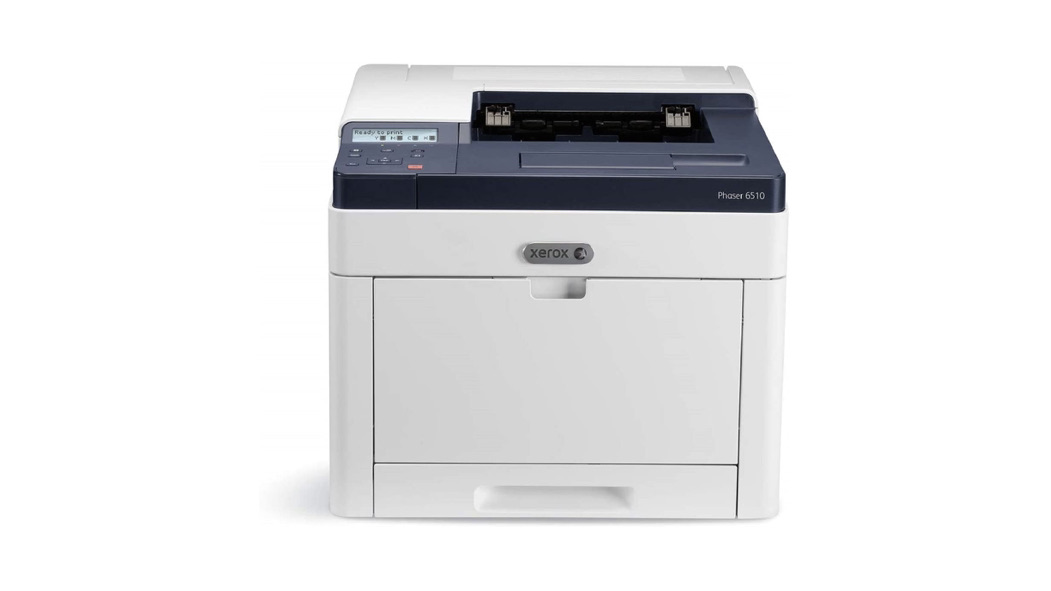
Category: colour laser printer | Print speed: 28ppm | Paper capacity: 250 + 50 sheets | Paper size: up to A4 | Weight: 23.8kg
Rugged and secure
Rapid print speed
Small display
No Wi-Fi on the DN model
You probably associate Xerox with office printers, but the brand’s entry-level range would suit a home office well, especially one with high print demands. The Xerox Phaser 6510DN has a rapid print speed of 28 pages per minute and room for 250 sheets of A3 in its main tray. This is expandable to 850 sheets and it ships with enough toner for 1,000 colour or 1,500 mono pages. It also has all of Xerox’s usual high build quality and security features. Choose the DNI model if you need Wi-Fi in addition to the Ethernet port.
Category: 4-in-1 colour laser MFD | Print speed: 22ppm | Paper capacity: 600 sheets | Paper size: up to A3 | Weight: 21kg
A3 capability
High paper capacity
Inconsistent prints
Less economical than laser
This big Brother blurs the line between home and office printer by combining the fast print speed and high capacity of a laser machine with the superior photo finish of an inkjet. We would recommend it for both applications because although it is smaller than the laser equivalent MFC-L8690CDW, the inkjet MFC-J6945DW can handle A3 paper. There’s really nothing that this fully featured 4-in-1 can’t do and it carries out all tasks satisfactorily.
A fully-featured 4-in-1 scaled down for the small office
Category: Monochrome laser printer | Print speed: 34ppm | Paper capacity: 250 sheets | Paper size: up to A4 | Weight: 10kg
Fast print speed
Built-in Wi-Fi
Strong security
No front USB
Stingy starter cartridge
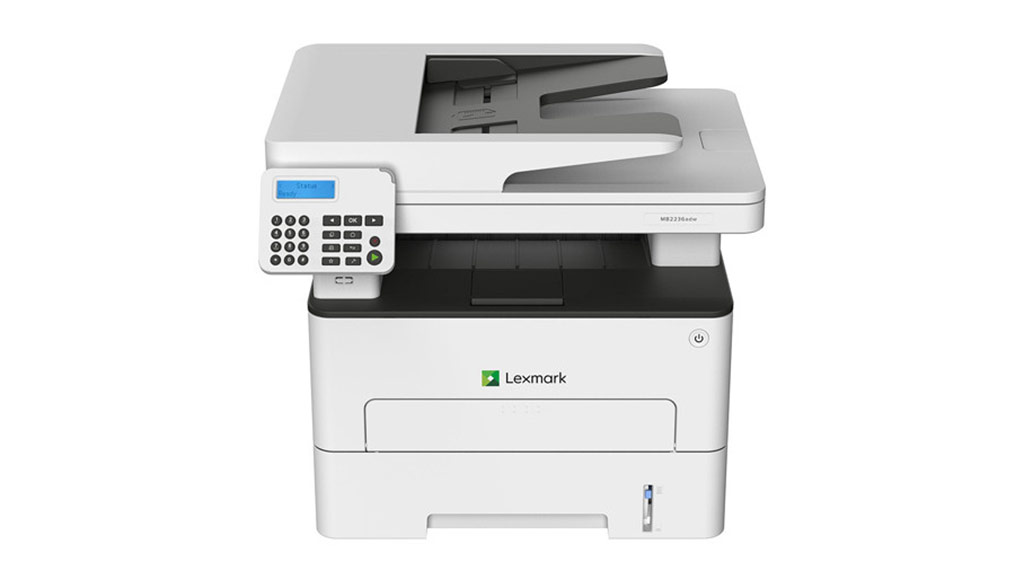
If you want all the functionality of a photocopier-style four-in-one, but can’t justify the expense of a premium machine, then the Lexmark MB2236ADWE is likely to fit well in your office. The smaller size is an advantage and the price is attractive. Printing is fast enough and so is the quality provided you stick to dedicated laser paper. It’s a pity there’s no Wi-Fi Direct facility, or an active front USB input, but that aside, you're getting a lot for your money here.
A fast and affordable entry-level laser with low running costs
Category: Monochrome laser printer | Print speed: Up to 26 ppm | Paper capacity: 251 sheets | Paper size: up to A4 | Weight: 5.9 kg
Fast and quiet
Super affordable
Double-sided printing
Monochrome only
No bells or whistles
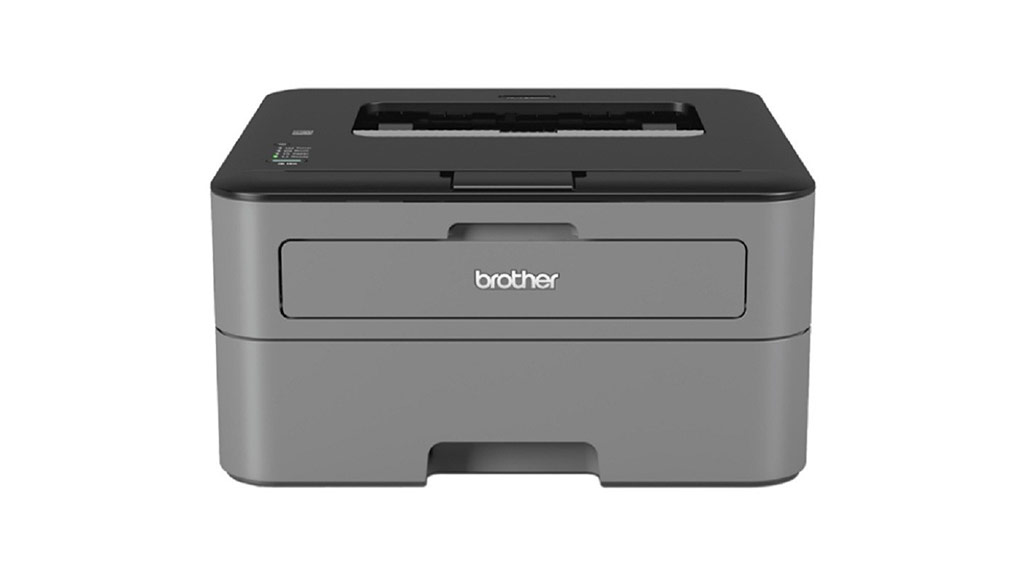
The Brother HL-L2300D specs are impressive for the price: it promises 26ppm print speeds, has 8MB of RAM on board and delivers a maximum resolution of 2,400 x 600 dpi. The paper tray holds 250 sheets, there's a second single-sheet paper feed for labels, envelopes and thicker media, and the printer can print double-sided without any human intervention. Of course, you won't find any bells or whistles here, but honestly, its simplicity is refreshing. With no overly complex Wi-Fi or cloud features to configure, installing the HL-L2300D is as simple as plugging a cable into it, and that means there's no danger that it'll go in a huff when you need to print something important. It's compact, quiet and impressively fast, and it offers a lot of bang for your buck. Double-sided printing is particularly good to have in a printer that costs so little to buy and run.
Vodafone has today announced the launch of its own 5G home internet plans, following in the footsteps of both Telstra and Optus, whose own plans launched some time ago given their head-start with rolling out their services.
From today, new and existing Vodafone customers can choose between two plans for 5G home internet – for AU$75p/m you can reach download speeds up to 100Mbps, or forking out AU$85p/m sees this limit uncapped.
Both offer unlimited data, a AU$5 discount if you already have a Vodafone mobile plan, and your first month free if you sign up before January 31, 2022. You can't bring your own modem with either plan, so you'll need to bundle the plan with Vodafone's own, but the good news is that it's free if you stay connected for 36 months (otherwise it's AU$612 in total, which can be paid off monthly at AU$17p/m).
Vodafone's new 5G home internet plans offer a great alternative to the NBN with its unlimited data cap, granted your home is in the coverage zone. There's a AU$5 monthly discount if you already have a Vodafone mobile plan and you get your first month free if you sign up before January 31, 2022. As we mentioned, this plan has a download speed cap of 100Mbps, but you can also opt for a plan with an uncapped speed limit for AU$85/pm instead – a great option if you're at the heart of one the 5G coverage zones.
As is the case with anything 5G-related in Australia, you'll need to check the network's coverage map to see if your area has access to the latest mobile data standard. The map has a key showing both 5G indoor and 5G outdoor coverage, the former of which is important for these new plans and substantially smaller than the latter.
If you find yourself right on the fringe of one of the coverage zones, it's likely worth waiting a little longer as, from our experience, performance in these areas can be worse than standard 4G coverage with slower download and upload speeds.
Vodafone is still quite a bit behind both Telstra and Optus in terms of 5G availability, with Ookla reporting in April that just 3.4% of Vodafone customers were actually able to use 5G, compared with Optus' 13.6% and Telstra's whopping 32.8%.
With that in mind, the telco plans to "have over 1,000 sites live by the end of 2021" in Sydney, Melbourne, Brisbane, Adelaide, Perth and Canberra, so there may be some shift in those figures over the course of the year, but we doubt it will be significant.
If you're lucky enough to be in one of Vodafone's 5G indoor coverage zones, these plans offer a great alternative to NBN services if you're unable to get a decent fixed line connection
It's also a great proposition in terms of value – considering the unlimited data cap and 100Mbps speed cap on the AU$75p/m plan, it works out cheaper than the best NBN 100 plans on offer at the moment.
Australia has some of the fastest 5G speeds in the world, with a median download speed of 283.56Mbps (according to the same Ookla report mentioned previously). Unfortunately, it was Optus and Telstra doing the heavy lifting here, with median speeds of 309.86Mbps and 295.00Mbps respectively, compared with Vodafone's 184.98Mbps.
It's also worth considering that 5G is a mobile signal and can fluctuate significantly as a result, with its speeds being largely dependent on signal strength at any given time.
In theory, if you are right in the centre of one of Vodafone's coverage zones and have the uncapped plan, you could attain download speeds much faster than an equivalent NBN plan, but for the vast majority of users, we suspect a fixed broadband connection would be preferable if you're able to get one.
Samsung is updating its Knox mobile security suite and cloud service with new features and upgrades that will improve usability for both end users as well as admins.
According to a new blog post from the Korean tech giant, the latest Knox cloud service release will provide improvements and enhancements from a user experience and functionality standpoint.
Of the common components receiving changes the first is the Knox account and license. Registered SamsungKnox.com users will now be able to use the Sign in with Google option on the login screen to login with a Google account that is registered with their corporate email domain and is linked to their Samsung account.
Next off, the Knox Admin Portal will now allow users to show and hide services on the left navigation menu. The services that users choose to show will then be visible on the menu as well as during the device sync process. Samsung has also added the ability to use Ping Identity for Single-Sign-On (SSO) in the Knox Admin Portal.
Knox product updates
As part of the latest Knox cloud service release, Knox Manage is getting iPad OS support in addition to support for devices running iOS 13 or higher. This means that IT admins can now manage iPad devices regardless of their OS version in addition to Samsung phones.
Knox Manage also received another big update and IT admins now have the ability to enroll multiple Windows devices at the same time.
Knox Asset Intelligence, which is Samsung's MDM solution, meanwhile now allows you to track, locate and retrieve assets in large public and private spaces using a new interactive and accurate indoor positioning solution. By using the new Finder app, you can set up your devices to report their locations as blue dots in the console.
If your organization has frontline workers using Knox Capture, you can now get detailed insights and trends about barcode scanning on enrolled devices and identify scan issues. These captured insights include total scan counts per each barcode symbol, hourly scan count distributions and more.
Since releasing Knox back in 2013, Samsung has continued to make a number of improvements to the platform to help organizations as well as consumers secure and keep track of their devices.
Invasive cannibalistic cane toad tadpoles in Australia eat so many of their younger hatchlings that they've become locked into an accelerating evolutionary arms race.
The cane toad (Rhinella marina) hatchlings, born by the thousands in small pools Down Under, have no natural predators in Australia, but they do have to contend with older cane toad tadpoles who feast on the defenseless amphibian younglings. This is causing the hatchlings to develop at a breakneck pace into tadpoles themselves, according to a new study in the Proceedings of the National Academy of Sciences of the United States of America, causing the tadpoles to in turn become even more aggressive cannibals.
Cane toads are not native to Australia, but instead South America. According to our sister site LiveScience, the cane toad was introduced to Australia in the 1930s by sugarcane farmers who believed the toad would make a great pest control solution to their beetle problem. From just 102 toads in the 1930s, the population has exploded to more than 200 million.
This is owing both to the lack of natural predators and natural proliferation, with female toads capable of laying more than 10,000 eggs in a single go. As subsequent generations are born in the same pool, the defenseless hatchling cane toads are at the mercy of the survivors of the proceeding generation, which have just developed the capacity to eat on their own and whose metabolism leads to a voracious appetite.
"When these eggs first hatch, the young can't swim or eat yet, so they can pretty much only lie there on the bottom of the pond until they develop into tadpoles," said Jayna DeVore, an biologist at Tetiaroa Society, a non-profit organization in French Polynesia, who specializes in invasive species and co-authored the study.
"Once the hatchlings develop into tadpoles," DeVore explained, "they are too large and mobile for other tadpoles to eat them, so the cannibals have to work quickly if they want to consume them all."
"These toads have gotten to the point where their own worst enemy is themselves," DeVore told Nature.
Invasive nature of cane toads makes their evolution into frenzied cannibals easier to identify
"When I first saw this behavior in the wild, I was amazed at how voraciously cane toad tadpoles sought out cane toad hatchlings and ate them," DeVore said.
To see how aggressive the cane toads' cannibalistic behavior developed over time, DeVore's team looked to the source: South American cane toads. While still the same species, the 86 years the invasive group of cane toads has spent in Australia has clearly changed them.
While some cannibalism was observed in the native South American cane toads, their Australian counterparts engaged in cannibalism 2.6 times more often over the course of 500 experiments with different individual tadpoles. The Australian tadpoles were also far more attracted to the hatchlings than their South American counterparts. When setting up a two traps, one with hatchlings and one without, Australian tadpoles were 30 times more likely to enter the hatchling trap.
"[South American] tadpoles were not attracted to the hatchlings; they were just as likely to enter the empty trap as the hatchling trap," DeVore said. "This demonstrated that this strong attraction to the vulnerable hatchling stage, which is what helps the cannibalistic tadpoles to detect and locate their victims in Australia, is not present in the native range."
To combat this, the hatchlings have responded by speeding up their development cycle, spending less time in their egg and hatchling stages. "We found that cane toad clutches from Australia developed more quickly; they reached the invulnerable tadpole stage in about four days, whereas native range clutches took about five days," DeVore said.
Even more incredible, Australian hatchlings appear to have developed a sense for when a cannibalistic tadpole is threatening their clutch, accelerating their own development in response. This has come at a cost though, as this more rapid maturation in early egg and hatchling stages appears to lead to slower development in the tadpole stage.
"The good news is that cannibalism can control population growth," DeVore said. "So, although cane toads are unlikely to drive themselves extinct, these cannibalistic behaviors may help to regulate their abundance post-invasion."
Analysis: invasive species are no joke
Invasive species are a major problem around the world as careless humans spread different species wherever we go, usually wreaking havoc on a local ecosystem.
While the Australian cane toad is one of the most famous examples of an invasive species, it's not the only one that Australia has had to deal with. Famously, rabbits were introduced to Australia in the 1850s and proceeded to, well, breed like rabbits, posing considerable threat to land and agriculture.
Australia isn't alone, either. The most well-known case – the Columbian exchange, when European colonizers reached the Americas – introduced to the Americas and brought back to Europe countless species of plant, animal, and contagious pathogen which had profound and lasting effects on the ecosystems of three continents.
Fortunately, our knowledge of these interactions has improved in the last century and we're much more conscientious about invasive species, but as the world becomes ever more interconnected, invasive species are only going to proliferate with unknowable consequences for the future.
The Samsung Galaxy S21 FE has seen tons of rumors around its launch, including one claiming it’ll come out September 8 , so what’s one more? The latest claim: the phone’s release date will be October 29.
That’s what leaker Jon Prosser is claiming in a tweet and on Front Page Tech, noting his sources told him the phone will be open for pre-orders on October 20 and go on sale October 29. Prosser was careful to note that he didn’t have an announcement date yet, and while the pre-order date is a good guess, Samsung could choose to unveil the phone earlier.
NEW EXCLUSIVE:Samsung Galaxy S21 FE *not* launching on September 8th, as previous reports have claimed.The device is *actually* coming in late October. Check out our report here 👇https://t.co/v8DEzhbSErSeptember 1, 2021
See more
Whether that’s at an event or just a simple online announcement, we haven’t a clue. The rumor says the phone will come in 128GB or 256GB storage options, and consumers can pick between Graphite, White, Olive Green, and Lavender hues.
Analysis: Wait, didn’t I just read a Prosser release date leak for late October?
Yes, we did just see Prosser predict nearly the exact same date of October 28 as the Google Pixel 6 release date. And while there’s always a chance (however small) that his inside sources and info are conflating both phones, there’s more going on in the phones world that could cause these release dates to align.
First is the rumored delays surrounding the S21 FE, which may have been slated for reveal at the August 11 Samsung Unpacked event. While it was packed with other reveals, like the Samsung Galaxy Z Fold 3, Samsung Galaxy Z Flip 3, and Samsung Galaxy Watch 4, it was also likely the last opportunity for the phonemaker to reveal its affordable flagship S21 Fan Edition (FE).
The S21 FE didn’t launch then, and rumors have suggested the Covid-related global chip shortage had even led Samsung to cancel the phone only to recommence production – so a late October release date, as Prosser suggests, could make sense.
That leaves the Google Pixel 6, but even late October isn’t out of line considering every previous Pixel phones (and even some of the later Nexus handsets) launched in mid-October. Given the Google Pixel 5a was released in August, it isn’t too late to see a flagship Google Pixel 6 only a couple months later, mimicking last year’s release schedule.
And we can only imagine Samsung and Google are fine to avoid launching in September, when we expect Apple to unveil its iPhone 13 range.
Scientists have upped the ante on theoretical Dyson Spheres with a proposal for alien civilizations constructing the colossal megastructures around stellar mass black holes, pushing the energy harvesting power well beyond what could be possible with just a traditional Dyson Sphere.
In a new study published in the Monthly Notices of the Royal Astronomical Society, researchers from Taiwan's National Tsing Hua University (NTHU) dig into the energy output from a stellar mass black hole and found that the energy captured would be immense and would dwarf the amount of energy captured by their own sun.
"An accretion disk, a corona, and relativistic jets could be potential power stations for a Type II civilization," the researchers write. "Our results suggest that for a stellar-mass black hole, even at a low Eddington ratio, the accretion disk could provide hundreds of times more luminosity than a main sequence star."
A Type II civilization refers to the Kardashev scale, a way for astrobiologists and cosmologists to classify the potential energy available to extraterrestrial intelligences.
Originally, the scale numbered from I to III, with Type I being a civilization capable of harnessing all of the energy of their home planet (humanity isn't even close to this stage yet). Type II civilizations would be capable of harnessing all of the energy produced by its host star, with Type III being able to harness the entire energy of a galaxy.
The issue seems almost well consigned to science fiction, but it is an important one when talking about the search for extraterrestrial intelligence (SETI). While predominantly focused on the radio signals produced by an alien civilization, the problem becomes what happens if an alien civilization is not broadcasting them for reasons of self-preservation (i.e., you can't come and invade what you don't is there).
That problem was what inspired physicists Freeman Dyson to postulate in 1960 that a sufficiently advanced alien race would reach the point where its energy needs exceeded what its planet was capable of supplying.
They would then move to harness the energy of its host star more directly by constructing platforms around their star in a form of biosphere that would absorb most of the star's energy.
If such a megastructure could be constructed, it would significantly diminish the life of the star from our perspective, but would be lit up like Christmas lights in infrared. Even as this advanced alien civilization soaked up all that energy, they could not help but bleed off excess heat into space, lest their platforms melt entirely.
While Dyson wasn't suggesting anything near what we now come to think of as a Dyson Sphere – where a star is essentially encased in an artificial construct like a kind of stellar matryoshka doll – the idea of something along these lines has captured the imaginations of the public and cosmologists alike.
Now, the NTHU researchers have figured that capturing the energy of a stellar mass black hole could provide as much as five times the amount of energy captured by a main sequence star, and might even be more visible as a result even using current telescopes.
Analysis: its fascinating to consider, but how plausible is this?
For starters, its hard to imagine what even a Type I civilization would look like. We're talking about a civilization that would be able to harness the power of earthquakes, volcanos, hurricanes, and even the energy output of the Earth's core all at once. We are hundreds of years out from such a feat if something like this is even possible.
A Type II civilization would have to be thousands of years beyond even that high threshold, and considering the incredibly unlikelihood of life developing on a planet orbiting a stellar mass black hole, much less one surviving long enough to achieve Type I status, any civilization building a Dyson Sphere around a stellar-mass black hole would have to travel from their host star to that black hole and construct one. That would almost certainly put them between a Type II and Type III civilization.
All that said, even though we imagine black holes as energy sinks rather than generators, that is not entirely the case. The area around the black hole is extremely energetic, with its accretion disk accelerating matter so fast that it radiated energy for brighter than a star.
Quasars, which are pretty much the energy being released in the immediate area around a supermassive black hole in the center of a galaxy, are the brightest objects in space, outshining all of the stars in the galaxy that contains them itself. While the jets speeding out from the poles of a stellar-mass black hole are nothing like those of supermassive black holes, the principle is the same, and the energy they represent is substantial. If you're a Type II civilization, you'd get far more bang from your investment building a Dyson Sphere around a black hole than a typical main sequence star.
However, we've yet to even find traces of bacteria on another world, much less something this, well, epic in scale. But, the galaxy is an immense place with an estimated 400 billion stars in it. We've only been able to detect the presence of a few thousand exoplanets around alien stars. We've got a long way to go before declaring anything we can't comprehend as impossible.
In an effort to better protect the privacy of its customers, Microsoft has revealed that it will change how usage analytics data is collected in Microsoft 365 to “pseudonymize user-level information” by default.
Effectively this means that all user-level information in Microsoft 365 Usage Analytics will be anonymous by default.
For those unfamiliar, Microsoft 365 Usage Analytics gives IT admins access to a dashboard that allows them to measure adoption trends of Microsoft products within their organization. They can also use the service to generate custom reports as well as to share insights with business decision makers.
Microsoft's privacy-focused update to Microsoft 365 Usage Analytics is rolling out now to business customers and according to a blog post from the company, the change will make it easier for organizations to comply with local privacy laws.
Microsoft 365 Usage Analytics
The change to how usage analytics data is collected in Microsoft 365 will impact user level information across Microsoft 365 Reports in the Microsoft 365 admin center, Microsoft 365 usage reports in Microsoft Graph, Microsoft Teams analytics and reporting in the admin center of its video conferencing software and the reportRoot: getSharePointSiteUsageDetail API for SharePoint site detail.
However, global admins will also be able to revert this change by heading to the Microsoft 365 admin center in order to show personally identifiable information (PII) in their respective tenants. To do this, they'll need to go to Settings > Org Settings > Services and choose the “Reports” option. From there, they can select the “Show identifiable user information in reports” option under the “Choose how to show user information” section.
Once enabled, admins and report readers will be able to see their user's PII though it won't be accessible to the Usage Summary Reports Reader as well as Global reader.
While being able to see employee personal information in reports may be useful to IT admins, keeping this information out of Microsoft's hands will allow organizations to comply with their country's data protection regulations.
The pandemic has changed how we conduct our day-to-day work, as well as how companies communicate, how projects are completed, and how clients and customers view products and services. With this change has come increasing demand for portable computers. Laptops, notebooks and tablet devices have been around for quite some time, but what has changed is the demand for power and features in an affordable and portable form factor.
Computing needs have been increasing for some time, especially in the creative space, where people were working from desks, desktop units, or with peripherals plugged in at all times. Now, these same employees are working from home, or a coffee shop, but without an entire desk worth of gear, attached. For many workers, the tools they need to get their jobs done were company-provided but now they are working outside of the workplace, there is no access to most of these tools.
No more external storage, no more external graphics processors, no more external monitors or keyboards - the devices many of us rely on to get work done now have to be portable, with storage, processing power, and more, all at a reasonable cost.
Working from home doubtlessly has some advantages, allowing more time for productive work due to less time commuting and moving from meeting to meeting. It also allows for people to set whatever mood they want for work - whether that’s a dedicated home office, working from the couch, from a coffee shop, shared workspace, or changing it up day-to-day. The possibility of so many locations means that the devices remote workers choose need to be able to fit all of those spaces.
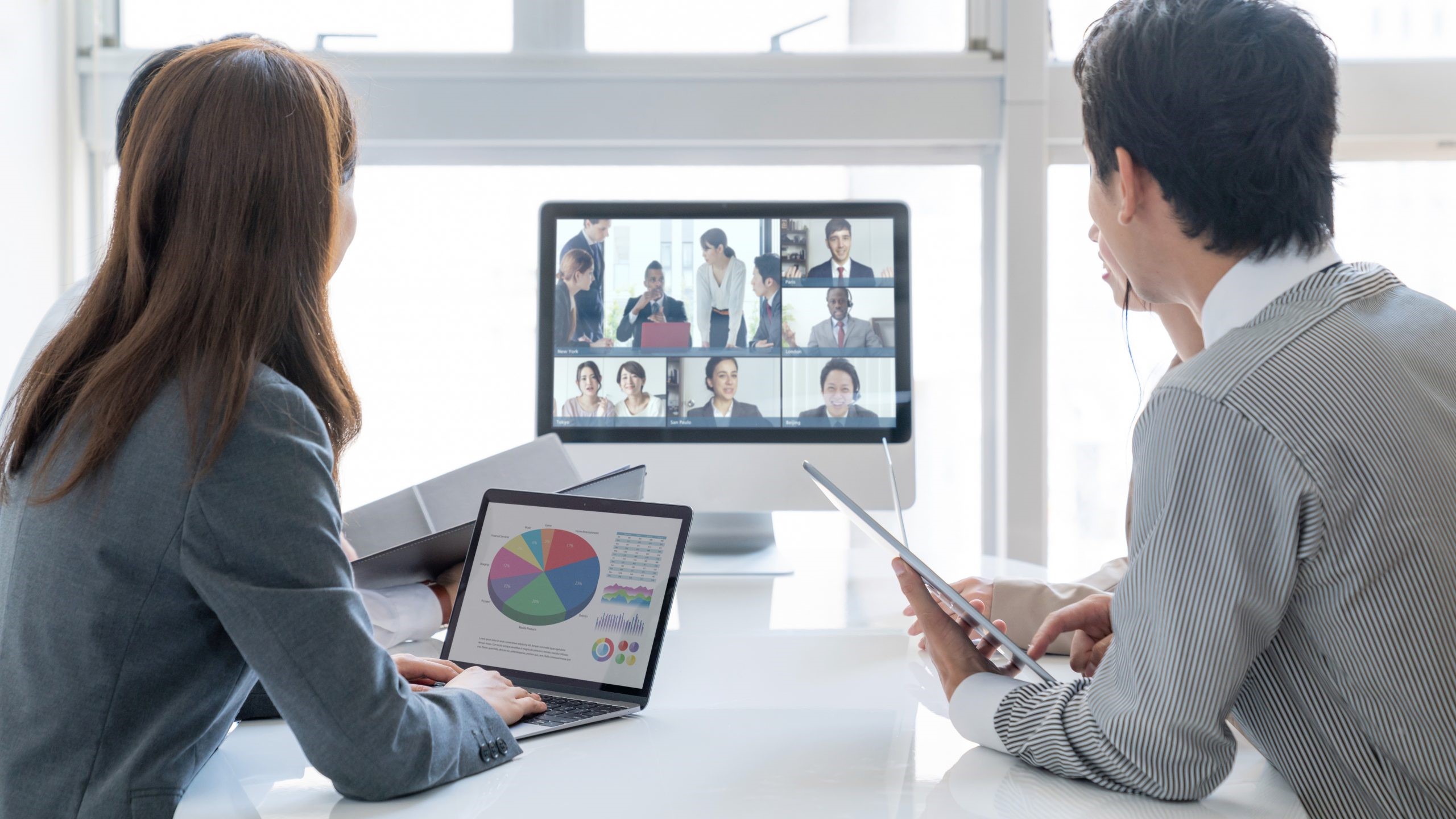
Working remotely can be great, but it also has its drawbacks. The need for a device capable of running vital software such as Microsoft Teams, Zoom and Webex is no longer a luxury but is now a necessity - and with that comes a clear mic, quality camera, and a way to angle the camera so the focus is on your face.
Additionally, with the use of flexible workspaces projected to continue rising, remote workers need the ability to conduct all elements of their job from the device they have with them. This can include anything from presentations, word processing, video and photo editing, screen sharing, signing PDFs, and more. The need for a reliable internet connection is paramount, with the demand for services such as 10GB ethernet internet rising exponentially.
These changes are subsequently changing how laptops are being made. For companies that are entirely remote, the question now is how best to equip employees with a business computer that addresses their needs.
The expectations for these laptops are rapidly changing. Previously, the expectation was to simply get work done, at work. Now, the expectation is to be able to get work done, anywhere, quickly. Business computers used to be a means to get work done, now they are the lifeline connecting employees to their jobs.
With more people working from home every day, newer laptops are going to need to meet this demand. Thunderbolt 4 connectors are still new, however they will probably be the future of laptop connections due to their versatility and speed. With one port, users can decide what that port does. Whatever it will become, it will transfer data at breakneck speeds. All while cutting down on clutter on the laptop itself. Additionally, due to the rise in virtual meetings, it is expected that the next generation of laptops will have better, high resolution cameras built in. Perhaps even with a camera cover. One additional camera quality that would be nice to see would be the ability to unlock with your face as a standard feature. With that being said, fingerprint security should be mainstream within the next generation of laptops.
On the track of making virtual meetings better, an upgraded microphone built into the laptop would make it so individuals would not have to use a 3rd party option. Continuing down this rabbithole, it would be nice to see laptop designs that have dedicated communication buttons or shortcuts. For example, next to the speaker volume buttons there could be a mic on/off toggle. But one that works with whatever virtual meeting platform you are on.
Further, due to the increased efficiency of the newest chips available, and the readily available places to charge whilst working from home, the next line of laptops may not have the increase in battery that has been the trend up until now. There is not as much of a need for increased battery anymore, so perhaps the trend will plateau.
With that being said, there has been an increasing demand by employees to have these devices provided by the employer. Seeing as how the business computer is everything for any given employee, employers are having to adapt. For example, if one employee does not have a device that allows them to do their job well, then they are going to be seen as a bad worker - with the inverse being true as well. Therefore, a quality device, with powerful components, a hi-resolution camera and microphone twinned with powerful speakers, all at a reasonable price is more than just where business laptops could trend - but the expectation.
(Image credit: Shutterstock / metamorworks)
Transitioning to a hybrid working model
If remote work gets to the point where employers are providing employees with laptops, they are going to want to have a way to manage those devices. However, as not everyone has incredibly strong network speeds, there will need to be an adaptation to where IT can efficiently manage those that have poor connection.
Large companies like Apple and Twitter are already looking at what a hybrid work atmosphere or entirely remote atmosphere will look like. As these companies begin to set (unintentionally, or intentionally) the standard for working conditions during and post- pandemic, other companies are watching.