Sunday, January 2, 2022

OnePlus 10 release date rumors, price, news and leaks

The OnePlus 10 is the next big smartphone we're expecting to see from the Chinese tech company now that the OnePlus 9T has been confirmed not to exist. In fact, it'll debut in January 2022.

This upcoming premium smartphone will likely launch as part of the early-year wave of top-end smartphones, with the Samsung Galaxy S22, Xiaomi 12 and Oppo Find X4 expected to be close contemporaries and rivals.

We haven't heard too much about the OnePlus 10 just yet - there are a few leaks, which we'll share below - but rumors will probably start up soon, particularly in the new year ahead of the phone's debut.

We've also drawn up a wish-list of features we want to see in the OnePlus 10, including changes from previous phones and added extras from rival devices, which would give the OnePlus 10 and 10 Pro a better chance of getting a top review score.

Latest news

The latest leak gives us most of the key specs for the OnePlus 10 Pro, including the screen size, battery capacity, and chipset.

OnePlus 10: cut to the chase

  • What is it? OnePlus' next flagship phone
  • When is it out? January is confirmed, perhaps January 11
  • How much will it cost? Likely starting at $729 / £629 (about AU$940)

OnePlus 10 release date and price

The OnePlus 10 Pro will debut in January 2022, according to the company's CEO Pete Lau. This was revealed in a post on Chinese social networking site Weibo where Lau wrote, "10 Pro, see you in January".

We don't know anything else yet, so we're not clear whether this will be a China-only launch. Previously, rumors have suggested the OnePlus 10 series will debut in China first and then come to the rest of the world at a later date.

Lau's post is specifically around the OnePlus 10 Pro, which may suggest the company will be splitting its launch in 2022 to reveal each phone on a seperate date.

A recent leak has also suggested the company will be hosting an event to reveal the OnePlus 10 Pro on January 11. That comes from a video that suggests it'll be a China-only.

See more

If the China-only launch comes first, leaks have suggested we'll then be able to buy this phone in the US or UK around March or April 2022. The company doesn't sell its phones in Australia, so don't expect a OnePlus 10 release there.

With regards to price, the OnePlus 9 series started at $729 / £629 (about AU$940) for the lowest-spec base model, and went up to $1,069 / £929 (about AU$1,400) for the  top-spec Pro model, so expect a range of prices between those figures for the handsets.

Of course, the new phones could shift the price up or down a little way, but since the OnePlus 10 doesn't sound like a huge reinvention, we wouldn't expect this shift.

Design and display

One screen detail has already been confirmed, with Pete Lau (the CEO of OnePlus) saying the OnePlus 10 Pro will use LTPO 2.0, to allow for a smoother screen than ever before.

Beyond that, one leak suggests the design of the OnePlus 10 and 10 Pro will be pretty similar to how the 9-series equivalents looked, just with some polish here and there. 

OnePlus phones don't have the most radical designs in the world, so that's no surprise there.

That said, a more recent leak shows the possible back of the OnePlus 10 Pro, complete with a very different camera design, as you can see below.

See more

The source of this leak claims the render is based on a photo of the phone, and added specs of a 6.7-inch 1440 x 3216 screen with a 120Hz refresh rate and a 20:9 aspect ratio.

We've since seen a more detailed leak of the OnePlus 10 Pro, showing the phone in full from all sides, as you can see below. According to the same source, the phone has dimensions of 163.0 x 73.8 x 8.5mm (or 10.3mm including the camera bump).
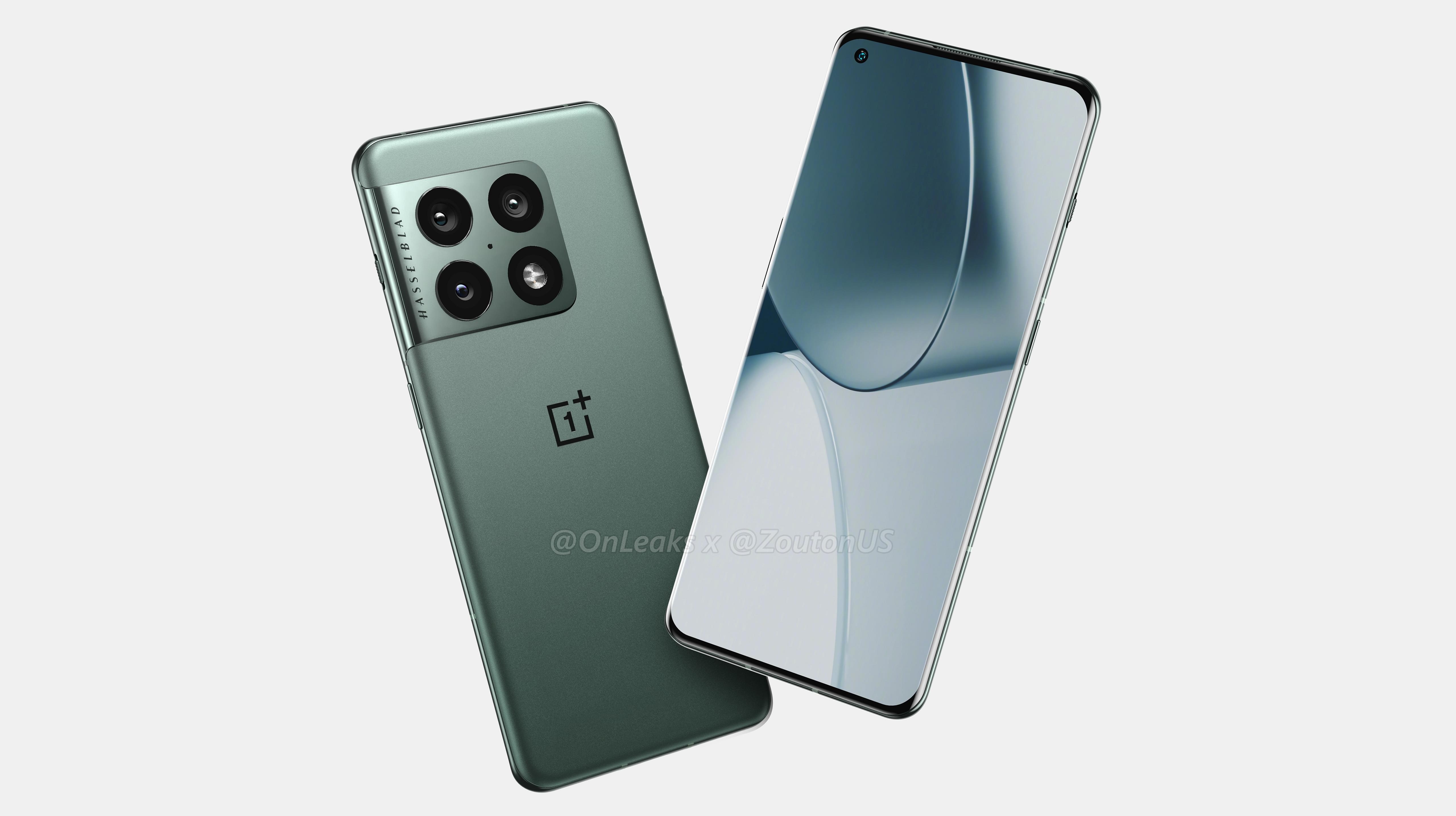
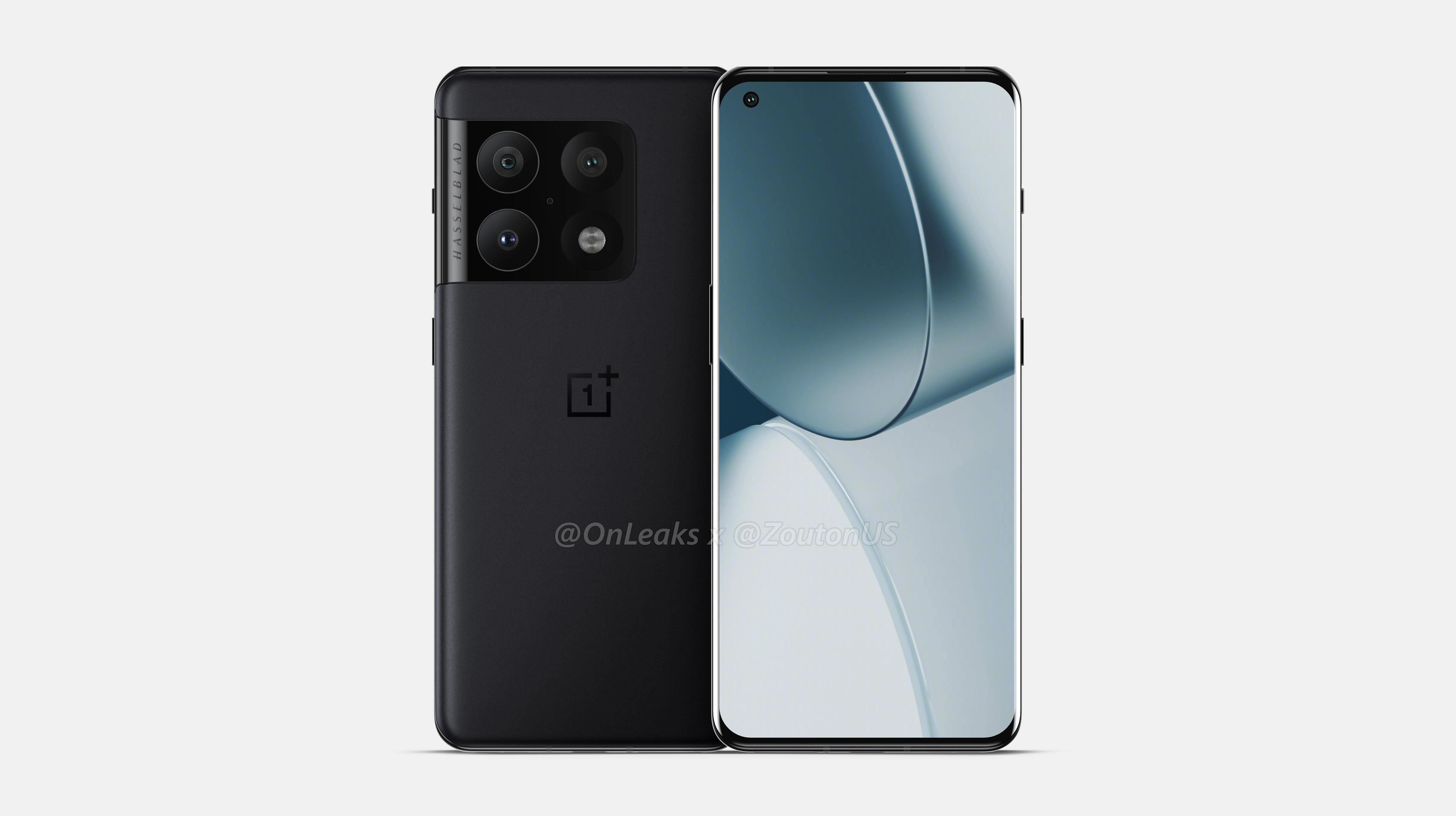
Image 1 of 2

An unofficial render showing the OnePlus 10 Pro from the front and back

(Image credit: OnLeaks / Zouton)
Image 2 of 2

An unofficial render showing the OnePlus 10 Pro from the front and back

(Image credit: OnLeaks / Zouton)

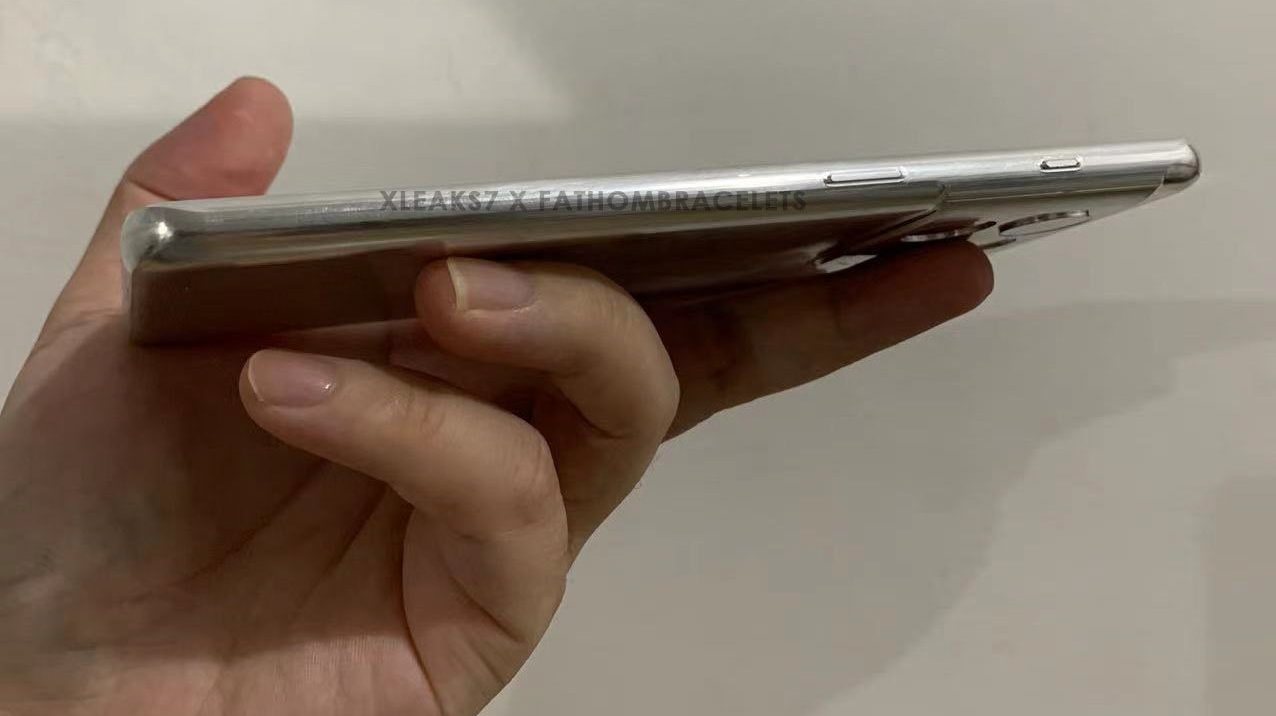
And now we've also seen an aluminum dummy unit of the OnePlus 10 Pro, and it matches the images above, but gives us a much clearer idea of how big the phone is in someone's hand. We've heard another mention of the 6.7-inch screen, too.

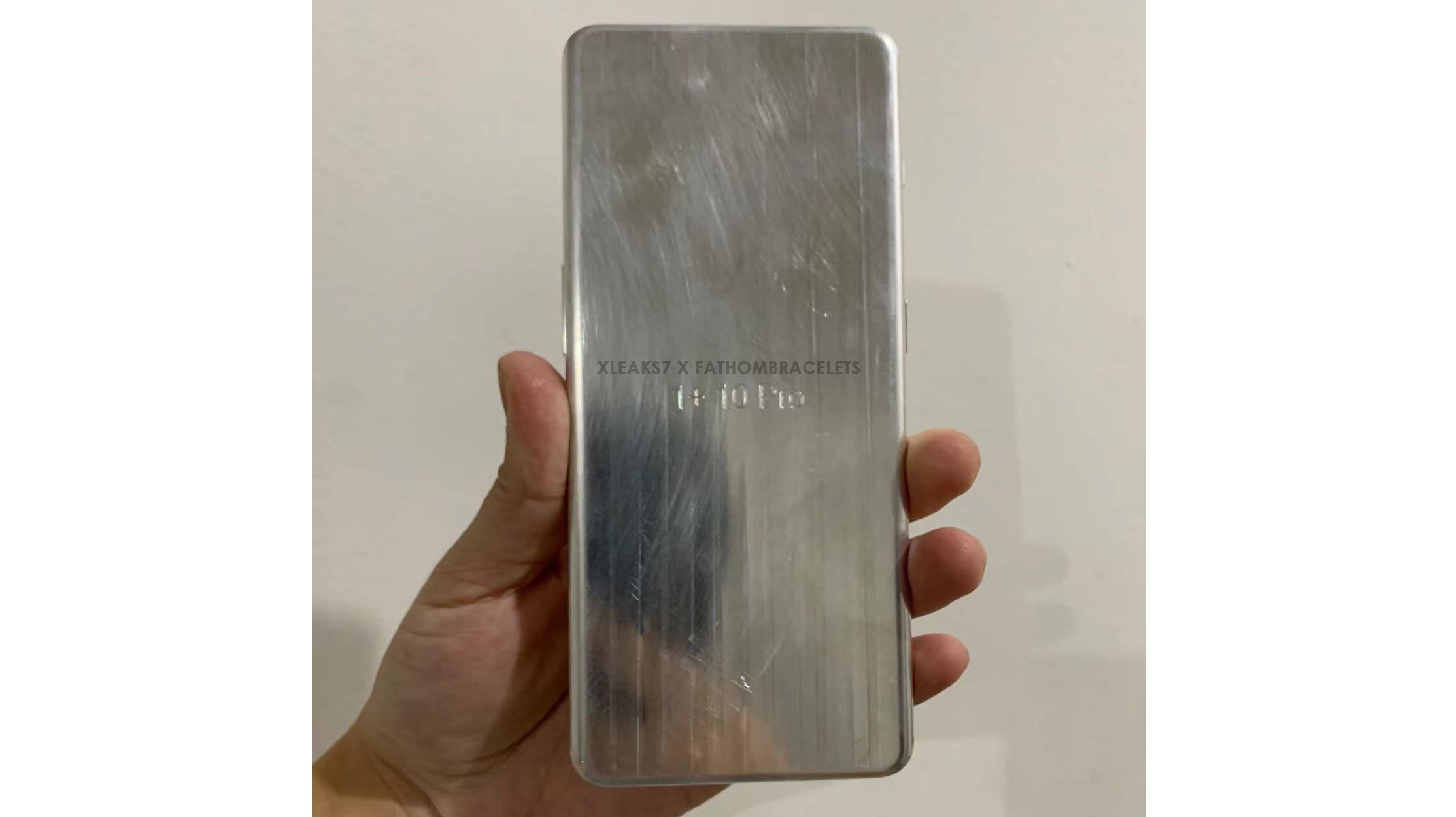
Image 1 of 3

A OnePlus 10 Pro aluminum dummy unit from the back

(Image credit: @xleaks7 / Fathom Bracelets)
Image 2 of 3

A OnePlus 10 Pro aluminum dummy unit from the front

(Image credit: @xleaks7 / Fathom Bracelets)
Image 3 of 3

A OnePlus 10 Pro aluminum dummy unit from the side

(Image credit: @xleaks7 / Fathom Bracelets)

Camera and battery

We don't know much about the camera of the standard OnePlus 10, but a leaker claims the OnePlus 10 pro will have a triple-lens camera with a 48MP main sensor, a 50MP ultra-wide one, and an 8MP telephoto one with 3.3x optical zoom. Those incidentally are the same specs as the OnePlus 9 Pro.

That said, there's some disagreement here, as the source of the aluminum dummy unit further up in this article claims the phone has a quad-lens camera, though that seems unlikely based on the leaked images we've seen.

We have heard these camera leaks backed up though, with one leaker sharing those specs and adding that the phone will get 80W wired and 50W wireless powering. Those specs have also been mentioned in a second leak.

That's not the only disagreement though, as a source called Bald Panda on Weibo (that's a Chinese social networking site) has also suggested the phone will come with 5x optical zoom, rather than 3.3x, so we're not certain what to expect on the camera front yet.

As for the OnePlus 10 Pro's front-facing snapper, that's rumored to be 32MP, which would be a big upgrade in terms of megapixels on the OnePlus 9 Pro's 16MP camera.

When it comes to the battery, we don't know what the capacity of the OnePlus 10's battery will be, but one source claims the OnePlus 10 Pro will have a 5,000mAh one, while another adds that it could support 125W charging.

Specs and features

First up, there's a confirmation of a feature from OnePlus itself. The company has confirmed the 10-series phones will debut brand-new software, which will combine the company's own Android fork called OxygenOS, with that of its sibling Oppo's ColorOS, following the merger of the companies.

The OnePlus CEO said the new software will combine "the fast and smooth, burdenless experience of OxygenOS, and the stability and rich features of ColorOS."

The company has also more recently confirmed that the OnePlus 10 will use the top-end Snapdragon 8 Gen 1 chipset. This is the successor to the Snapdragon 888 and is likely to power many of 2022's flagship Android handsets.

Elsewhere, a leaker has claimed that the OnePlus 10 Pro will have a 8GB or 12GB of RAM, 128GB or 256GB of storage, and an IP68 rating for water and dust resistance. So far we haven't heard any specs rumors for the standard OnePlus 10 though.

What we want to see

This wish-list for the OnePlus 10 series is based on what we did and didn't like about the OnePlus 9 series, and what smartphone rivals are doing.

1. A zoom photo renaissance

Some phones come with impressive zoom cameras, like the Mi 11 Ultra with its 48MP 5x zoom camera or the Huawei P50 Pro with its 64MP 3.5x zoomer.

The OnePlus 9 didn't even have a zoom camera, and the Pro's snapper was a relatively measly 8MP 3.3x offering. Sure, that's not terrible, but if you're spending lots of money you'd want a bit more than that.

We'd like to see the OnePlus 10 pack a telephoto camera, even if it's just 12MP or 2x zoom, with the OnePlus 10 Pro packing a periscope snapper with 4x or 5x zoom and a higher-res sensor. Though even that wouldn't help the Pro rival the big dogs, with the S22 Ultra likely to have super-zoom and the Xiaomi 12 possibly having a Pro sibling too, it'd at least be more worthy of its cost.

2. Expandable - or more - storage
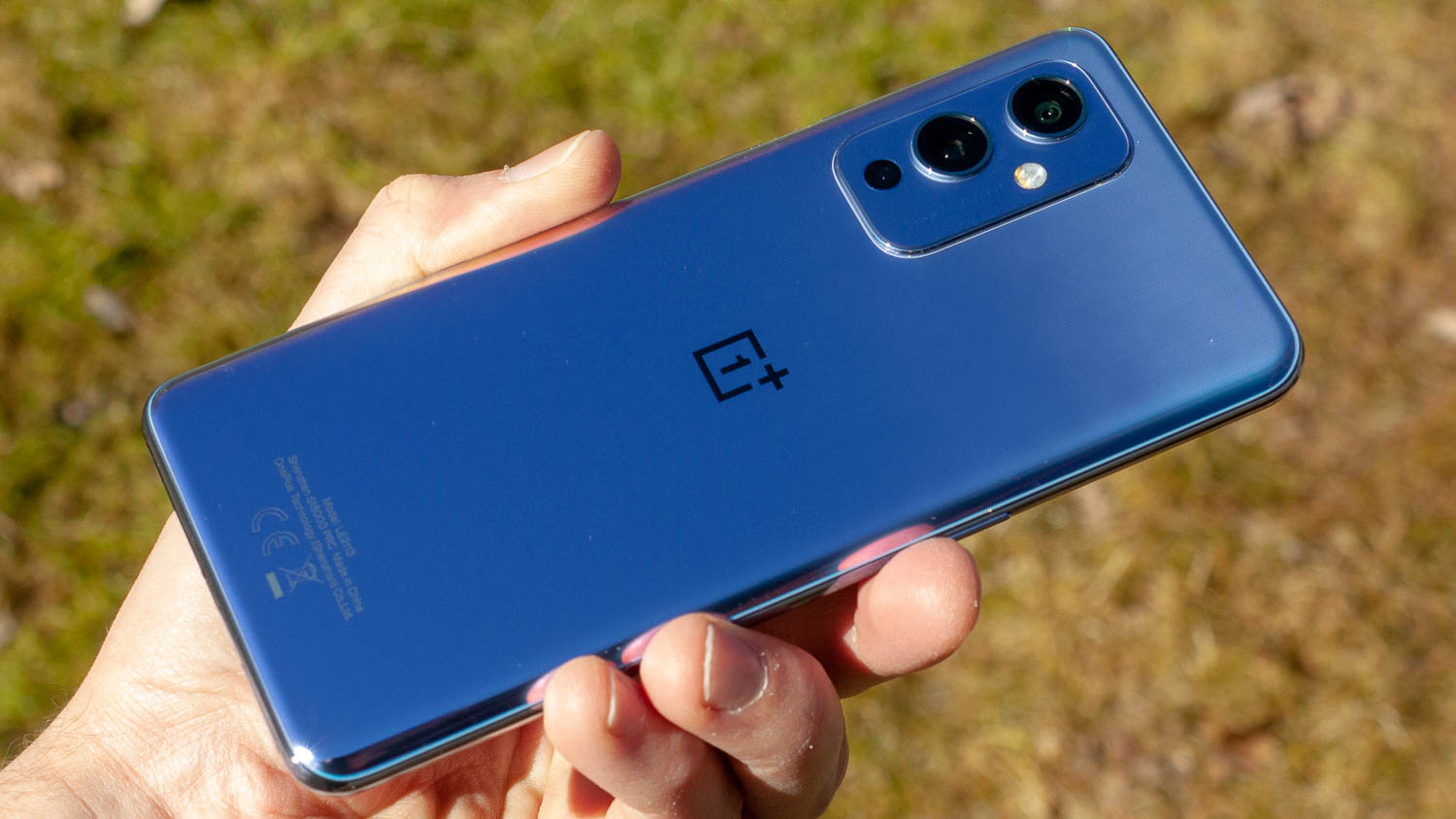
OnePlus 9

(Image credit: Truls Steinung)

The only 'con' that both our OnePlus 9 and 9 Pro reviews had in common was the lack of expandable storage. So if you bought a 128GB smartphone, you can't extend the space with a memory card, and instead need to rely on cloud storage if you want more.

While expandable storage isn't necessary for most users, phone power-users - the type who'd likely buy a Pro phone, for example - might want the extra space for photos, files, or loads of apps.

Alternatively, perhaps the storage space could be improved. The OnePlus 9 phones come with a max option of 256GB, which is a lot, but not much compared to 512GB or 1TB iPhone 13s. Some people just need lots of storage.

3. Faster charging

Both the OnePlus 9 phones have 65W charging, which is very fast compared to your iPhones or Samsung Galaxy devices... but not quite as speed as rivals from companies like Xiaomi or Huawei.

Granted, 65W is faster than most people will need, but some power-users would likely enjoy the ability to juice up a smartphone in even less time. For example, the recent Xiaomi 11T Pro can power up in just 17 minutes.

Perhaps OnePlus could use this kind of super-fast powering on the 10 Pro, or at least find a competitive powering speed to stay in line with the competition.

4. Better colors
OnePlus 9 launch

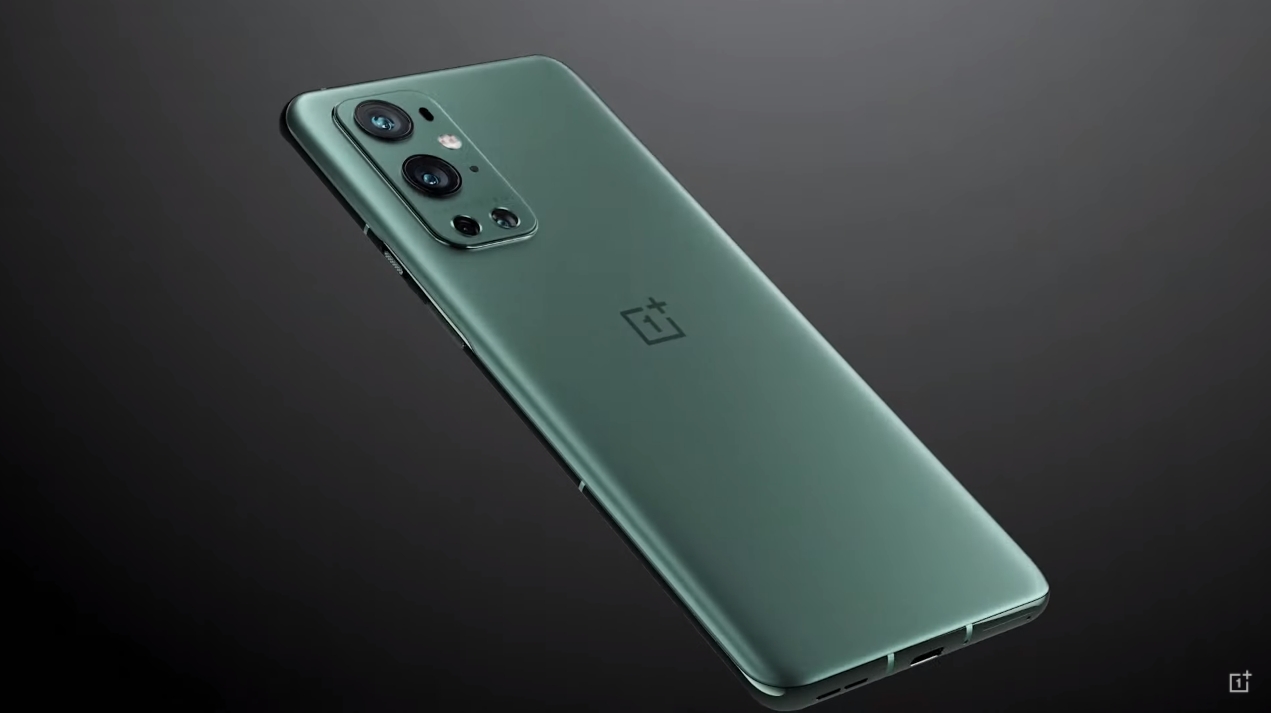
The green OnePlus 9 Pro was the only vaguely interesting-looking member of its family. (Image credit: OnePlus)

If you look at the color options of the OnePlus 9 series, or in fact most devices from the company in general, you'll see the usual gamut: black, white, maybe a light blue. There's nothing really interesting there.

We'd like to see OnePlus follow suit with the iPhones, and get a little bit weird in its colors. Let's see pink. Let's see red. Let's see gold.

Sure, vibrant phones are known to sell pretty poorly compared to boring-colored ones, but in a world where most smartphones look near-identical, brands are going to have to look to color sooner or later in order to stand out.

5. Something to come from this Hasselblad co-operation

In 2021, OnePlus announced that it had partnered with Hasselblad for the 9-series cameras. Lots of phone companies partner with camera brands for their snappers, but it wasn't exactly clear what the Hasselblad partnership would bring for the OnePlus 9.

In the end, it turned out... not much. However OnePlus did suggest that this co-operating would take some time to come to fruition, with the OnePlus 9 series just the first of many handsets to benefit from the collaboration.

Hopefully, with the OnePlus 10 series we'll see the fruits of OnePlus' and Hasselblad's labor. Perhaps we'll see some new camera modes, or bespoke lenses that impress us. Months after the OnePlus 9 launch we saw a few Hasselblad-centric features brought to the phones, and it'd be great to see the OnePlus 10 launch with something like this.


from TechRadar - All the latest technology news https://ift.tt/3kDjMSl

10 PC games we can’t wait to play in 2022

A new year is upon us, and while we can’t be sure it’ll be a good one or that we’ll keep to the many resolutions we make, we can trust it to deliver an array of excellent titles. 

The forecast for new PC game releases in 2022 has been looking bright and primed to be one of the best years for gaming in a long time. So, we’re here to let you in on some of the titles we cannot wait to get our hands on.

While we wait for these titles to arrive, make sure you check out the best PC games you can already play.

Elden Ring screenshot

(Image credit: FromSoftware Inc.)

Elden Ring

This one’s a no-brainer: from the moment Elden Ring was announced, along with the knowledge that George R.R. Martin (the genius mind that brought us A Song of Ice and Fire) was announced, the hype surrounding this title has been atomic.

Elden Ring is an open world soulslike dark fantasy RPG published by BANDAI NAMCO and developed by From Software Inc.. Become the Elden Lord by restoring the Elden Ring from its scattered shards. Fight, gain and build up your skills, and explore the Lands Between.

Due for release February 25 2022, you can pre-order Elden Ring on Steam now.

Redfall poster image

(Image credit: Bethesda Softworks)

Redfall

Redfall is the newest offering from Arkane Austin, the studio behind Dishonoured and Prey. Published by Bethesda and due for release in Summer 2022, Redfall is an open world co-op FPS game in which you have to take down vampires with unique powers who have taken over the town of Redfall, Massachusetts. 

You have four characters to choose from, Devinder Crousley, Layla Ellison, Remi De La Rosa, and Jacob Boyer, each armed with their own unique weapons and abilities with whom you must form a crew of vampire slayers to save the town.

Redfall will be available on Windows 10 and Game Pass.

The Callisto Protocol screenshot

(Image credit: KRAFTON, Inc.)

The Callisto Protocol

Set in the PUBG universe in the year 2320, this immersive action survival horror game is developed by new studio Striking Distance Studios (founded by co-creator of Dead Space, Glen Schofield) and published by Krafton

You play as a prisoner attempting to escape a maximum-security prison colony on Jupiter’s moon Callisto. You must fight your way through hordes of various alien monstrosities, explore the colony, Black Iron created by the United Jupiter Company and uncover the secrets that lie within.

Although there hasn’t been a specific release date announced just yet, Callisto Protocol is definitely coming out at some point in 2022.

Starfield promo poster

(Image credit: Bethesda Softworks)

Starfield

Starfield is a new action RPG developed by Bethesda Game Studios and published by Bethesda Softworks. Since the release of The Elder Scrolls and Fallout franchises over 25 years ago; this is the first new universe by Bethesda in a world set in space. You play as a space explorer in Starfield 20 years after a colony war took place between the Freestar Collective and the United Colonies, the two largest factions in Starfield.

It was announced during the Xbox showcase at E3 2021 that Starfield would be an Xbox exclusive, but it'll be available on Windows 10 and Game Pass from 11 November 2022.

God of War 2018 screenshot

(Image credit: Sony Interactive Entertainment)

God of War

It was announced in October 2021 that the superb God of War 2018 would be coming to PC, much to the PC gaming world’s delight.

God of War is a single-player third-person action-adventure game developed by Santa Monica Studio and published by Sony Interactive

You play as Kratos, the troubled former Greek god and his son Atreus. Packed with side quests, boss battles and a rich storyline, it will show PC gamers why it is one of PlayStation’s most popular and beloved exclusives.

God of War 2018 will be released on 14 January 2022 and is available to pre-purchase on Steam.

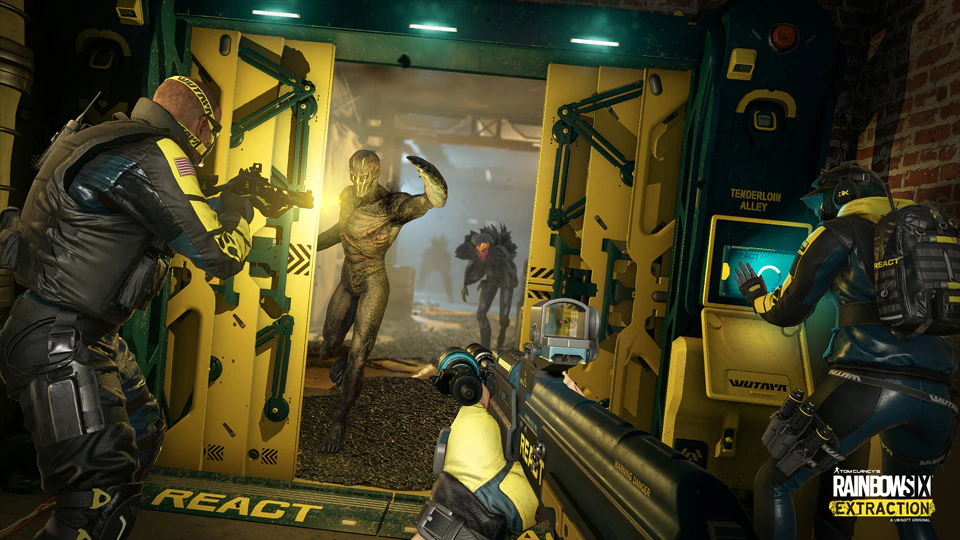
Tom Clancy’s Rainbow Six Extraction

(Image credit: Ubisoft)

Tom Clancy’s Rainbow Six Extraction

The much-anticipated spin-off to Rainbow Six Siege is finally here! Ubisoft Montreal is back with Rainbow Six Extraction with plenty of kill-it-with-fire alien monstrosities to keep you sharp and alert.

In Extraction you play in a team of three to complete objectives while eliminating alien enemies called Archaeans. In each incursion all objectives and enemy placements are procedurally generated; there are up to 12 objectives to complete, including gathering intel or collecting samples.

Out for release January 20 2022, Rainbow Six Extraction is cross-platform and will be available on Epic Games, Ubisoft, Amazon Luna, and Google Stadia.

Company of Heroes 3 poster

(Image credit: Sega)

Company of Heroes 3

The much-loved RTS Company of Heroes is back with its third instalment from developer Relic Entertainment and published by Sega.

In a departure from its Western and Eastern Front settings, Company of Heroes 3 is set in the Mediterranean focusing on Italy and North Africa during WW2. There are a bunch of new features and improvements to look forward to, like the tactical pause and destruction system, which is not just for show, but allows for more strategic depth to gameplay.

There’s no specific release date yet, but it’s tipped for a Q4 2022 release. In the meantime, Wishlist it on Steam.

Ark II poster

(Image credit: Studio Wildcard)

Ark II

In a surprise preview at the Game Awards 2020, it was revealed that Ark 2, sequel to Ark: Survival Evolved, was on its way. Many fans were impressed with its graphics and actor Vin Diesel’s involvement in the game.

Ark 2 is an open world survivalcraft game developed and published by Studio Wildcard and follows on from its predecessor’s last DLC, Genesis Part 2. Explore the world, battle primeval creatures, craft a base, tools, and weapons, and enjoy improved graphics and enemy AI.

While there’s no specific release date just yet, Ark 2 will be coming out some time in 2022.

Vampire: The Masquerade - Bloodhunt screenshot

(Image credit: Sharkmob AB)

Vampire: The Masquerade - Bloodhunt

Following a successful Steam Open Access, Vampire: The Masquerade – Bloodhunt is due for release in Spring 2022. This free-to-play title is developed and published by Sharkmob and promises hours of endless vampire-on-vampire hunting fun.

Navigate your way around the rooftops and gorgeous streets of Prague in this action-packed, epic battle-royale title based on the Vampire: The Masquerade TTRPG and World of Darkness series. Choose your clan: Brujah, Nosferatu, or Toreador and “archetypes” to utilize its unique powers coupled with your strategy to reign supreme.

While you wait for its release, you can add it to your Wishlist on Steam.

Dying Light 2 Stay Human screenshot

(Image credit: Techland)

Dying Light 2 Stay Human

Fans of Dying Light are itching to get their hands on the second instalment of the beloved action RPG Dying Light 2 Stay Human. Developed and published by Techland, the game sees you fighting (as its title implies), to stay human.

In this huge open-world survival-horror RPG, play with up to 4 player co-op using your combat and parkour skills to kill all the particularly hideous zombies infesting one of the last remaining human settlements.

Dying Light 2 Stay Human is due for release 4 February 2022. You can pre-order it now on Steam or Techland’s official site.

We also have to drop a few honorary mentions: Evil West, Hogwarts Legacy, Suicide Squad: Kill the Justice League, Total War: Warhammer III, and Sonic Frontiers.


from TechRadar - All the latest technology news https://ift.tt/3FZflti

Amazon Prime Video eyes up 8K TV shows – but is it a play for new Samsung TVs?

8K TVs are here to stay, and it looks like Amazon Prime Video is getting fully behind the upgraded resolution technology.

Prime Video is the latest member of the 8K Association, a cross-industry body that exists to promote the growing ecosystem of 8K content and devices – and which also offers an 8K TV specification standard to ensure customers are getting a minimum bar of features and capabilities with every approved 8K television.

Prime Video joins the likes of Samsung, TCL and Panasonic in helping to forge a road map for 8K technologies, suggesting the TV streaming service has 8K TV shows and films in its sights.

You won't currently get 8K support on any mainstream TV streaming service – aside from the odd video on YouTube. Content providers are still getting to grips with 4K resolution support, and it will likely be a while before native 8K content – videos filmed and displayed in 8K – become a sensible business proposition for most of them.

While 8K TV sales are surging, they're still a fraction of the overall TV market, and the prevalence of mobile phones means that plenty of consumers are watching TV on comparatively low-res screens.

Nonetheless, 8K is certainly coming, and it makes sense for content providers to get involved in planning its future. Amazon's interest in 8K, though, is likely tied up not just in the general direction of the TV market, but also Samsung's current strategy around 8K TVs.

Is 8K the future of TV shows?

Prime Video creates huge swathes of original shows and movies, within an increasingly crowded market for streaming services – with Netflix and Amazon now having to compete with Disney Plus, Apple TV Plus, HBO Max and Peacock, among others.

While quality and diversity of content will separate the winners and losers in the short term, effective implementation of rising picture standards will be a key element in the long run – ensuring that the best TV streaming services look their best on high-spec home cinema displays.

And as 8K TVs drop in price, and become more readily available to the average household – in the way that 4K TVs now are – support for native 8K content is only going to become more important.

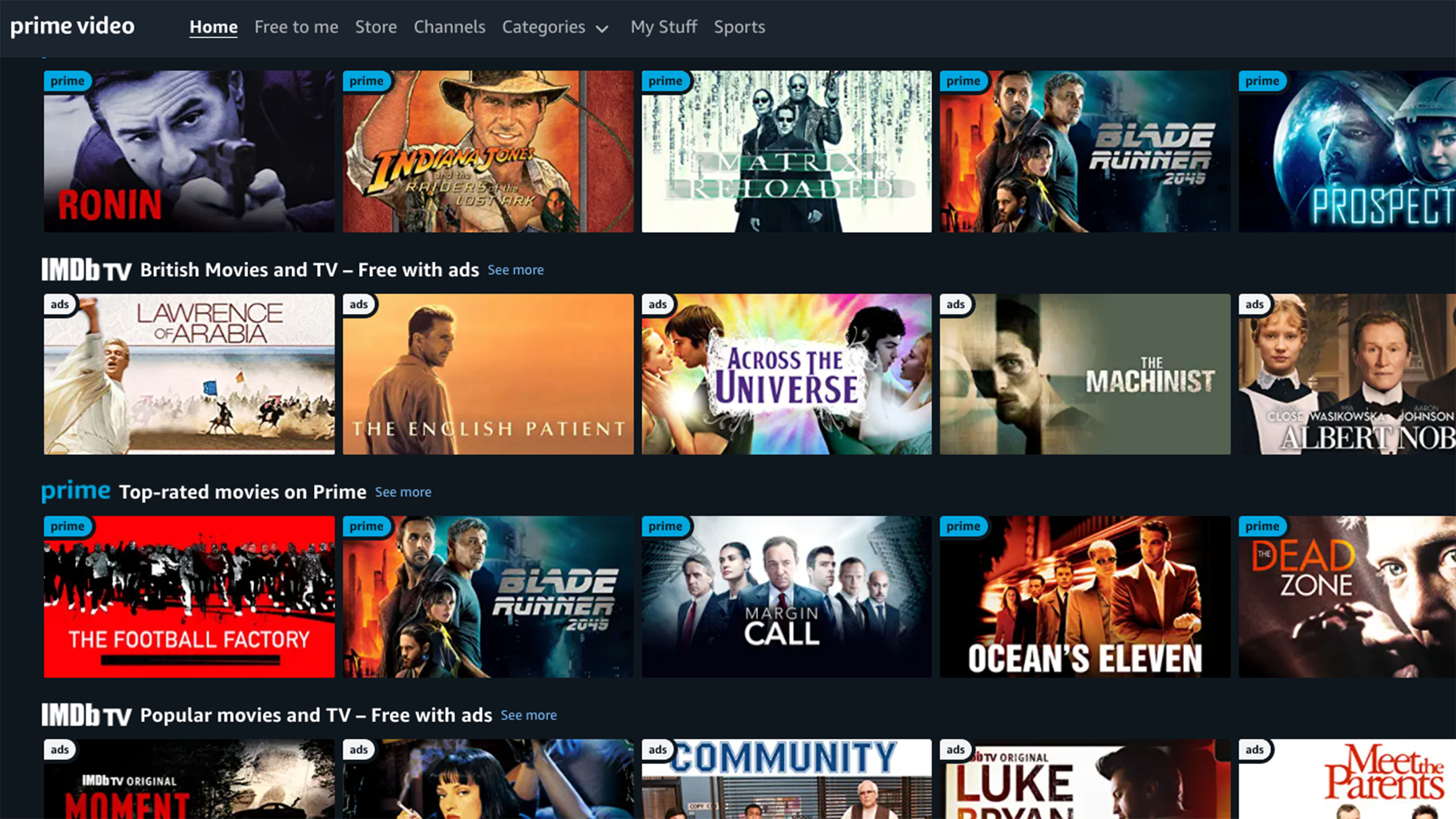
A screengrab of the IMDb TV row on Amazon Prime Video.

(Image credit: Amazon Prime Video)

We already see this for dynamic HDR standards like Dolby Vision and HDR10+, which elevate the picture quality possible on compatible television screens, but which are implemented pretty inconsistently across different streaming services. While Amazon supports both standards, for example, it mostly stocks titles in the less-widespread HDR10+ format, whereas the likes of HBO Max and Netflix opt exclusively for Dolby Vision.

What's worth noting, though, is that Samsung TVs exclusively support HDR10+ over Dolby Vision, meaning that Prime Video is one of the best smart TV apps for Samsung TVs.

With Samsung aggressively pursuing 8K resolution for the best Samsung TVs each year, Amazon is likely only cementing its position – well worth doing, given Samsung's status as the largest TV seller worldwide.

It's only just begun

The 8K Association's certification is only getting more complex, with the introduction of an Ambient Contrast Ratio (ACR) standard "to help ensure good picture quality performance in different ambient lighting conditions."

Gaming specs like VRR (variable refresh rate) and ALLM (Auto Low Latency Mode) are also now baked in to the certification, meaning gamers should be able to buy an 8K TV with confidence in its ability to display current-gen console games at their best.

8K isn't quite the dominant force it may one day be, but minimum expectations for 8K quality are increasing all the time – and seeing content providers like Prime Video get behind these standards can only be a good thing in the long run.


from TechRadar - All the latest technology news https://ift.tt/3sM3kUx

Google AR specs are again rumored to be in development

If you're keen to experience augmented reality through a device that fits on your face, you could soon have another gadget to consider: Google is said to be developing a new generation of pair of AR-capable smart specs.

The tidbit comes from a report in The New York Times (via 9to5Google), which mentions that the company is "nurturing a new project" in the smart glasses category. However, we don't get too many other details about the product.

What we do know is that Google picked up Canadian startup North last year, the company responsible for the Focals smart glasses, and the new eyewear is apparently being developed as a result of that acquisition.

Wait and see

Of course Google Glass has been around since way back in 2013, so this isn't a completely new venture for Google – though it sounds like the latest AR specs that are in development will get new capabilities and perhaps a new name too.

Last month Google was advertising job roles to work on a new "Augmented Reality OS", and those listings also mentioned an "innovative AR device" in the pipeline at the company. This isn't a rumor that's come out of nowhere.

North was teasing a second generation of its Focals specs before it got acquired by Google, but it doesn't sound as though a launch for this product is particularly close – we'll just have to wait and see what 2022 brings.


Analysis: Google and Apple go head to head again

As the article in the NYT points out, plenty of companies are busy working on gadgets that promise new augmented reality and virtual reality capabilities. In particular, we've been hearing a lot of rumors about a pair of Apple AR glasses that may be making an appearance at some point in 2022 and 2023.

If Google pushes out a new AR product at the same time then the two tech giants will be going head to head in yet another area: they already compete in terms of smartphones, mapping applications, smart speakers, streaming music services, fitness platforms and plenty more besides.

Meta – the company previously known as Facebook – is heavily involved here too, and wants us all in the metaverse sooner rather than later. Meta has already pushed out a basic pair of smart glasses called the Ray-Ban Stories, which are able to make calls and take photos and videos (see also the Snapchat Spectacles).

The next wave of AR specs should go a lot further, overlaying digital elements on top of the real, physical world in front of your eyes. Whether or not a substantial number of people can be tempted into buying a pair, however, remains to be seen – which was a major stumbling block for previous versions of Google Glass.


from TechRadar - All the latest technology news https://ift.tt/3sMaZlP

Why an ergonomic mouse and keyboard have been my best home office upgrades

I’m no stranger to working from home; in fact, I was doing two days a week at home even before the pandemic forced many of us to strictly avoid the office. So I’ve had a decent home office setup for a long while – a standing desk, a second monitor docked with my laptop and a decent office chair. What I hadn't bothered with was a dedicated keyboard and mouse, instead using the laptop’s built-in keyboard and trackpad, which worked fine... until over the course of a few short weeks I found my neck muscles and right shoulder flaring up in pain.

To be fair, the muscle issues weren't new – I've suffered from chronic muscle tightness of the back for a while. What using the laptop's keyboard and trackpad did was exacerbate the problem until it became a deep burning sensation in the right shoulder joint.

As reluctant as I was to change the setup I was so used to, something needed to be done – and so entered an ergonomic keyboard and vertical mouse into my life. By day three of using both, the burn I was feeling in my right shoulder had all but disappeared.

There’s a lot of debate on whether an ergonomic setup is truly beneficial – some swear by it (particularly companies trying to promote these products), while others think they’re overrated. I take the middle path: the keyboard and mouse have not cured my repetitive strain injuries (RSIs) – far from it – but they have made my day-to-day functioning a lot more comfortable and I’ll happily extol the virtues of the ergonomic keyboard and mouse to anyone who’ll listen.

I’ll also be the first one to admit that it may not suit everyone. But if one of your new year's resolutions is to boost the comfort of your home office setup, it's certainly well worth investigating.

To go ergonomic or not to go ergonomic...

The issue with getting an ergonomic keyboard is that there are different types, each with its own pros and cons. Figuring out which one will suit you best isn’t easy, especially when you can't visit a store to try one. 

I spent days researching arm and wrist placements on different types of ergonomic keyboards to see which one would (in theory) help the shoulder joint best. I finally chose the Logitech Ergo K860 split wireless keyboard – it’s also the model we rate as the best ergonomic keyboard here at TechRadar.

And since I had no clue whether it was the laptop keyboard or using the trackpad that was causing my discomfort, I decided I might as well get an ergonomic mouse too and for that I chose the Logitech MX Vertical wireless mouse.

I honestly cannot say whether it’s the new split keyboard, the vertical mouse or the combination of both that sorted me out, but pain that no amount of physiotherapy could fix seemingly disappeared within days. Clearly, it was worth the investment.

Instant connection

Another factor that needs to be taken into account when purchasing ergonomic accessories is compatibility. Most ergonomic keyboards work remarkably well with Windows machines, even offering extra functionality keys that make light work. If you’re a macOS user, you’ll need to make sure there are drivers that you can use.

That said, there’s a fair chunk of ergonomic wireless keyboards and mice that work fine with both operating systems (sometimes even without dedicated drivers). Both my new accessories connected to my MacBook instantly via Bluetooth, but they did require the installation of the Logi Options app to convert them from their default Windows setup to work correctly with macOS.

Another reason I opted for this particular Logitech keyboard was because it uses the company's PerfectStroke keys, which don't take a lot of effort and therefore help reduce the strain on fingers and wrists. Moreover, the domed split keyboard design ensured my arms were placed just right, forcing me to sit a certain way and in turn improving my posture.

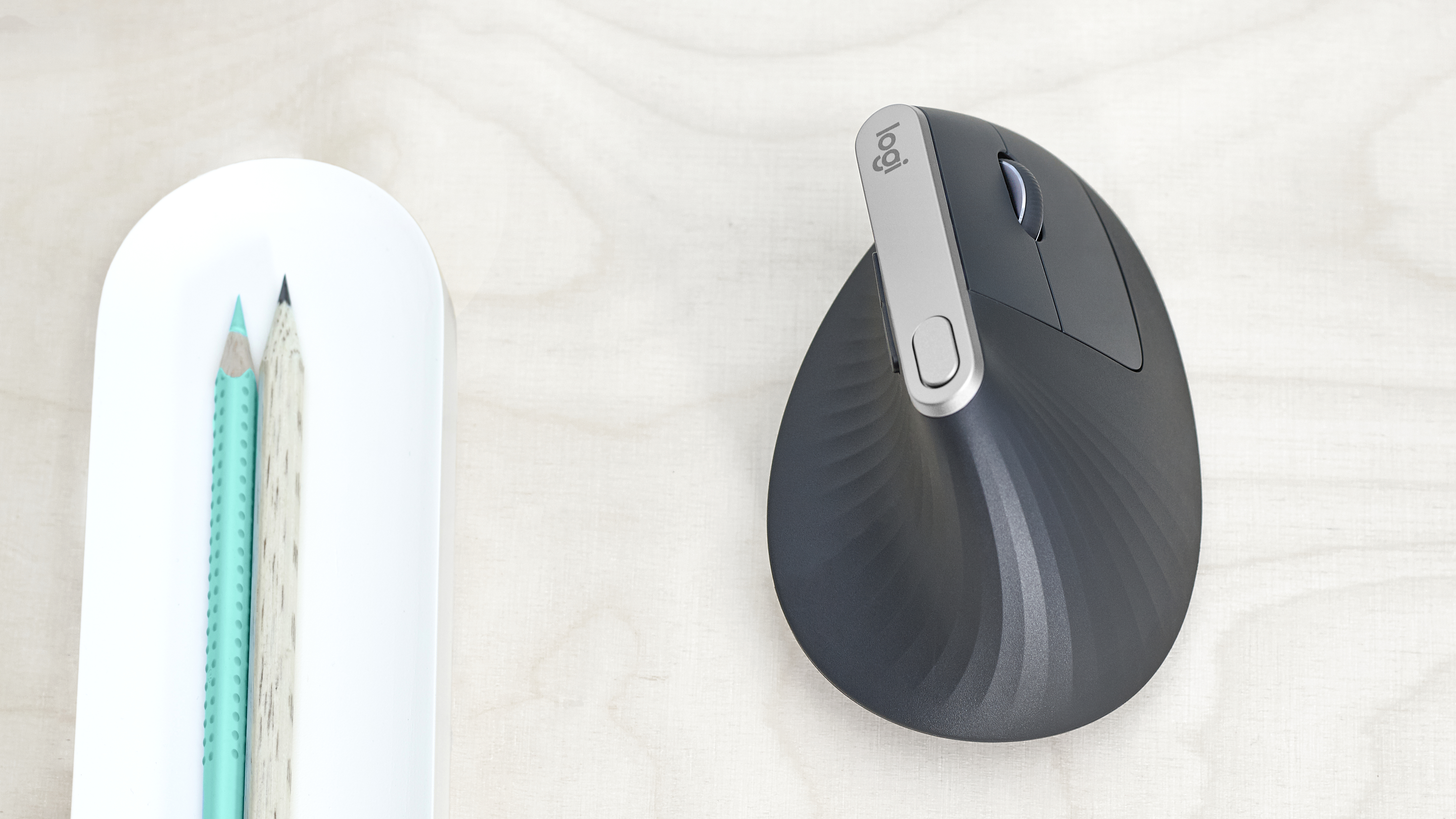
The Logitech MX Vertical mouse on a wooden desk

(Image credit: Logitech)

As for the mouse, the Logitech MX Vertical is a strange-looking device to say the least, but that bulging boat-like shape works in its favor. The 'sail' (or vertical) part of it rising from the main body is slightly angled left, offering a remarkably large and comfortable thumb rest, while the opposite face of the vertical rise gives ample space for the rest of your fingers. Interestingly, the way your fingers intuitively get placed is practically perfect, with the forefinger and the middle finger lying on the left and right buttons respectively and the scroll wheel in the middle. 

The amount of finger movement required to operate this mouse is the bare minimum. And don't be fooled by its size – the mouse is extremely lightweight, so moving it around requires no effort.

High investment

It's not all sunshine and daisies with my new ergonomic setup though. It cost me a pretty penny – most ergonomic keyboards and mice are a hefty investment – and it took me days to get used to the split keyboard.

Typing at my usual speed initially led to so many typos that I was forced to slow down and actually look at what I was doing, which in turn affected my productivity and trigger off a few neck aches because I kept looking down. 

I've had the keyboard now for about four months and I'm still getting used to it. While I have gotten faster at typing – making less typos and not looking at what I'm doing all that much – like most people I'm not a trained touch typist, and the old muscle memory is still placing my fingers in the wrong spots sometimes. For example, my thumbs occasionally still end up in the empty space between the two halves of the keyboard when looking for the G, B and N keys, and I still hit the Fn key instead of the Opt/Ctrl on the right side of the keyboard.

Even the vertical mouse took some time investment on my part to come to grips with. It's quite big and my hands are small. Adapting from a trackpad to a regular Apple Bluetooth mouse, and then to the larger MX Vertical wasn't all that easy. A couple of weeks into using it, though, it felt like the most natural thing to hold, but I do have to use my middle finger to scroll as its longer length reaches the scroll wheel more easily.

Person typing on Logitech ergonomic keyboard

(Image credit: Logitech)

Despite claiming that the two new accessories have improved my day-to-day work, I can still feel my neck and shoulder complain occasionally. It's important to remember that ergonomic keyboards and mice aren't a cure – they're a preventive, provided you've found the right one for you. The damage to my muscles has been done – what the keyboard and mouse do is help curb further problems, and give the body a chance to heal itself.

And they don't work independently. You still need a good chair to maintain your posture and make sure your arms and knees are parallel to the ground – it's the entire setup that can help alleviate typing-related strain.

So, if I'm still feeling it, was it all worth the money? For me, yes. The fact that I can work pain-free for the most part trumps the inconvenience of learning to adapt to an ergonomic setup. Sure, I'm still a little slow at typing and the keyboard takes up a lot of space on my desk, but I've seen a huge improvement in comfort while working. 


This article is part of TechRadar’s Tech Resolutions series, a motivating blast of encouragement showing you how to supercharge your new year with tech. Running from Sunday December 26 to Sunday January 2, our series will also reveal how we’re aiming to level-up our gadget lives in 2022. So whether you’re looking to become a Chromebook power-user, beat your takeaway obsession with a new air fryer, or use a smartwatch to propel you to new fitness heights, we’ll show you how to get your new year off to a flier. And when it all inevitably goes wrong, you can always blame the gadgets.


from TechRadar - All the latest technology news https://ift.tt/3FRZrRB

Saturday, January 1, 2022

Why are the AirPods Pro deals still happening this long after Black Friday?

If you're looking to be kind to yourself in 2022, then the gift of wireless audio might be just that present - and these AirPods Pro prices are worth considering.

What's incredible is that Amazon still has Apple's all-new AirPods Pro in stock and on sale for $179 (was $197) in the US. While that's still $20 more than we saw during Black Friday and Cyber Monday, it's still cheaper than usual and far less than they've been over the last 12 months.

In the UK, it's a slightly different picture: Apple's AirPods Pro are £187 for the Magsafe wireless charging versions (the latest charging case), where they've been between £240 and £199 for months previously. 

They were on sale for £185 during Black Friday, but you can probably get past that £2 difference.

AirPods Pro deal

All-new Apple AirPods Pro: $199 $179 at Amazon
Save $70 -
 Amazon has Apple's best-selling AirPods Pro in stock and on sale for $179. While we've seen the earbuds drop to $159 during Black Friday, this is the best deal you can find right now and $18 less than last week's price. The all-new AirPods Pro includes a MagSafe Charging Case alongside the classic AirPods.

All-new Apple AirPods Pro: £199 £187 at Amazon
Save £12 -
While the saving might not seem like much on recent prices, this is a low price not seen at all in 2020 - while Apple might refresh the models in 2022, they're still excellent wireless earbuds and this could be the cheapest they'll be for a few months - like we said, we're not sure why this deal is still going.

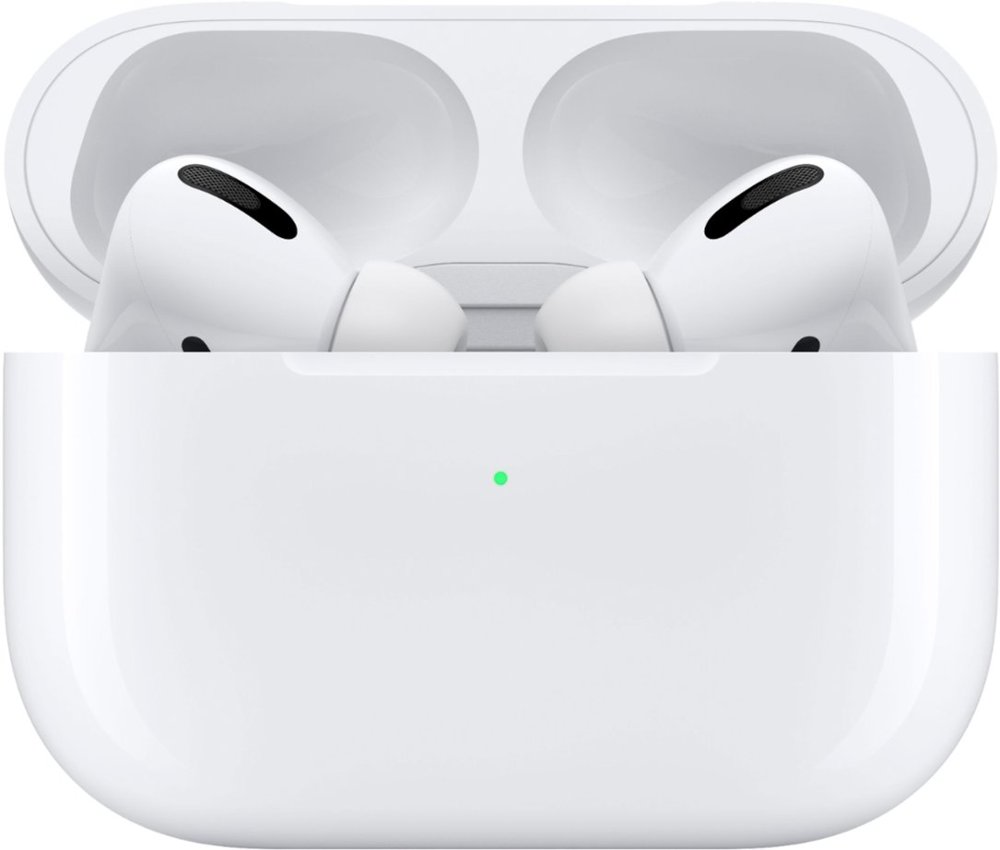
Apple's all-new AirPods Pro now come with a Magsafe Charging Case which provides more than 24 hours of total listening time and can be charged using a Qi-compatible charging mat or using a Lightning connector. That's not a sonic upgrade, admittedly, but we often have trouble locating them on a wireless mat, so this is a welcome change.

The wireless earbuds feature Apple's powerful H1 Chip and include Active Noise Cancellation to block out unwanted noise. The sweat-resistant AirPods also come with new silicon tips in three different sizes to provide a more comfortable and secure fit.

What's most impressive is the spatial audio on board, mimicking surround sound for movies and music in the wireless earbuds by using an inbuilt gyroscope - Apple is really leaning into this technology by adding it into things like the new AirPods 3 and AirPods Max, so it's worth getting involved.

More AirPods deals

You can shop for more offers with the best AirPod deals and sales and see the best AirPods Pro deals and sales that are happening now.


from TechRadar - All the latest technology news https://ift.tt/3JC8nN9

TechRadar's Year in Review: missing phones, broken Windows and cool wires

A note from our Global Editor in Chief, Gareth Beavis:

Firstly, I'd like to say Happy New Year to all of our readers - without you, this site would be nothing but a weird vanity project that sees a few writers and editors telling each other which tech to buy. But thankfully we have millions of other people look at this site each month, and not a day goes by when I'm not incredibly grateful for that opportunity to help you buy the tech you love.

While we've got a lot to look forward to in 2022 - both in terms of TechRadar and the wider world of tech that we cover - 2021 deserves to be mulled over one final time, before putting it in a drawer in your mind and never examining it again.

In a year that began with Delta and ended with Omicron, it's impossible to ignore the impact of the pandemic on the world of tech over the past 12 months – so much was delayed, or outright cancelled, as a result of the disruption the virus wrought on global manufacturing and supply chains. However, there were still plenty of product launches to get excited about, and flashes of innovation that got us talking.

For our round-up of 2021, TechRadar's editors and writers have been looking back on the year that was in their particular field – and looking forward to what's coming down the line in 2022.

Phones

The big names get some serious competition, and foldables get good

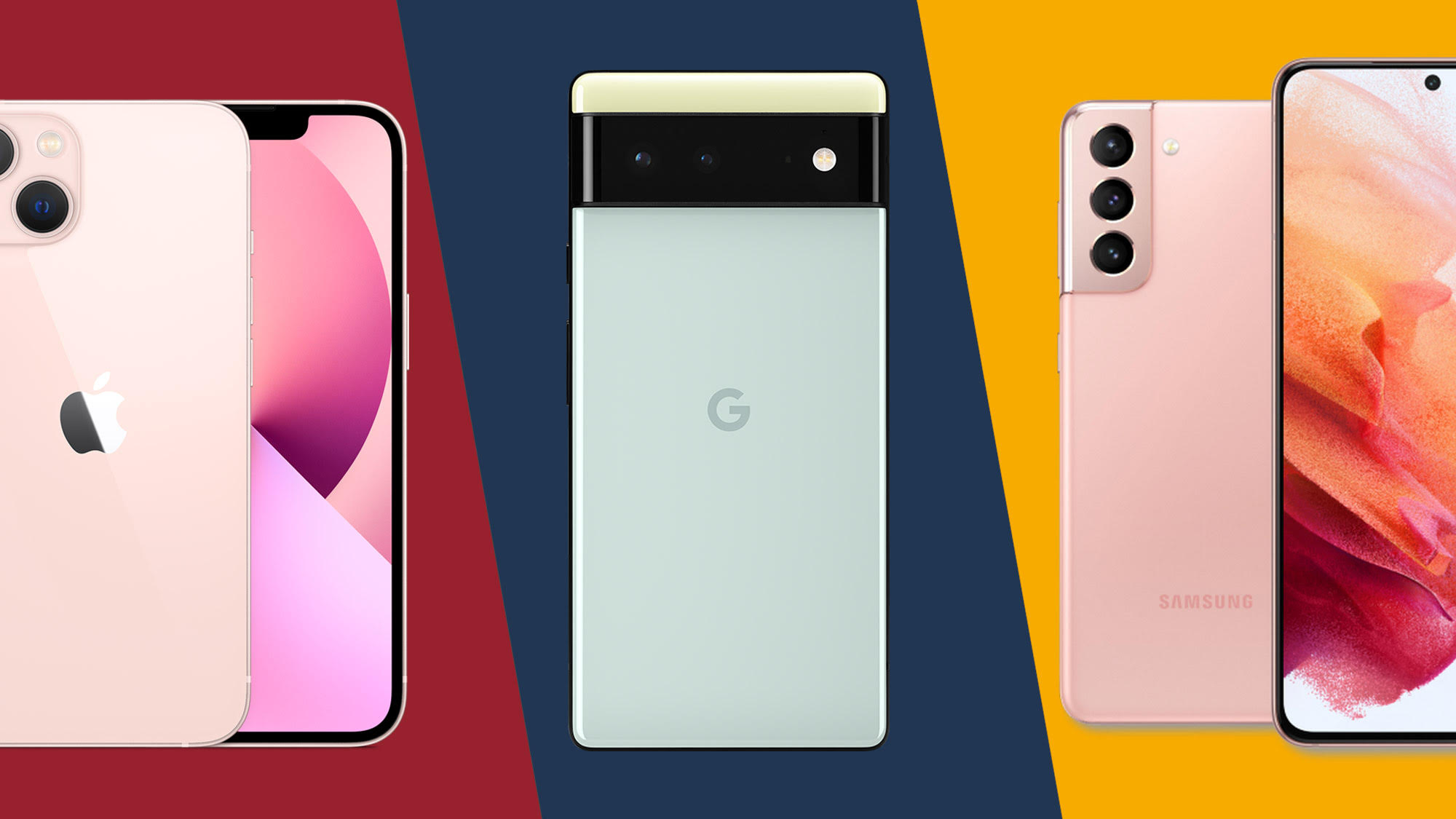
Composite image showing the The iPhone 13, Google Pixel 6 and Samsung Galaxy S21 Plus

Left to right: The iPhone 13, Google Pixel 6 and Samsung Galaxy S21 Plus are among our best phones of 2021 (Image credit: Apple / Google / Samsung)

James Peckham, Phones Editor, writes…

2021 has been an odd year for smartphones, with a multitude of delayed launches, and some notably 'missing' handsets that we thought we'd see – for example, there was no Samsung Galaxy Note 21 or OnePlus 9T. Much of this is due to the ongoing impact of the pandemic on global manufacturing and supply chains.

We have, though, still seen a whole host of fantastic handsets launched in the past 12 months, from the Samsung Galaxy S21 and iPhone 13 series to Google's Pixel 6 duo, while brands such as Xiaomi, Oppo, Realme and OnePlus really established themselves as top-tier players with impressive releases.

2021 was also the year that foldables came of age. The Samsung Galaxy Z Fold 3 was a highlight for those looking for a folding smartphone that really works, although it's still eye-wateringly expensive. Elsewhere, 5G increasingly became the mainstream standard for connectivity, with most new smartphones supporting it and network coverage expanding around the world. The smartphone world also lost one of its big names, with LG announcing that it would cease making new handsets; sadly this means the previously revealed LG Rollable won't be seeing the light of day.

2021 hasn't been a game-changing year for mobile technology, but the field has seen a steady stream of improvements and innovations that have kept things interesting both for those who follow the industry and for those of us looking to upgrade our phones. You can catch up with all the biggest developments in our round-up of the year in phones.

Computing

Chip shortage fails to stem a tide of innovation

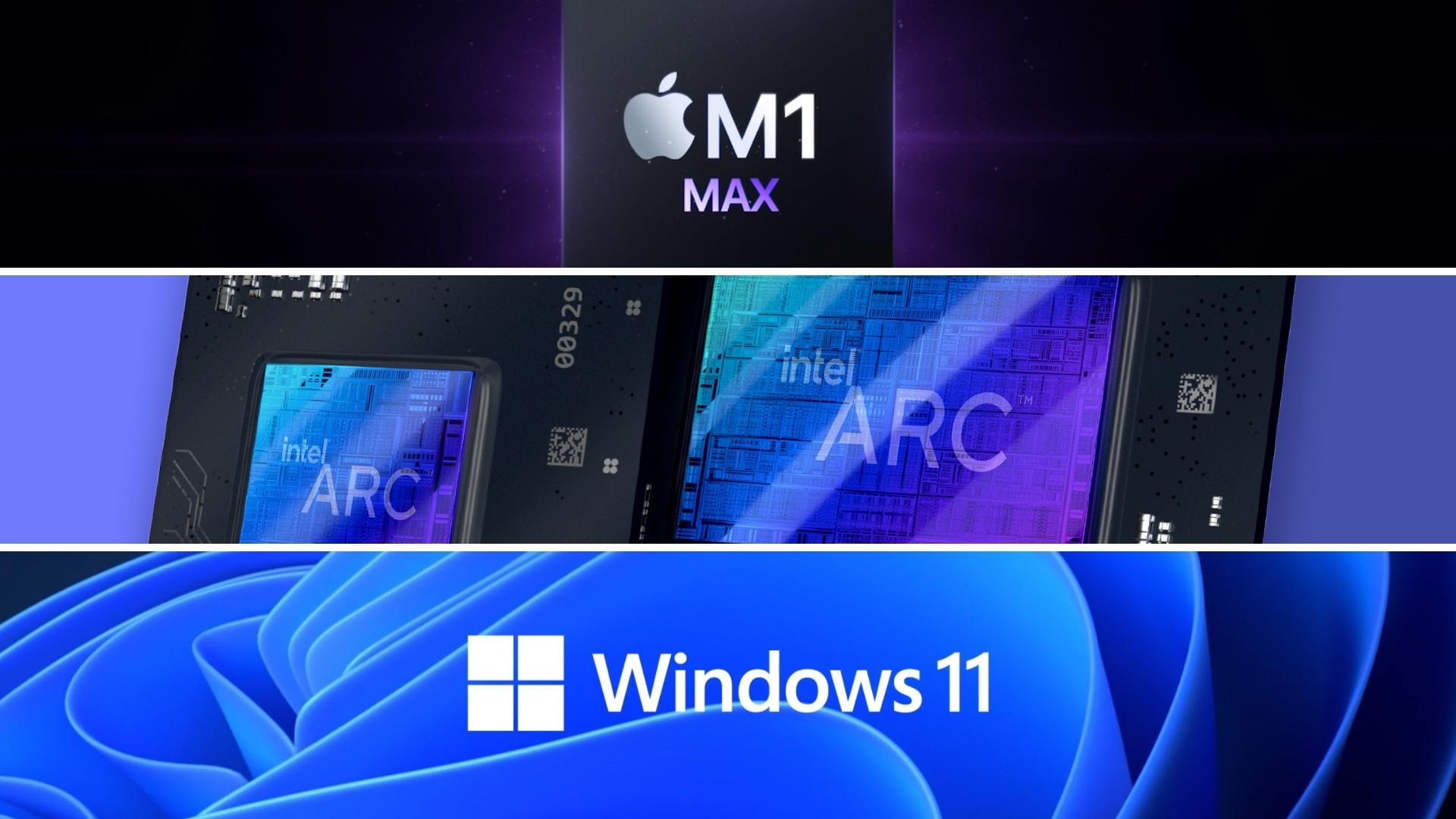
composite image show logos for Apple M1 Max, Intel Arc Alchemist and Windows 11

Advances in chip technology are set to usher in a new era of super-powered computing (Image credit: Future)

Jessica Weatherbed, Computing Writer, writes…

2021 has been a rollercoaster ride for the computing market, with the ongoing chip shortages making graphics cards harder to find than a needle in a haystack for PC gamers and desktop building enthusiasts. Meanwhile, Apple enjoyed seeing customers scrambling to get their hands on its latest M1 Pro and M1 Max-powered MacBook Pro laptops.

It wasn't all doom and gloom for Windows users, with the Windows 11 operating system releasing on October 5. It received a mixed but generally positive response, although predictably Microsoft has had to release a stream of bug fixes and updates to address issues and add improvements in response to user feedback. Microsoft also refreshed its Surface line, with new devices including the innovative Surface Laptop Studio.

As we move into 2022 we're looking forward to seeing a new generation of super-powered hardware, with Apple continuing to improve its own silicon, Intel announcing plans to enter the desktop graphics card market with the Arc Alchemist (creating the possibility of an all-Intel build), and super-speedy DDR5 memory modules increasingly replacing DDR4.

Cameras

Nikon delivers a retro treat and AI gets creepy-clever

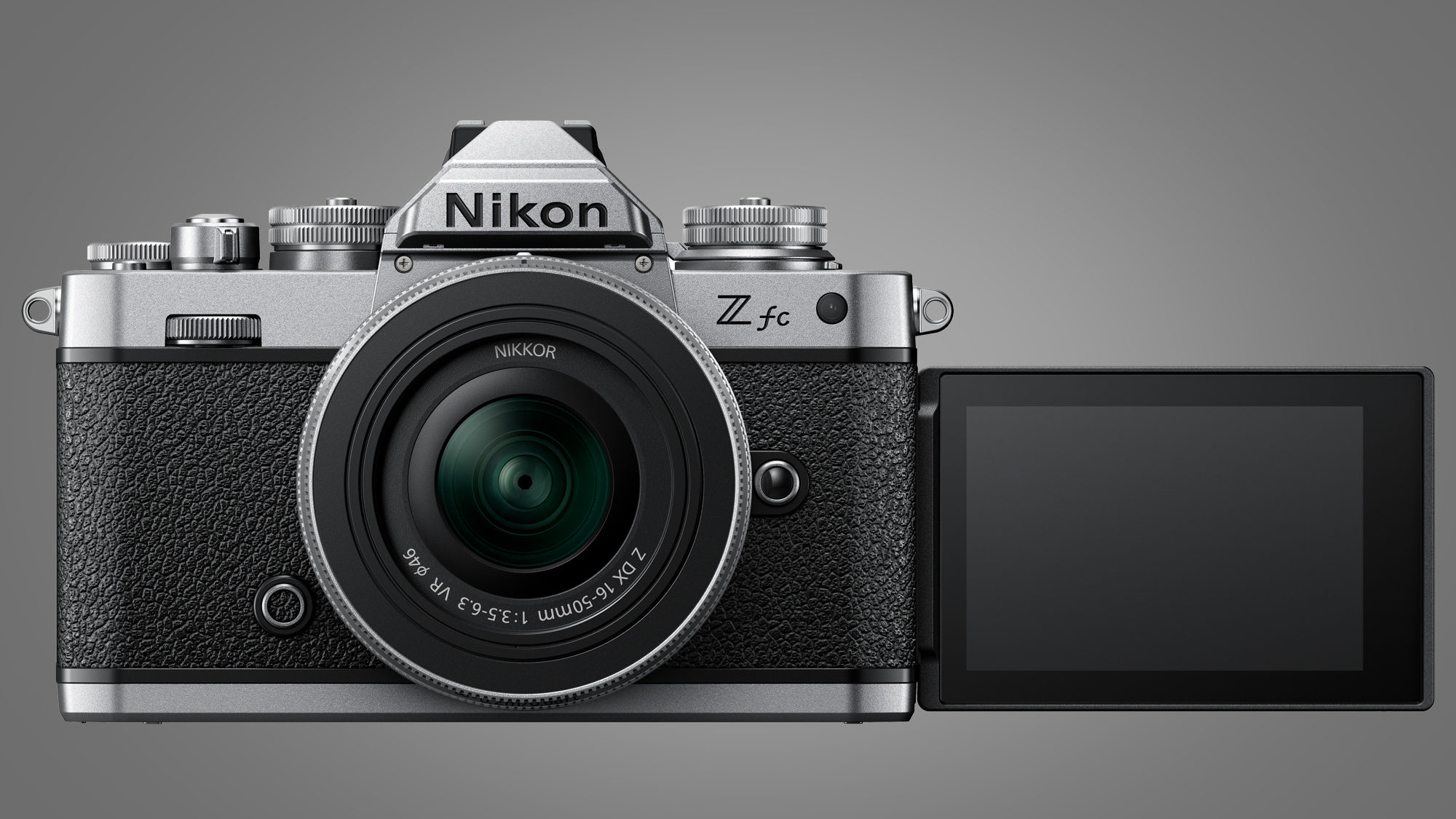
Image of the Nikon Z fc on a gray background

The Nikon Z fc was a glorious blast from the past in a year that saw the appearance of some seriously futuristic photography tech (Image credit: Nikon)

Mark Wilson, Cameras Editor, writes…

It's been another massive year of innovation for photography, if a more subdued one for new cameras. The chip shortage has put the brakes on launches, with some new models (like the Panasonic GH6) pushed back to 2022 and others (see the Sony ZV-E10) pulled out of production just months after they arrived. But it's still been a big year for new professional bodies: the Sony A1, Canon EOS R3 and Nikon Z9 are incredible full-frame powerhouses that have hammered the final nail in the coffin of DSLRs.

Back in the realm of cameras that most of us can actually afford, the highlight was arguably the Nikon Z fc. A mirrorless reincarnation of the 30-year-old Nikon FM2, it's a beautiful camera that delivers something that's all too easy to forget in a world of stacked sensors and 30fps burst modes: fun. Nikon still needs to make more lenses for the Z fc, but for casual photography it's a great alternative to Fujifilm's retro rivals. For those with a slightly bigger budget, Sony also delivered the excellent A7 IV, which is the best all-rounder for stills and video that you can buy right now.

2021 also saw AI and machine learning ripping up the photography rulebook, with powerful editing software like Photoshop and Luminar AI challenging the definition of what a photo actually is – is replacing your scene's real-world sky with a simulated one still 'drawing with light'? The debates have raged, and not just about editing – back in February, a new tool called Deep Nostalgia went viral thanks to its slightly unsettling ability to animate your old family photos.

So what about the coming year? We've polished our crystal ball, and made our predictions for the big camera and photography trends of 2022.

Audio

Wireless buds get some serious sonic upgrades

Image of woman wearing sunglasses and wired earbuds looking at her phone

It’s official: cool girls only wear wired earbuds – for now, at least (Image credit: Shutterstock.com / GaudiLab)

Olivia Tambini, Audio and Music Editor, writes…

It's been an exciting year in audio, with a rash of new products, innovations in wireless sound technology, some weird trends, and the continuing comeback of vinyl in a world largely dominated by Spotify, Apple Music and other streaming platforms. One of 2021's big launches was the Apple AirPods 3, a new and improved version of its most popular true wireless earbuds. Coming with support for Spatial Audio – a technology Apple has gone big on for its Apple Music streaming service and Apple TV Plus – they were received enthusiastically by those who felt the 2019 AirPods were overdue an upgrade.

They weren't the best earbuds we tested this year, though. From the all-round excellence of the Sony WF-1000XM4 to the supremely customizable NuraTrue, 2021 was an exciting year for wireless in-ears.

Oddly though, wireless headphones are being spurned by youthful fashionistas of today. As evidenced by Instagram account Wired It Girls, wired earbuds appear to be the preference of the young and hip crowd. Will this trend continue into 2022? Probably not – as with the renewed interest in Y2K microtrends like trucker hats and velour tracksuits, we suspect this particular fad will be a flash in the pan. So no, we won't be throwing our wireless headphones in the trash just yet.

Televisions

Mini-LED is so 2021 – the future is QD-OLED

Image of the Samsung QN900A TV

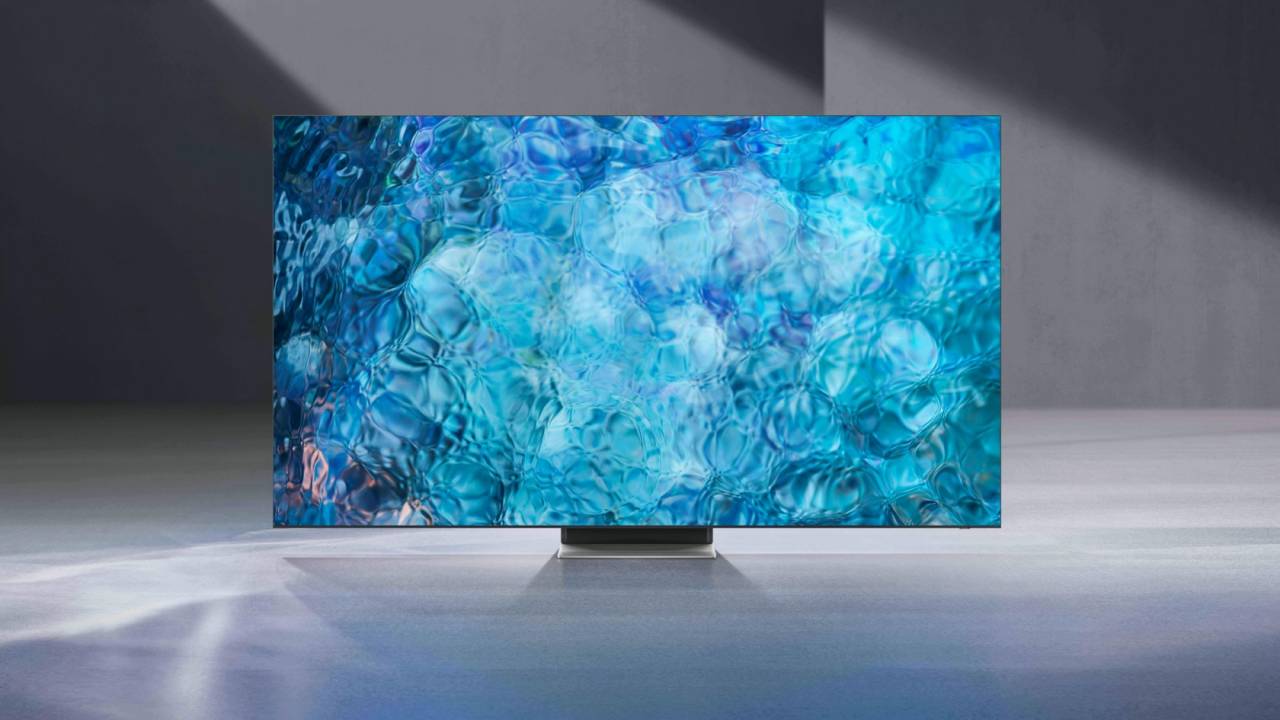
The Samsung QN900A is one of the best TVs we saw in 2021, packing both an 8K resolution and mini-LED display tech (Image credit: Samsung)

Nick Pino, Senior Editor, Home Entertainment, writes…

We got acquainted with mini-LED TVs in 2020, but 2021 was the year that we finally welcomed the brighter, higher-contrast screens into our homes, from Samsung's Neo QLED lineup to LG's QNED models.

While most of the big innovation was in higher-end sets, budget buyers in the US were treated to a sampling of the technology in the TCL 6-Series QLED with Mini-LED for a very reasonable price. We're hoping the technology continues to make its way down the price range in 2022 as we look forward to the arrival of an even newer panel technology: QD-OLED.

QD-OLED screens combine the refined black levels and deep contrast of OLED with the color saturation of Quantum Dots. By boosting the amount of light an OLED pixel can put out and further enhancing the colors through a Quantum Dot filter, these screens are being talked about as the next big evolution in displays.

Here's hoping we'll get our first look at TVs featuring the tech at CES 2022; in the meantime check out our pick of 2021's best TVs across a range of price points.

Fitness

Would you pay a monthly fee to see your health data?

Amazon Halo View

Amazon's Halo View is one of the cheaper fitness trackers, but you'll need to pay a subscription to get the most from it (Image credit: Amazon)

Cat Ellis, Fitness and Wellbeing Editor, writes…

The above was the big question posed in 2021 when Amazon unveiled its new Halo View fitness tracker. It looks like a Fitbit and captures a similar array of data, but unless you're an Amazon Halo Fitness subscriber you'll only be able to see the basics. You get a 12-month trial when you buy the tracker, but once that expires you'll have to pay an additional $3.99 (about £3 / AU$5) per month to see stats like your sleep score and workout insights.

It's the same story with Oura, which released its third-generation smart ring in late 2021 alongside a new subscription service that unlocks extra health insights, audio content (such as meditation sessions) and educational content. You get six months free with the third-gen Oura smart ring, after which it costs $5.99 (about £5 / AU$8) per month, which is pretty steep considering the ring itself is £299 (about £220 / AU$420).

Fitbit won't charge you to check your workout stats, but it's also started expanding its array of member-only goodies. These include the new Daily Readiness score, which tells you how much energy you have in the tank for the day ahead based on your sleep and activity patterns, and the Sleep Animals feature, which analyzes your nightly habits and gives custom creature-themed recommendations. Fitbit Premium membership is $9.99 / £7.99 / AU$15.49 per month, though all new Fitbits come with a free six-month trial so that you can decide whether it's right for you.

In 2022 we may well start to see fitness trackers that are super-cheap to buy, but require a phone-style monthly contract in order for you to make the most of them – we'll keep our finger on the pulse and let you know.


from TechRadar - All the latest technology news https://ift.tt/3Hp52iE

WWE Day 1 live stream: how to watch wrestling PPV online from anywhere

Has Vinnie Mac taken us all back in time a week? Because some big turkeys are about to get stuffed at WWE Day 1. There are four titles on the table, including a super-heavyweight rematch years in the making between The Big Dog and The Beast, in this inaugural WWE Day 1, which is also WWE's first ever New Year's Day PPV. Read on as we explain how to watch a 2022 WWE Day 1 live stream, wherever you are in the world - with Peacock TV the exclusive broadcaster for US viewers!

WWE Day 1 live stream 2022

Date: Saturday, January 1

Time: 8pm ET / 5pm PT / 1am GMT / 6.30am IST / 10am JST / 12pm AEDT

Venue: State Farm Arena, Atlanta, Georgia

Live stream: Peacock Premium (US) | BT Sport Box Office / WWE Network (UK) | WWE Network (CA) | Sony Ten (IN) | WWE Network / Main Event (AU) | WWE Network (JP)

Watch anywhere: try the No. 1 rated VPN 100%  risk-free

Roman Reigns is no stranger to Suplex City. Lesnar has used his signature move to embarrassingly devastating effect on the current Universal Champion countless times in their past meetings, and the Head of the Table is going to have his work cut out staying out of his opponent's clutches.

Lesnar may only just be returning, but he's shaping up as the biggest threat to Reigns' dominance that there's ever likely to be. Meanwhile, relations are more fraught than ever between Raw Women's Champion Becky Lynch and Liv Morgan, who tried to exact revenge outside the squared circle before Christmas, still reeling about her brutal defeat last month.

Plus, Seth Rollins, Kevin Owens and Bobby Lashley have WWE Champion Big E in their crosshairs in the Fatal Fourway, and The New Day take on The Usos. Read on for the full WWE Day 1 2022 card and all you need to know to watch a WWE Day 1 live stream online from anywhere.


usa flag

WWE Day 1 live stream in the US

Peacock TV Premium is the exclusive place to watch all of WWE's biggest events stateside, and you can tune into WWE Day 1 from 8pm ET / 5pm PT on Saturday, January 1.

Peacock costs just $4.99 a month for an ad-supported version of the service that will get you every big WWE event in addition to loads of other great content. Alternatively, you can pay $10 a month for commercial-free coverage.

It's exceptional value for money and brings with it a host of fantastic entertainment, like Modern Family, The Office and Saved by the Bell, plus international sporting events, including Premier League soccer and, of course WWE.

- Click through to Peacock TV to start watching now

And if you're abroad right now, don't forget that you can still tune in just like you would at home with the help of a good VPN. Or consult our guide to the best Peacock VPN options for more details.

WWE Day 1 live stream from outside your country

You'll be able to watch WWE Day 1 from a wide range of countries with WWE Network, but if you don't want to grab a new membership there are plenty more live streams available. We're rounding up all the best places to watch in the US, Canada, UK, Australia, Japan, and India just below.

If there aren't any reliable WWE live streams in your country, or if you're away from home and your plans have been scuppered by geo-blocking, we've got a top tip to make sure you don't miss out as well.

Watch a WWE Day 1 live stream from anywhere

ExpressVPN is the world's top VPN right now
We've tested all of the major VPN services and we rate ExpressVPN as the absolute best. It's compatible with loads of devices including iOS, Android, Amazon Fire Stick, PlayStation, Apple TV and such, and we found it secure, speedy and simple-to-use. Express is a do-it-all service that also benefits from 24/7 customer support.

Yep, ExpressVPN is the best all-round VPN for streaming - and perhaps best of all, it has a 30-day money back guarantee, plus 3-months FREE, when you subscribe for a year.

- Try ExpressVPN 100% risk-free for 30 days

Once you've registered and downloaded the software, just follow the prompts to install it then select the location you want to relocate your IP address to - it really is that easy.

How to use a VPN

Using a VPN is as easy as one-two-three...

1. Download and install a VPN - as we say, our top choice is ExpressVPN

2. Connect to the appropriate server location - open the VPN app, hit 'choose location' and select the appropriate location.

3. Go to the broadcaster's stream - head to your home broadcaster's site or app and watch as if you were at home - so that's Peacock for the US.

canada flag

How to watch WWE Day 1: live stream in Canada

WWE's move to Peacock doesn't affect Canadian viewers, which means the best place to watch WWE Day 1 is still WWE Network.

WWE Network is available through local TV providers, though you'll need to pay an additional PPV fee to tune in to WWE Day 1, which runs on Saturday, January 1, with the action beginning at 8pm ET / 5pm PT.

Canadian abroad? Then you can use a VPN to magically transport yourself back to Canada to live stream WWE Day 1 coverage just like you would at home.

uk flag

How to watch WWE Day 1: live stream in the UK

BT Sport is usually the place to watch all things WWE in the UK, but at the time of writing it isn't clear if it's showing WWE Day 1. 

It's well worth keeping an eye on the BT Sport Box Office to see if this changes - if it does, WWE Day 1 is likely to be a PPV event costing £19.95. 

Alternatively, WWE Network is also available in the UK, where it costs £9.99 per month - and it's definitely showing WWE Day 1.

You'll have to prepare for a late one though, because the action gets underway at 1am GMT on Saturday night/Sunday morning. 

If you're outside the UK and want to tune in, it's simple to do with a handy tool – simply grab a VPN and follow the instructions above to live stream the action. 

australia flag

How to watch WWE Day 1: live stream in Australia

WWE fans in Australia can tune into WWE Day 1 on WWE Network, which is also available Down Under. A subscription costs US$9.99 per month. 

It's also being shown on Main Event, which is available through both Foxtel and Optus TV. The PPV event is available for $24.95. 

The WWE Day 1 action begins at 12pm AEDT on Sunday afternoon. 

Aussies abroad looking to watch a WWE Day 1 live stream should find that a good VPN helps them access their home streaming services wherever they are.

japan flag

How to watch WWE Day 1: live stream WWE in Japan

If you're watching from Japan, you'll need to tune in from 10am JST on Sunday morning. 

You've guessed it... you can tune in to WWE Day 1 via the WWE Network, which has been available in Japan for the last few years.

india flag

How to watch WWE Day 1: live stream in India

WWE fans in India can tune into WWE Day 1 on Sony Ten 1, but you'll need to be up early, as the action begins at 6.30am IST on Sunday morning. 

If that's a little early for your liking, you'll be able to tune into WWE Network for a replay too.

WWE Day 1 2022 full card

  • Big E (c) vs Seth Rollins vs Kevin Owens vs Bobby Lashley: WWE Championship Fatal Fourway Match
  • Roman Reigns (c) vs Brock Lesnar: WWE Universal Championship Singles Match
  • The Usos (c) vs The New Day: WWE SmackDown Tag Team Championship Match
  • Edge vs The Miz: Singles Match
  • Becky Lynch (c) vs Liv Morgan: WWE Raw Women's Championship Singles Match
  • Drew McIntyre vs Madcap Moss: Singles Match


from TechRadar - All the latest technology news https://ift.tt/3zjDUyB